
Badass Larp Talk #3: Livin’ On A Prayer
There are three subjects you’re not really supposed to raise in polite conversation, universally speaking: money, politics, and religion. Mostly because unless everyone goes out of their way to be funny and light-hearted about it, before long they’re going to wind up throwing insults if not punches. In this post, the first “by request” column in the Badass Larp Talk series, we’re going to bend that rule just a little and talk about religion from a purely roleplaying perspective. Specifically, how do you portray a character with faith in a way that is fun and engaging for you and everyone around you?
Before we get too much further, however, let’s make a clear distinction between playing real world faiths and purely imaginary ones. For instance, the difference between portraying, say, a Jehovah’s Witness and a follower of Paladine from Dragonlance. We’ll start by talking about the real world faiths, since it’s a bit shorter and more to the point:
Do your research, start small, and be respectful.
Now, that’s true of a lot of things in larp, but here’s what I mean in particular. The research part is easy – if you’re going to be portraying a member of a real world faith, chances are you can draw on hundreds if not thousands of years of material. I’m not saying that you must learn enough to earn your doctorate in that faith’s theology, but at the very least you should get beyond the common stereotypes and generalizations of that faith (if any). It’s kind of sad to see a fiery “born again Baptist preacher” character who doesn’t know anything about what it actually means to be born again or Baptist. Likewise, I remember feeling a little dumbstruck when I met a character who cheerfully gave their faith as “Native American!” and then looked blank when I asked what specific belief system they practiced. It’s not a matter of judgment as much as it is a sense of loss in missed opportunities – with just a little more research, those players could make their character a lot more compelling and three dimensional.
If you’re portraying a real world belief that’s not familiar to you, the best bet is to start small and build up to it more as you go along. Running in and talking constantly about how it’s awesome to be Catholic, how you totally love the saints and the Pope and can’t believe you got such a good deal on this bitchin’ rosary is, ah, strained, to say the least. Start with small touches and add more as you are more comfortable. It’s also good to find out if there are other players who know more about the faith and get their take on it, or at least make sure you’re not out to offend anyone. Yes, larp is a game and it’s all imaginary, but it’s also a social activity, and if you can avoid offending your fellow players that’s good for the flow of the game as a whole. Quite often they’ll be more than happy to let you know what’s good and what’s crossing the line. Done well, however, portraying a different real world faith can yield a fascinating take on a whole different perspective that you never imagined.
Purely Imaginary Faith
When it comes to purely imaginary faiths, one of the big factors to consider is the impact of faith in your setting. Many game settings, for example, feature characters touched by the divine who openly and frequently manifest the power of their faith to heal wounds, smite heathens and even raise the dead. Step back a minute and consider the implications of that sort of divine presence in everyday life. Many people in our world struggle to come to terms with their faith in the absence of direct, miraculous proof – but what happens when divine power is an everyday occurrence, where the gods are an obvious, accepted fact of life? So much of the average 21st century outlook on religion is colored by a sense of uncertainty and skepticism that just would not belong in a setting where evidence of the divine is commonplace. It’s pretty hard to be an agnostic, much less an outright atheist, when gods manifest themselves on a daily basis.
And that’s not even considering the fact that outright evil deities exist in many of these settings, making “the Devil made me do it” not just a legitimate possibility but a serious concern.
So what does that mean for your roleplaying experience? I think it’s important to peel away a lot of our modern ambivalence and uncertainty and dive into the mindset of someone who has never doubted the existence of the divine. Even if you have a strong personal faith in real life, that is often contrasted by contact with a secular culture, which simply doesn’t exist in these settings in a meaningful way. Rather than subtracting ambivalence and uncertainty, then, a believer must consider the implications of everyone in society acknowledging that their god exists, and what a society built on that foundation would really be like. Especially when you factor in that many of these societies have multiple deities, some with competing agendas or spheres of influence.
That doesn’t mean you have to be a simple-minded goof or a frothing zealot, by the way. For one thing, knowing that the divine exists doesn’t guarantee that you’ll be happy with it – a once-zealous character may abandon their faith in the god of battle after some of his friends die in combat, for instance, feeling that his prayers and devotion have been betrayed. In this case, though, it’s not a question of the god’s existence, but a repudiation of their action (or inaction), which is a subtle but very important distinction from a roleplaying perspective. That your character acknowledges that a particular god exists, but has chosen to reject them anyway, is very different from wondering if there is a god at all, and adds good subtext to your roleplaying experience. The ancient Greeks believed in their gods, but not because those gods were especially kind or loving as a rule. The gods were powerful and eternal, and respecting that was just good sense to them. Besides, the love of a divine being can be as dangerous as their animosity, so it was best to avoid any attention if possible and make sure you were on their good side if it wasn’t.
Likewise, the ability to call down miracles on-demand has its own implications – if priests can raise a dead hero who falls in battle, why don’t they also raise a poor farmer who falls in his fields? (And if they do, what does a revolving door to the afterlife do to attitudes about life and death?) Do miracles have a cost – in money, in time, in exhaustion? If so, who determines who receives them and who is left wanting? What does your character’s deity ask of her? How does she uphold her creed? Where does she feel that she falls short? Is she part of an organized group of believers (very likely in a divine-positive world)? What are they like? What parts of her faith do they stress, and what parts do they marginalize? Has she ever sinned, and if so, did she atone? Does anyone else know about it? Is there another deity or faith she just cannot stand? Why not? All of these are just a start, but they should inspire some good character backstory and attitudes.
Of course, faith is in the details too. Some games mandate specific prayers or ceremonies, but many others leave the details wide open for player interpretation. Prayer, in particular, is a hugely telling thing. I can still remember some of the simple prayers and chants I heard at the first fantasy boffer larp I ever played, because they were so emblematic of the characters repeating them and helped set the tone for their faith in my mind. Most were very short and to the point, but that’s OK – it’s hard to remember the really long prayers in the heat of battle! What’s your character’s most common prayer? What was her “baptism” into her faith like? What symbols of her faith does she wear/carry? (If she doesn’t display her faith, why not?) What are her faith’s colors, icons, prohibitions? What religious rituals are her favorite, and why? Which ones does she avoid, or participate in only grudgingly? Are there any holidays she considers especially dear? Why?
If the answers to any of these are “I don’t know” or “I don’t think those exist in game”, that’s fine too, no worries – that just means you get to make them up yourself! Or perhaps better yet, gather a few more faithful and develop them together. I think you’ll be pleasantly surprised by the results. Larp is a social activity, after all, and ritual is one of the most powerful binding agents that brings people together. Even years after we left our first fantasy boffer larp, we found out that some of other followers of the faith we had started there were still doing the same prayers and the same rituals that we had created. Many of the people doing them had no idea who we were, either – the rites had been passed down to them by other players. That’s an incredible sort of roleplaying connection to foster, when you think about it, and one reason of many to explore playing a character with a powerful devotion to the divine.
The woods are lovely, dark and deep, my sweets.
Don’t forget to bring a light to find the way.
—————————————————————————-
Badass LARP Talk is a semi-regular advice series for gamers who enjoy being other people as a hobby. Like what you read? Click on the BLT or Badass LARP Talk tag on this entry to find others in the series, follow me on Twitter @WriterPete, or subscribe to the blog for future updates!
The Five Stages of Grief: Advice to My Creative Writing Class
How to Be Published In 5 Simple (But Not Always Easy) Steps
Step 1: Lay the Foundation
- Immerse yourself. If you’re a writer, you need to read. All the time. If you’re a poet, read every poet you can find. If you’re a game writer, play every game you can. If you’re a dramatist, go to plays, watch movies, soak up good television, you name it. Popular stuff, obscure stuff, critical hits and fan favorites – dive into it all.
- Don’t pigeonhole yourself. If you want to write sci-fi, it’s great to read all the sci-fi you can find, but don’t stop there. Nothing’s more boring than a genre writer who doesn’t read anything outside their genre. It seriously limits your perspective.
- For that matter, don’t turn up your nose at other mediums. Be able to appreciate a good poem, a good movie, a good book and a good game for what they are, even if they aren’t usually your thing. You never know where a good idea might come from.
- Read criticism in your field – if you want to make games, read game review magazines. If you write fiction or poetry, go to writer’s workshops and listen to critiques. It’s important to see how people discuss your field and what they look for.
- Research! If you’re working with sci-fi or the paranormal, it needs to be grounded in realistic details. Even in a fantasy world, you still need to know how armor and weapons work; sci-fi that is theoretically possible has a much different feel than making stuff up and mumbling something about “science-y” stuff to justify it.
- Outline/prepare whenever possible. After the initial rush of inspiration, outlining helps you keep your momentum. It also keeps you from spinning your wheels.
Step 2: Write, Write Write
- Write 250 new words a day, five days a week. (I recommend Sunday-Thursday). That’s one double-spaced page per day, give or take, and takes no more than 30-45 minutes if you just sit down and do it with no TV, internet chat or other distractions.
- Incidentally, at this pace you’ll have a novel length manuscript in about three or four months. Think about it. A little less than an hour a day, with weekends off, will give you a novel in less than half a year or so. Seriously – what’s stopping you?
- Have an idea how long you want a piece to be, and budget your word count. Give yourself a set amount of words for each scene. Even if you don’t know how long the total work will be, set goals for the next section – “this chapter will be 4K.” That keeps you honest and prevents chapters from just going on and on with no focus.
- Writer’s block IS. NOT. REAL. It assumes that inspiration is some sort of magic force that comes and goes, totally beyond your control. Sometimes inspiration does strike out of the blue, but serious writers know it mostly comes from having a routine and getting used to writing on a regular basis. You don’t find inspiration – you create it.
- Just keep writing. Even if it’s total crap, don’t stop writing. You can always edit or delete later, but the longer you stop the tougher it will be to restart. This is why a lot of writers have so many abandoned projects – they start strong, run out of that initial burst of inspiration, get discouraged and never come back. Don’t stop writing.
- If you go off schedule, if you miss a day, don’t beat yourself up. Just keep writing.
Stage 3: Revise, Edit, Repeat
- Don’t edit while you write. I mean, if you spot something, fix it, but don’t try to do serious edits while you’re still writing. Don’t get stuck; make a note and move on.
- Let’s be perfectly clear: Your first draft is rarely perfect. For serious projects, most authors go through at least five or six drafts, and some do twice that (or more).
- Be advised that authors are poor editors of their own work, beyond basic spelling and grammar. Yousee what you meant to say; another pair of eyes will see what’s there.
- Have you work edited by at least one person who has training in the craft. Make sure they know that you’re looking for a serious edit, and compensate them for their efforts. If it’s a professional, shop around and make sure their rates are fair, and make sure they have credentials and/or author testimonials. Good edits are worth it.
- Polish, polish, polish! Submissions with a lot of errors are far less likely to be accepted. It shows a lack of professionalism and sometimes even a lack of respect.
Stage 4: Publishing & Agents
- Research your market! Don’t submit to a magazine you’ve never read, or a publisher whose books are poor quality or badly reviewed. Make sure agents are looking for the type of material you’re submitting, and if possible see their other clients/books.
- NEVER pay “reading fees” or other upfront costs. They’re almost always a scam.
- A handy reference for finding all kinds of publishing markets: http://www.duotrope.com
- Before contacting agents, make sure your work is finished and polished. Agents don’t want to hear “I have this sweet idea for a book” or “It’s mostly finished, kinda, but if you sell a publisher on it I’ll totally finish it, I promise!” When you’re an unknown author, it’s hard enough to sell a finished product, let alone an idea or partial draft.
- Whether it’s for agents or publishers, always their read submission guidelines AND FOLLOW THEM. Submissions that don’t follow guidelines are deleted unread!
- A handy reference for finding agents: http://www.agentquery.com
- Agent query letters are as important as your manuscript. TRUTH. Study up on good query letters, and make sure to tailor each query to an individual agent’s requests.
- Read your contracts CAREFULLY. If you don’t know contracts, get help from someone who does. Make sure your rights are protected, that you aren’t getting abused on payment and that you know what you owe – and are owed – and when.
- Always get some form of compensation, whether it’s money, free copies or whatnot. If you choose to do a project knowing you won’t get compensated, that’s your prerogative, but don’t accept getting nothing if you were promised something. Your time and your talent are valuable, never forget that. And never let anyone else either.
- Always be polite, prompt, concise and professional. Make sure your emails have correct spelling and grammar, and use formal language and salutations. If you make a mistake or give offense, just acknowledge it, apologize, and fix it. Manners matter.
Stage 5: Moving Forward
- Don’t quit. There is literally nothing like seeing your work in print (or ebook). Truly.
Badass Larp Talk #2: The Joy of Spilling Secrets
Let’s talk a moment about secrets.
Secrets are cool. Secrets are mysterious. Secrets are powerful. Lots of characters have secrets – in their backstories, in their relationships, sometimes even in their day-to-day lives. I have no doubt that, regardless of what town you call home, there are characters walking around whose closet skeletons could rip the community apart if they got loose. And that’s pretty damn awesome, no matter how you slice it. Here’s something else about secrets, though:
Hoarding them sucks.
One thing that I hate to hear, after a character dies or is retired, is the player declare “Nobody ever found out about X!”, which was some really cool character detail or vital piece of backstory that never made it into play. Or worse yet, the same declaration from a villain, talking about some really awesome detail the players never managed to dig up. What’s worse is that these declarations are often made proudly, like the player managed to hoodwink everyone else or something, when all I can think is: “Man, what a waste of all that dramatic potential.” Because that’s the thing with secrets in a game environment – at game, having a secret you never tell ANYONE is to good drama what masturbation is to good sex. As in technically there are similarities, and they’re both fun I guess, but really, I wouldn’t put them in the same league in pretty much any other way that counts.
“But my character wouldn’t confide in anyone!” some might cry. “Why would they tell anyone about their worst deeds or darkest moments?” To which I respond: BULLSHIT. In my regular life I tell my closest friends lots of things, including dark secrets and weak moments, and we haven’t even suffered through a zombie apocalypse together, much less your everyday dungeon crawl or vampire society party. What the hell do you think the bond between friends in that sort of harsh world would be like, where literally any moment might be your last? That kind of stress needs a release, and guess what, that release is pretty much always someone else, whether it’s a friend, a lover, a bartender or a battle brother. Even the most hardened, jaded, cynical characters I’ve seen have at least one buddy they hang around with, and most of them have a whole gang. Sooner or later, something’s going to come out. Everyone is still human, and humans are social creatures. We can’t help it. Even when we know it’s dangerous to share a secret – hell, sometimes especially because it’s dangerous – we have to share because the sharing validates something about us, brings others closer and lets us share a bit of the strain of carrying it.+
And if you’re still thinking, “But! But! But my character is a Lone Wolf who rides alone, wolfishly! He doesn’t need anyone and never gets close to anyone and can’t trust anyone but himself and his sweet Desert Eagle/katana gunblade that he made from the melted metal of his old village and the ashes of his family”, well, I’ve got a whole other speech about what’s wrong with total lone wolves in gaming, especiallyLARP. We’ll save it for another time, though. (Short version: Playing a genuine, absolute loner in a social gaming environment is a bad strategy vis a vis entertainment, and I mean yours and everyone else’s at the game.)
Also, just for the record? Sharing a secret is awesome for drama. Previously you had all the power over this knowledge, which is safe but boring. But now? Someone else has a key to your skeleton closet, and even if you’re super BFFs, now there’s always the chance that they’ll slip and let it out, or be captured and interrogated, or turn against you, or any number of other things. And guess what? That excitement, that tension, is likely far cooler and has far more potential to entertain you than sitting on that secret alone would have been. It also adds a great power dynamic to your relationship that you didn’t have before, not to mention possibly inspire you to get some dirt on them too – you know, just in case.
I should add that I’m not just talking about sharing dangerous secrets either, though that’s what I’ve focused on so far. I’m also talking about things like backstory, inner thoughts and relationship dynamics. So many characters have rich, detailed inner lives that nobody else ever gets to know about, because the player never shares it. For some people, that’s fine – they like being the only one to know certain things about their character, and hey, it IS their character. So if it works for them, great. But for those of you that spend so much time and energy writing those backstories and developing those in-game relationships, I urge you with all my heart: Get it out there! Let other people know about it! Even if it’s just a little bit, you’d be amazed how it changes the way you play; when whole games start doing it, a whole new level of story, trust and betrayal opens up that will blow your mind.
Let me be clear, I’m not saying that there is no place for FOIG (Find Out In Game). There is. After all, you probably would tell your best friend what you got them for the holidays if they really REALLY wanted to know, but generally speaking it’s more fun for both of you to surprise them, otherwise you wind up with a pretty dull present exchange down the road. Game secrets can be the same way – sure, I would probably tell you what Doc Rowe, my Dystopia Rising character, been plotting to do to the rest of the town since taking his first death drove him a little bit crazy, but that wouldn’t be nearly as much fun as finding out when it happens. (Especially for you DR players who will find out about it when the first symptoms begin to surface.) And I’m not saying there won’t be repercussions for sharing certain things either – if your character is in a secret assassin’s guild, for instance, and decides to start posting the names of members around town, you can bet there will be some retaliation, and quickly. Some secrets really are best kept that way, at least for a while, in order to preserve mystery, paranoia and tension. It’s sitting on them forever that’s the real problem.
I’m also certainly not saying that meta-gaming – using out of character knowledge in-game, like using diner conversation after an event to prompt an in-game response your characters would have no reason to carry out otherwise – is acceptable either. Not only is it against the rules, but it’s also what holds a lot of players back from doing this in the first place – they worry that other people will use what they learn out of game against them in game. There not much else to say about it except that it’s poor form, it’s poor sportsmanship, and poor drama besides. It’s not even like cheating at a video game, it’s like cheating at having lunch with your friends – it’s rude, you don’t win anything really and it makes little goddamn sense besides. Respect the divide between player and character, therefore, and just don’t metagame.
Last but not least, sometimes you just never get a chance to share a secret. Maybe your character dies before the right moment arises to reveal their love for that person they’ve been hopelessly taken with for ages; maybe they retire or are forced into exile before they ever get a chance to tell people about what they saw that terrible time during the war. That’s OK, too. That’s what they call “being true to the fiction” in the writing biz, which is another way to say that sometimes not everything goes the way characters plan, but so long as it makes sense in the context of the world it holds up. It’s its own special kind of drama, knowing that you waited just a little too long and now the chance passed you by for good. I call this the “Adama Effect”, and if you’re not familiar with why that title’s relevant, go and watch all of the new Battlestar Galactica. It’s cool – I’ll wait. (Seriously, it’s totally worth it.) OK, OK, for those without the time, let’s just say that – no spoilers – a major character waits the entire series to spill a very important secret, when he finally does, it’s literally seconds too late. The utter joy of the reveal and the utter devastation at the timing is one of the most effective instances of a secret reveal I’ve ever seen. The point is, though, that it was still revealed – just a few moments too late.
That said, I’m not asking you to go around telling other characters things you thought your character never would reveal – except maybe I am, a little bit. Whether it’s a little bit of personal history you’ve never shared, a motivation you never revealed, thoughts on a relationship your character was afraid to voice, or even a dangerous secret that might land you in a whole lot of trouble if I became widespread knowledge, I’m challenging you to find a way to share one secret thing about your character at the next game you play. And the game after that. And the game after that. Your character, telling another character. (None of this “I told them in the parking lot!” or “I whispered it while everyone was eating pizza, not my fault if no one heard” nonsense.) Not enough secrets, you say? That’s not a problem, really. Indeed, it’s challenge of its own – go and find some.
After all, the woods are lovely, dark and deep, my sweets.
Lovely, dark, and deep … and full of secrets too.
—————————————————————————-
Badass LARP Talk is a semi-regular advice series for gamers who enjoy being other people as a hobby. Like what you read? Click on the BLT or Badass LARP Talk tag on this entry to find others in the series, follow me on Twitter @WriterPete, or subscribe to the blog for future updates!
Communion
When it first aired, my brother and I made something of a ritual of watching The Pacific. We were both fans of Band of Brothers, for starters, but as it went on, I started to realize there was something more at work.
My maternal grandparents met in the South Pacific during the war, on Saipan specifically. Randy was a Williams College philosophy major who’d joined the Marines, an Intelligence officer who’d been contemplating an acting career; Bev was a volunteer for the Red Cross who’d gotten a pilot’s license and lied about her age to serve overseas. Aside from a few classic stories – the crowd favorite being Japanese soldiers surrendering to Bev’s donut truck – neither of them talked about it much, at least to the grandchildren. Nevertheless it was a part of their story, and when we heard about The Pacific coming up, it went without saying that we’d watch it.
We watched it together, my brother and I, just the two of us, catching dinner and chatting beforehand, not talking much during or after. We did this for 10 weeks straight as I recall, every Sunday. He was still living in our grandparents’ house at the time, which added something to it as well, but no matter where we watched it, it wouldn’t have been much different. As we watched I realized I was feeling the tension more keenly, feeling the emotion more deeply, and it took me a few weeks to figure out why. Watching it felt like being with them again, trying to understand some of what they’d seen and survived. Even if it was different people, different battles, it was close enough to feel that sense of kinship. Neither of us mentioned it, but it was plain both of us were affected.
Now I’m watching The Pacific again, solo this time (Meg doesn’t like war stories much), in preparation for an upcoming project, and once again I feel it. Objectively, I don’t like the series as much as Band of Brothers – curious as it might sound, in focusing on three specific Marines it somehow felt less personal than the ensemble cast of Band of Brothers, as if the extra attention to a few felt unfair to the others around them – but emotionally I just can’t help feeling it. I tear up often as I watch it, and it makes me miss them both like crazy. Soldier’s stories always grab me, but put on the Marines and I just about lose it every time, even before my grandfather passed. The heroism, the reflexives selflessness, the ability to endure what many have and none should have to, it reaches out and grabs me and doesn’t let me go.
I’m really glad I’ve got this project coming up, because I think I needed to tell some stories here, to try to take what it was that they went through and put it through my own lens. When I can say more, rest assured I will. Until then, though, I’ll be watching and taking notes, enjoying my own little communion.
5 Days and Counting
Well now! The response to Runner has been absolutely incredible so far, from the ruckus that was raised at Barcade to the quiet signature requests that have come at me from unexpected angles, and as it closes in on my first week as a novelist – that’s still so much fun to say, I won’t lie – I am filled with nothing but absolute joy and gratitude for being given this chance to tell a story I believe in for people who’ll enjoy it. Thank you all. Truly.
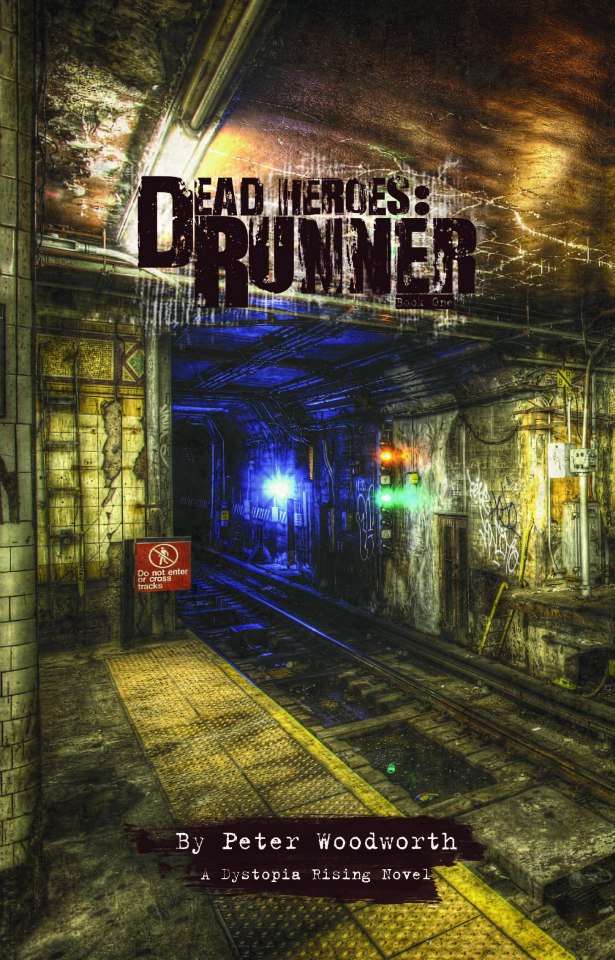
Runner releases today!
It’s finally here! My first novel, the post-apocalyptic zombie survival tale Runner, officially releases today! If you’re in the Jersey City area, the launch party starts at 7:30 tonight at Barcade (a 21+ venue). Come on out for books, food, booze, autographs and a ton of classic arcade games you can play for only a quarter!
Even if you can’t make it, however, Runner is now available on Amazon as well – just in time for the zombie lover on your holiday wish list!
Badass Larp Talk #1: Playing to Fail
Play to fail.
Gamers are a wonderful group of people, but there’s no denying that there is a strong core of competitiveness in what our hobby as well. These are *games*, after all, not pancake socials, and even though we all know that there aren’t “winners” in larp in any traditional sense, some play habits die hard. There’s a real temptation to look at larp like tabletop or console RPGs, where min-maxing your skills and equipment is essential to playing the game and where players are encouraged to work their hardest to avoid weaknesses and failures whenever possible. And to be fair, there’s nothing wrong with playing a character who’s awesome at something, or many things. You want to be a badass gunfighter? Go for it! World’s greatest doctor? Amazing, we could use someone like you. Political mastermind? Dive right in, there’s always plenty to do.
Just don’t forget to build in weaknesses too.
Would you want to read a book or watch a movie about a character who was awesome at everything they did, who never made any mistakes, who never lost at anything, who never once found themselves at a loss – for words, for bullets, for love? No, you wouldn’t, and you know why? Because that character is BORING. No losses, no failures and no mistakes makes for one dull protagonist, and in larp, guess what – that’s you. So what do you do to avoid falling prey to the dreaded Mary/Gary Sue problem? You build weaknesses into your character, pressure points that the staff and the other players and occasionally even you yourself can use to knock your character on their ass and force them to deal with things they can’t handle so well. And then you play them no matter where they take you, even if – especially if! – that means they’re going to land your character in serious trouble at times. Make them NEED, and find out just how far they’ll go to get it.
What can you do to encourage this sort of character? Build characters who hate things. Or love them, no matter what. Make your character afraid of something, or utterly unafraid of something that should terrify them. Give them a history, not just full of enemies out to get them, but of loved ones that the world might take away at any moment. (Enemies are easy to figure; family’s damn near impossible.) Give them money troubles, addictions, obsessions, self-deceptions. Give them codes of honor, noble promises, lofty ideals and pure intentions. (Pound for pound, few things screw up your life worse than pure intentions.) Put them in charge of a group or a project that you *know* will end up breaking their heart, or at the bottom of a ladder that will take an awful lot of blood to climb. Give them a dream they’ll do anything to realize, even if it means sacrificing everything they have now to do it.
I’m not saying that your character should suck at everything, or that they must make suicidally foolish decisions just because, or that they must be some sort of whining emo mess in order to be “real.” It’s a balance – too few problems and a character is dull, too many and they quickly become an unplayable caricature. So don’t be afraid of being good at things, or making the right decision when called for. That’s part of characters too. I’m also not saying that you should deliberately screw up your character’s life on a regular basis – well, OK, I kind of am, really. Staff will do their level best to make your life difficult and complicated, but just as it’s difficult for them to scare you if you the player refuse to feel fear, it’s difficult to really challenge your character if you the player refuse to embrace the idea that not only can you fail from time to time, but that failure can actually be a much better story than success.
If you don’t believe me, well, let me pose a scenario for all you Bond movie fans. (Well, it works for all kinds of different movies, but I like Bond and so we’ll go with that.) You know how the villain always gets one over on Bond and the rest of the good guys in the early stages of the film – captures him, kills someone vital, gets away clean to continue their nefarious schemes? Now imagine what the story would be like if Bond just captured them right off and defeated their scheme, with no problems and no complications. Be pretty damn dull, right? Yeah. It’s like that. When everything goes wrong on every conceivable level, it’s rough on the protagonists – and it can be the finest, most brutal, most amazing stories you ever experienced. That is the heart of playing to fail – realizing that some of best stories come from our very darkest hours.
So try it out, ladies and gentlemen. Find a weakness and play to fail, just to see where it takes you.
I think you’ll be pleasantly surprised.
—————————————————————————-
Badass LARP Talk is a semi-regular advice series for gamers who enjoy being other people as a hobby. Like what you read? Click on the BLT or Badass LARP Talk tag on this entry to find others in the series, follow me on Twitter @WriterPete, or subscribe to the blog for future updates!


 Positively Woodworthian