Latest

The End Begins

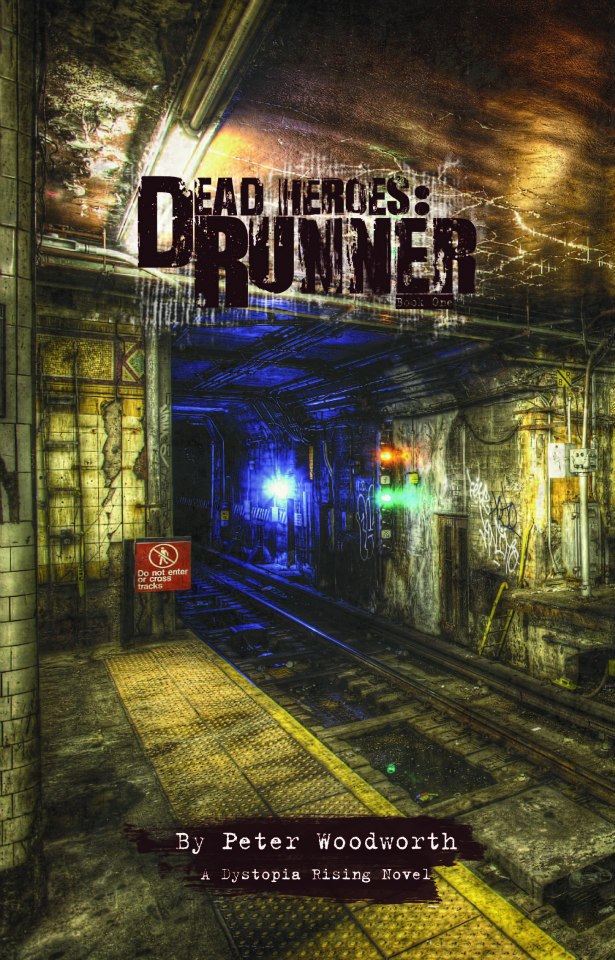
Not much to say today, except that Runner, my first novel and also the first book in the Dead Heroes trilogy of survival action in post-apocalyptic zombie wasteland, officially releases on 12-12-12. 

Here’s the cover: 

Image

The book will be available on Amazon as well as through the Eschaton Media company website, in both print and ebook formats. No price info just yet, but stay tuned. 

Did I mention I’m excited beyond words? 

Love & Hurricanes, Revisited

I was going through my oft-neglected blog this morning, and stumbled across this entry from not that long ago:

In the movies, it’s easy to know when someone realizes how much someone means to them. The music swells, the camera zooms, the dialogue slows down and the actor(s) focus everything on a single point. Realization dawns on them, and then they march off to war, turn the cab around on the way to the airport, put on a tutu and dance in their kid’s recital, etc. It’s simple, and even though there may be more obstacles in the way, we know that they will find a way to express it eventually.

In life, unfortunately it’s the bad more often than the good that pushes these moments. (I blame the lack of orchestral musical cues.) It’s another cliche that we only recognize what we love, what we value, when we are on the edge of losing it. But like folktales and good lies, most cliches have an element of truth to them. Those moments force us to put our hands against the mural we make of our lives and remember that for all its beauty, it’s still just stained glass, and on the other side the weather waits to smash it. It only ever takes a little pressure to bring it down around us. Even if, looking back, we realize we might not have been so close to the edge as we thought at the time, that never really matters. The knowledge we gain is all that counts.

That’s where I am tonight, watching the weather howling on the other side of all the colors and swirls. I love so many people, and I want them to be okay. I want to see the sun come up tomorrow morning and shine through that mural without so much as a single piece out of place. I love each one so much it just about breaks my heart.

I love.

On Monday, as the worst of the storm was hitting where I live, we managed to keep our internet connection for hours into it, and in what I suspect is an all-too-familiar modern moment I was obsessively refreshing Facebook, watching different status reports roll in from around the web. A lot of them were friends commenting on the gradual loss of power, internet and other services, while some were simply chiming in to say that they were OK and not to worry about, but the ones that kept getting me were the ones of people sharing stories and pictures of the damage being inflicted by the storm. Thanks to a ragtag network of friends and total strangers passing along files from all over the East Coast, I saw subway tunnels flooding, boardwalks breaking to pieces and houses going under water; I heard tales of downed trees, downed wires, and (most terrifyingly of all) downed construction cranes in midtown Manhattan.

All together, it was shocking and sobering and scary in a uniquely modern way – we used to fear this sort of disaster because it would take hours or even days to check on everyone and make sure people were OK, but now I realize what scared me was the idea that someone I knew might be posting one moment and gone the next, leaving that terrible final status update hanging in the ether, like being on the phone with someone the moment they get in an accident. I apologize if I’m sounding overly melodramatic here, but the notion crept up on me until I was well and thoroughly terrified. Fortunately my lovely wife was able to keep me together, as she always does, but it is a strange and terrible thing indeed.

When I was a kid, my parents always told me never to have your last words to someone be words of anger. I’ve tried to live by that as best I can, but now I’m aware of a different sort of parting exchange. In this world we now have to consider what those parting thoughts left online might be, and for some reason the notion scares and saddens me all at once. Be good to each other, everyone. 

The glass is thin, and the wind is always howling.


Pay to Play, the Gamer’s Edition

I have to admit, I’m actually kinda ticked about this new edition of the Star Wars RPG – and a bit disappointed in Fantasy Flight. We’re supposed to be excited to pay $30 for a Beta version of the game, just so we can then turn around and pay for the full version when it’s finished? No. I am not paying you for the privilege of playtesting your rules for you. Not even for Star Wars.

At least with Only War, they knocked the cost of the Beta off of your order if you also ordered the full rulebook at the same time – basically you paid $20 for the Beta rules, then got a $20 discount on the full version when it came out (though that was DTRPG and not FFG). That’s kosher, as far as it goes.

But this, this just feels exploitative. Especially when I’ve been part of Paizo’s open Pathfinder playtesting community for years and never had to drop a dime on it. I know some people would say that FFG needs to recover the cost of making the books, but in response I’d say, why print them in the first place? Put out the Beta as a pdf, charge a couple bucks for it (and maybe take that off the top of a full edition order as above), and the rules will still get just as tested, I guarantee. This just feels like an attempt to get hardcore Star Wars collectors to grab a “limited edition” before the game is even ready, and I dislike it intensely.

People who know me know that I hate the “OMG gaming companies just want to make monie$” gamer argument, because I know better. Gaming’s a business like any other; they have to make money if they want to keep making games, and don’t need to apologize for it. But that said, there’s still a legit way to do it, and a sketchy way to do it, and this feels sketchy to me. Fantasy Flight has built a reputation on putting on some extremely high quality tabletop rpgs, in addition to their already fantastic board games and other diversions – maybe that’s why I feel such a letdown to see this sort of business practice. 

Cry Havoc!

So I’ve been teaching a little course for the college’s civic arm called “Cry Havoc! Science Fiction Goes to War” about – appropriately enough – military science fiction. I’ve always loved the genre, but until I started prepping for the class I never really considered it as a whole, and now I wish I had always looked at it as a continuum instead of as individual books. I’ve known for a long time how much of an excellent mirror science fiction is when it comes to examining society, but when it comes to our outlook on war it’s perhaps especially potent. 

We started with Starship Troopers, which is one of those books that I simply re-read over and over again, at leas two or three times a year. As a writer, I am amazed every time at the construction of the narrative – it is perhaps the best example I know of how to do a S. Morganstern-ish “the good parts” narrative that moves freely among the best elements of the story while not wasting even a single word on unnecessary exposition. Author geekery aside, it also serves as a great meditation on the changing perspective on military conflict from the end of WWII through the Korean War, as we were confronted with a new and different kind of enemy we struggled to understand. A lot of my students had only been exposed to the movie before, so teaching them the book was a particular delight. Rico is a disarming narrator – a gee-whiz kid in power armor – and that made it easy to get them in the mindset for the rest of the fiction.

After that we tackled Forever War, and the mood in the room changed noticeably. Many of my students are older, and this remains The War for them, one which must be addressed carefully. A few of them served in it, and the others knew people who did. There was a quote I found when I was preparing the lesson on the book: “Vietnam remains the only American war about which one must apologize before speaking.” I couldn’t reliably attribute it, but the sentiment seemed right – while we had some fantastic discussions of Haldeman’s pro-pacifist attitude and the way he tackled scientific implications of concepts like relativity in his fiction, there was always a little tension, especially when the young folks like myself spoke up.

Orson Scott Card’s Ender’s Game, was next, another of those books I find myself re-reading on a regular basis, and while we looked at it as a product of the Cold War, it was also interesting to note that it marked a shift away from writers who had military experience to those that didn’t. It’s not a question of quality – you don’t need to have been a soldier to write strong military fiction, any more than you need to have been a homicide detective to write good murder mysteries – but there is a shift in what gets focused on. Card’s book is philosophical, with the technology largely serving as a backdrop to the action of the story, while Heinlein and Haldeman are much more interested in the nuts and bolts of soldiering, the details like kit and drills and chain of command that are a grunt’s whole universe. My students also struggled with the ages of the characters involved, but that’s normal – you have to keep reminding yourself how young they are to really feel the impact of what’s going on, and the parallels to the so-called “Cold War kids” generation are really powerful.

In a couple of hours, we’re finishing up with Scalzi’s Old Man’s War, and I’m really excited, mostly because it’s the first time I’ve taught it and I’m eager to share it with the class as it was shared with me. While I normally dislike heavy comparisons, as they imply a book can’t stand on its own, I really believe it combines the best military elements of Starship Troopers with the hard sci-fi edge of Forever War, all without missing the human component of the conflict (as Ender’s Game covers so well). Not only that, but it also manages some genuine humor and even an element of mystery, which all told makes for a very satisfying package. I’ve already heard some good things about the book from my students who’ve been reading in advance of this class, so I think we’re really going to have a great discussion.


Schrödinger’s Ending

[Author’s Note: This is a spoiler-light review of the Mass Effect 3 finale, the ensuing controversy and the nature of endings in general. What that means is that it contains very broad hints at the different endings, but no specifics; I made a solid effort not to give away anything concrete or even too terribly suggestive. If even that threatens to kill your buzz a little, though, please don’t read on. I’d hate to accidentally ruin your enjoyment the way a careless spoiler ruined some of mine before I saw the endings myself. Otherwise, enjoy!]

If you’ve had your ears open anywhere that picks up geek news lately, you’ve probably heard something about the controversy surrounding the end of Mass Effect 3. A number of fans have castigated BioWare for endings they felt were unsatisfying, even going so far as to start online petitions urging BioWare to change the current endings/create new ones. (This measure was apparently successful, by the way – BioWare announced that some form of change is coming, though whether it will be a patched ending, DLC or whatnot is unclear.) Others have bitten back against what they see as a a fan culture of entitlement, where players fail to accept the idea that not all stories have a super happy ending, not to mention that giving in to fan tantrums is not the best precedent to establish as far as business models go. If you want to hear what some video game experts have to say, PC Gamer has an interesting line-up of folks giving their opinion on this very topic as well.

About the only common thread that can be pulled out of this is that people really, really care about Commander Shepard’s story – there just wouldn’t be this kind of controversy otherwise. And it’s not hard to see why: Mass Effect 1 took a fairly standard concept about a small band of heroes battling a great evil and executed it in fun, innovative and most importantly emotionally engaging ways. While its formula has become a source of some teasing, BioWare’s patented branching stories, conversation wheels and crews of supporting characters to interact with are a stable model because they use them so well. It’s hard not to become attached to crew members, to try out different Shepards to see how different decisions affect the story. Mass Effect 2 then took that ball and ran with it so far it started playing a different sport, carrying over decisions from the previous game in meaningful ways, expanding on the universe, ramping up the stakes, digging deep into characters from the first game and bringing new characters and decisions in that added real weight to the story. (Well, except Samara. Jack may have been annoying sometimes, but at least she wasn’t dull, not to mention anatomically wince-inducing.) As the Empire Strikes Back installment of the series – building on a previous story and secure in the knowledge that there would be another following it – Mass Effect 2 took the opportunity to play a bit dark and dangerous, and rocked it. In prep for Mass Effect 3, I recently replayed the final mission from ME2, and I still get chills during the final rallying speech. It was, to properly employ an often overused word, epic.

Having finally finished the game and gone back to play through each of the endings available to me, let me give the short, spoiler-light version: there are three possible endings, at least that I’ve seen. Two of them are “normal” and one was available as a bonus because I’m a completionist who bumped galactic readiness to 100% and gathered all the war resources I could before the final battle, including arming several battalions of Girl Scouts, weaponizing Christmas music and equipping every bullet with its own miniature gun to fire while in flight. True to BioWare form, one choice seems to be offered as the “Paragon” option, one the “Renegade” option, and the bonus choice as a little bit of both. And to be honest, in their initial unfolding scenes, each of those felt right. Shepard’s choice is fine, I think – it’s the rest that’s a bit wobbly.

The problem is that after the immediate consequences of your initial choice, the endings all collapse into essentially the same cinematic, with the only difference between them being whether two characters appear or not. (Plus, after watching it several times, the writer in me has started yelling “Why are they even there? How did that happen?” louder each time.) Not only that, but you get very little in the sense of aftermath, especially for a story operating on such an epic scale. Leaving some questions unanswered is one thing, but leaving so many is quite another. At the end of Mass Effect 2, players agonized over knowing the fate of a single squad member, often restarting the final mission several times to try to get everyone out alive (or at least their favorites). At the very end, you got a chance to mourn anyone you’d lost, and see the survivors, count the people you’d helped. It’s part of what made Mass Effect 2 so effective – not only did it set the stage for Mass Effect 3 so well, it also made you feel like all the decisions you made mattered, from entire colonies down to the life of a single crew member.

That is what I think falls a bit flat at the end of ME3 – you don’t get that final look back over what you’ve saved, and what you’ve lost. Which means that all those tough decisions you’ve made along the way, particularly the really tough ones in the last game, don’t mean as much, because we don’t get to see what they accomplished in the end. To make matters worse, some of what we do see appears to be “take backs” – plot twists that neatly undo something the player has worked hard to accomplish or agonized over losing throughout the game. (Imagine if after all the blood and sacrifice and inspirational Tom Hanks speeches, Private Ryan was simply shot and killed in the closing moments of the bridge battle, and you get an idea of what I mean about how a “take back” makes the audience feel.) In a game that goes out of its way to resolve a minor storyline involving Conrad Verner, a comic relief character from the first two games and Shepard’s #1 super fan, the decision to leave huge stories and major characters undetailed is a bit puzzling to say the least. It feels a bit like the writers got lost at the end and just didn’t know how to wrap up all of the stories they’d been telling, so they took the path of leaving most of it unrevealed. Which might work, except all this emotional investment you’ve built up needs somewhere to resolve itself, and when it doesn’t have enough of an outlet, it turns to frustration instead.

It’s as though you’d gotten to the conclusion of the Lord of the Rings, with armies clashing and a ring poised to fall into a volcano, only to suddenly cut away to a single human soldier walking back to his farm and hugging his wife and children. On the one level, what a neat, close-up way to end the series. It’s implied that the forces of good won the day, after all, and rather than sweeping images of armies of thousands, a single person’s story can be that much more emotionally effective, putting epic events back on a scale we can relate to more easily. It could be part of a great ending, no question. On the other hand, if that’s all we get, we’re left with a trilogy’s worth of characters and storylines that are now stuck in a sort of emotional limbo, with no resolution to wrap them up. What happened to the hobbits? To Aragorn? To Gimli and Legolas? To Gollum? To freakin’ Gandalf? We may not need an accounting of every man of Rohan, but accounting for none of them? We’re left with Schrödinger characters, nether alive nor dead.

And, emotionally, it just doesn’t work.

Don’t get me wrong, I am normally a staunch advocate of letting writers tell the story they want, including ending it how they feel is best. A lot of people whined about the end of Battlestar Galactica, for example, but I was always quick to defend its creators – it’s their story, they get to tell it their way. Fans are free to bitch, and they do, and the fact is that no matter what ending a game or a series has, some nerds will always rage about it. You really can’t make everyone happy. I suspect that a lot of the fans complaining about “we didn’t get the ending we wanted” are frustrated that they don’t a flawless Hollywood action hero American ending. They can, to put it mildly, put on their big kid pants and shut the hell up. If they weren’t expecting sacrifice and loss, they really weren’t paying attention – the Mass Effect series has always been about making hard choices, from your decision on Virmire to the suicide mission to the very last battle.

At the same time, no matter who you’re trying to please, your ending needs to be true to its own story. I was prepared for the idea that Shepard might very well not survive Mass Effect 3 – when the annihilation of all civilized life in the galaxy is the threat, a heroic sacrifice is always on the table. (That’s not a spoiler, by the way. I’m speaking in theory, about heroic stories sometimes requiring heroic sacrifice. Breathe easy.)  The problem is that, regardless of whether Shepard lives or dies or turns into ice cream or puts on the Metroid armor or goes on to win “Dancing with the Stars”, right now the endings don’t do justice to everything that’s come before them. We can’t have closure about every single possible character, and I accept that, but we need more than what we’ve got right now. When I shed some tears about the loss of a crew member – and I did, especially for one of them, and I get choked up thinking about it even now – you’ve done the impossible, as far as writers are concerned. You’ve made me truly care about your characters. Bravo.

Just let me say good-bye to them, too.

Please.

Coming to Life

One of the best parts of writing – and not incidentally gaming – is when your character surprises you. You have an idea of where you think they’re going, they seem pretty predictable, but suddenly BOOM! They come to life, even if just for a moment, and tell you “Actually, I’d rather do X.” It’s a bit of a rush, though truth to be told it can be a little creepy too, because suddenly you realize that this person you created, who is entirely under your control, has just elected to go a different way than you intended. 

I know, I know, to some folks out there that sounds more like schizophrenia than creativity, but I bet the artists and the role-players are nodding. As my Creative Writing students will tell you, I am very much not a unicorns and rainbows kind of person when it comes to how creativity operates – it’s a lot more work than wishes – but this is one of the rare exceptions. Because honestly, when it happens, it really does feel a little bit like magic. The feeling that the character has gone from a fun creation to a real personality is pretty spectacular, especially because it tends to creep up on you. 

I think one of my favorite stories about one of my characters surprising me occurred about eight years back, when I was playing at Mystic Realms, my very first boffer LARP. It was a weekend centered around battling a giant monster, one that was rarely seen at the game and the subject of much legend and conjecture by those who hadn’t been among the few that battled it the first time. We had been warned of its impending attack, and the staff had done a great job ramping up tension as the town tried to prepare all manner of siege weapons, magical barriers and battle plans to have a hope of defeating it. It was also one of the rare few monsters that had a chance to possibly remove your character from play for a very long time, if not permanently, so the fear factor was unusually high. I was playing a character perhaps best described as a swaggering rogue, but beneath the wisecracks, I was rattled. I had no idea what to expect and I was really excited about what was going to happen.

On Saturday night, the word came down that the creature had been spotted, and the town rallied to battle. We marched into the woods with weapons ready, murmuring tactics in whispered voices and wondering what lay in store. Then we found it. Basically? Chaos. The monster was superbly created, a giant beast operated like a Chinese dragon, and along with its minions it truly gave us hell. (But not unfairly, something that made the whole experience worthwhile – it was never easy but never impossible.) Plans fell apart, desperate fighting erupted in a dozen spots and the woods were alive with fear and danger. I’ve been LARPing for a decade and a half now and this is definitely one of the scariest moments in memory. When we finally took the beast down after hours of hard fighting, the town erupted into genuine cheers – it had really been a thrilling experience. My cocky little arcanist made jokes right along with everyone else, and as we started back to town, it seemed like business as usual, bantering with friends.

Then we were crossing the bridge over the lake, lit up like noon with a full moon in the sky, and without quite knowing why I sat down at the edge, dangling my feet over the side. And I started to cry – not sad tears, but tears of joy. I’d survived, and quite suddenly I realized that my character hadn’t planned on making it back that night. He’d figured he was dog meat, a feeling reinforced several times throughout the fight as I was nearly killed several times over. But there it was – my swaggering, wisecracking, never-show-fear character was glad to simply be alive. A friend of mine sat down and put her head on my shoulder, her normally talkative character also quiet, and we just sort of sat in happy silence for a while.

I suppose in the telling it doesn’t sound so dramatic, but in the moment, I was amazed at the fact that this character – who was usually fun but a bit two-dimensional in his wisecracking nature – actually had an inner life of sorts. He valued his life, and he was simply overjoyed to have made it out of such danger alongside his friends. I didn’t underestimate him quite so much after that, and it actually turned into the core of a superb roleplaying experience later on, a motivation that made him a lot more fun to play. 

So what are your favorite moments of characters coming to life in unexpected ways, whether in gaming or in art?

One If by Jeep

So this past weekend I attended Dreamation, one of Jersey’s longest running cons, and despite having arrived late on a Saturday I was able to crash some great games. The first was a tabletop session of Apocalypse World, D. Vincent Baker’s badass post-apocalyptic game, where a great table made for a fun afternoon of misfit adventures. I submit to you that if the idea of a chainsaw-wielding fat man in a business suit, dinosaur bone armor and a wooden Zulu mask he calls The Duke doesn’t make you giggle even a little bit, well, it might be time to blow the dust off those D6s.

As much fun as that game was, the real highlight of the con was Under My Skin, a fantastic LARP about relationships, boundaries and the power of new love. The game is inspired by the Jeepform school of LARP design – usually just called Jeep for short, which I’ll do here – which stresses freeform storytelling, emotional development, and personal drama over traditional rules and action-adventure style physical conflicts. I was fortunate enough to have the game’s creator, Emily Care Boss, running the session – despite our tight time constraints she kept us focused and centered throughout. Eight players rounded out the group, with LARP expert and blogger extraordinaire Lizzie Stark in attendance along with two of my fellow Apocalypse World players from that afternoon, a good friend’s super cool boyfriend and a few total strangers. All in all, a nice mix of familiarity to work with for a con LARP.

[Author’s Note: The rest of this post is part session review, part game design discussion, and it got very lengthy. If you enjoy that sort of thing, read on – if you don’t, you can skip to the last paragraph for a capsule review. Enjoy!] 

Character Creation Basics

As we sat down to create characters, we first talked a bit about ourselves, our boundaries, anything we thought might be helpful for the group to know. Players were encouraged to share freely but not required to do so – there’s no checklist for what an Under My Skin group needs to know, which meant some people shared stories, others preferences, and a few not much beyond the basic details. We had a diverse crowd, too, which was interesting to factor into the process – going around the table we found a couple of married folks, a polyamorous triad, a single person, a couple of open relationships, and a couple of monogamous ones. Physical boundaries were set too – the game defaults to casual social touching outside the bathing suit area, but players could potentially set other limits if they liked, provided they respected the limits of other players first.  So if you don’t have a problem with light kissing but I do, then we’re not kissing, or perhaps we’ll compromise with a theatrical “thumb kiss” or the like. Throughout the night, different pairs of players did little micro-negotiations of the “is it OK if I put my arm around you in this scene?” variety, but that’s about the extent of the contact that went on, or really was expected.

Right there one of the persistent myths I’ve heard about Jeep relationship games got busted, which is that it’s basically a front for gamers who just want an excuse to make out with strangers. We had a pretty progressive table in terms of relationships, I’d say, but no one even broached the subject of going past the usual touch limits; the most contact in game was some hand-holding, a couple of thumb kisses and some 7th grade “arm around the shoulder on the couch” action. I suppose you could say that we were just a restrained group, and that another game might have been wall-to-wall naked gamer party parts, but really, that could be true of any LARP if that’s where the players want to take it. I think it has a lot more to do with the desires of the players than it does with the game itself – I’ve been to Changeling LARPs with a lot more sexy touching than this session of Under My Skin had. If anything, the fact that we were taking on relationships and emotional issues made people a little more cautious, not less.

Couples & Friends

For a game with no “rules” as such, simply a structure to the session events, character creation took a surprisingly long amount of time – we began by selecting a “core issue” our characters that would help focus our roleplaying, such as guilt, honesty, loneliness, insecurity, etc.; the group then offered suggestions about areas where this issue might arise in our lives, such as work, relationships, religious beliefs, intimacy, you name it. Once we had those, we tried to get a sense of who our person might be, how those factors might have shaped them. I looked over my character’s core issue – honesty – and the areas I’d been given – taxes, the workplace, relationships, intimacy – and came up with a salesman one step ahead of a scheme falling apart around him, a smart young guy who’d left his old job under the cloud of a fraud allegation and was now hawking a second rate product as hard as he could before his customers caught on. I decided that this guy, Nathan (“hey, just call me Nate”), had a problem with honesty because he was so good at working around it, telling people just enough truth to be believed and get his way while leaving out the stuff they wouldn’t like so much. He wasn’t a really bad guy, in the sense of being truly abusive, just morally lazy as hell and seldom there when the fallout of his lies hit – he always tried to move on before the consequences caught up. I didn’t want him to be a caricature, but I definitely saw him on a downward swing as the game began.

After we’d had some time to think on our characters, we paired off – three couples and a pair of best friends. As it happened, I was paired with Lizzie Stark’s character, Rita, a disappointed actress and sometime teacher. We got together and talking about our characters, decided that our couple saw themselves as the model of a very modern, enlightened relationship – no marriage for us, no sir (and how’s that religious guilt working out for you there, Rita), we’re allowed to see other people, we talk all the time about our relationship, etc. So we rated our Intimacy high, since we communicate often on relationship issues, but gave ourselves a low Passion score – for all our talk, the two of us aren’t really doing well due to our mutual disappointment in our careers, and so the physical side of the relationship had suffered, priming us both for the arrival of a New Flame, the game’s destabilizing element. We picked a few things we do together – pottery class and oh-so-hip restaurants – and our Lines, the limits we do not want our partner to cross with someone else. Going over a Line is considered a serious betrayal, even if it might seem minor (like “don’t go to that restaurant with anyone else”) and so are the fuel for a lot of the drama of the rest of the night. The default Line is “have sex”, but it can be changed, and you may have up to three total. After talking about for a bit and refining our Lines for maximum dramatic value, we finally agreed that my limits for her were heterosexual sex (isn’t Nate so enlightened!), long romantic phone calls, and telling intimate stories, while hers for Nate were “sex with someone I know”, long romantic phone calls, and dishonesty about what he was up to. When those were settled, we also got a pair of Friends, two other player characters we were casually connected with. We sat down with them and worked out some details about our mutual past; I got Steve, an old-coworker I still played online games with, and she got Naveen, a travel writer she met while shooting on location a while ago. We had a few minutes to work out some friendship details and we were good to go.

One of the things that knocked me out about Under My Skin was how much I knew about my character after this process, how well I thought I could inhabit him even after just an hour or so. Another myth about Jeep took a hit there, which is that Jeep games are full of tortured characters and focus solely on Deep Angsty Melodrama. While your core issue will be the focus of your dramatic path over the course of the game, it is not required to be a horrible flaw – I could’ve taken “honesty” and been painfully honest instead, a nice guy who maybe tells the truth when a simple white lie would be better at times. Likewise, your areas give you some latitude to interpret your issue – you can choose to be free of your issue in some of them and suffer in others, to give it some contrast. And the Lines, well, damn. Having rules that your partner is never supposed to break, in a game where it’s guaranteed that they’re going to fall for someone else? That is the stuff drama is made of, ladies and gentlemen. You could practically hear the hearts cracking already.

New Flames

Once couples and friends had been sketched out, it was time for the tipping point. The New Flame is the person your character is about to fall for (and who will likewise fall for you), as well as the one random element in the game – in this case, we rolled on it. This represents how you really can’t predict who you’re going to fall in love with, or when. It also prevents things from being too neat right off the bat – unlike your partner and your friend, you don’t talk to your New Flame before play begins. (You know who it is, but that’s it.) You’re required to fall for each other – one of the only truly required things in the game – but you’ll have to figure out how that happens in the moment with each other. This is less difficult or nerve-wracking than it might seem, as remember it’s a mutual attraction, so you’re both working to build chemistry, and most of us found it a lot of fun because when both people are working to make it happen, it’s a lot less difficult than if one person is unaware or resistant.

Note: You might think, as I did, that it’s not much of a game about relationships if you know in advance that your starter relationship is doomed. However, this is a misconception – all that’s guaranteed is that your character will notice someone new and face some hard decisions about where they want to take these new feelings. Some of our couples managed to hold it together and stay as they were in the beginning, others endured but changed their relationship to accommodate these new feelings, and some outright imploded. So it’s not a certainty that your original couple will collapse, just that they’re going to have questions to confront.

Game Play

After all that, Emily went over the schedule with us. Under My Skin keeps dramatic tension building by having a set schedule of “stages”, which feature scenes that shape the relationships we’re going to be exploring. Most scenes are just two players, with the other players acting as an audience; each pair of players has a turn onstage acting out the same kind of scene. When everyone has had a turn, the next major stage on the schedule begins. For example, the first stage is each of the starting couples somewhere on their own, and helps establish the baseline for each relationship (including perhaps some hints of hope or problems). So for our game, first Steve & Jo did a scene, then Naveen & David, then Rita & Nate, and finally Andi & Amanda. After everyone had had a turn, we moved on to the next major stage in the schedule. We were under time constraints due to the con, but in general players are encouraged to take a comfortable amount of time to reach a dramatic moment with their scene – you are politely encourage not to monopolize (and Emily watched the clock for us all), but there’s no set time limit as such.

Anyway, it starts with the baseline scene, and then a big group scene where everyone is onstage at once – in this case, the group decided to make it a house party at David & Naveen’s place. This is also where the New Flames meet, so while couples tended to enter together, people quickly moved to making conversation with their new interests. I was concerned about how this would work – I wondered if it would be a little rom-com cliche to try to play out sudden attraction – but as my previous comments indicate, it was surprisingly believable. After all, you’re trying to impart a sense of attraction, not necessarily go crazy right off, and so it was a very charged scene full of leading questions, invitations for later contact and the like. Nate met Andi, his new crush, and they immediately geeked out, agreeing to a Warcraft meet-up later in the week. Innocent, right?

From there, the composition of the stages alternated – we saw the couples together again, now struggling with their new feelings for other people (some discussing it openly, some not), then the New Flames meeting up for that first big scene alone together, back to the couples for more reaction and processing. Due our time constraints, unfortunately we could not really use Flashbacks, one of the techniques that is normally employed to flesh out the different stages. As the name implies, Flashbacks are very short scenes involving two of the characters in a scene, used to give some context, focus in on a particular sticking point and the like. Flashbacks can be called for by the moderator, as Emily did at one point to see what a couple was like on their honeymoon, by the players in the scene themselves or even by the rest of the players in the audience. We got a taste of it, but sadly not much more, though it did show a lot of promise, and I’d love to see how it could be employed in games with more time to make use of it.

Some of you are probably thinking that you spend an awful lot of time passively observing Under My Skin as part of the audience – after all, at each stage we had four couples that each needed a scene, and barring a Flashback or the like you’re not going to be in more than one of them. However, this is where the character creation really shined – outside of your own character, you have a Partner/Best Friend, a Friend and a New Flame, all folks you’re invested in due to the time spent working out relationships and building romances. Which means that even when you’re in the audience you generally have at least one person you’re invested in who’s taking part in a given scene, and so trust me, you pay closer attention than you might think. It was like watching the best episodes of a Joss Whedon show – the slightest bit of contact between lovers made people inhale with tension, a cutting comment might elicit groans or gasps from the crowd, a faint smile cause people to almost clap with excitement, that sort of thing. It’s a brilliant way to handle having players be in the audience so much of the time, and worked very well – we were a con game of mostly strangers running late on a Saturday night, with parties and other games waiting in most instances, and yet nobody was texting, yawning or reading their new rulebook.

The one thing you don’t do is stop for analysis – in Under My Skin, you talk a lot before play and do a good long debrief after, but as much as possible you try to keep the action rolling once the game begins. This is another point in its favor, I believe. A lot of the fun of the game is in the uncertainty of where things are heading while it plays – you might have a brief whispered conference before a scene, but that’s it. Too much thought lets people start constructing much neater, more predictable narratives, and I think that would spoil a lot of the fun.

Angels & Devils

The climatic stage of the game is known as Angels & Devils, and features the New Flames meeting in private for the last time in the game. This is where they will decide whether or not they’re going to cross the Lines their partners have set for them, and what that will mean. The twist is that each character has two players hovering nearby, one portraying the Angel (telling them not to cross the Line) and the other the Devil (telling them to run over the Line with a monster truck).  As a final twist of the knife, the player of the character’s Partner is automatically one of the two (their choice), so they will have a voice in their Partner’s decision process. (I should note that by default, the Angel/Devil roles are assumed to be more voices of conscience than actual voices in a character’s head or supernatural entities.) These players are encouraged to be as vicious or inspiring as they like, so long as they don’t upstage the principal characters in the scene, and they were a lot of fun to watch. I personally couldn’t quite get the hang of how to approach this role, but I was definitely in the minority – many of the comments made were absolutely heart-wrenching, and nobody had an easy decision to make. For instance, Nate seemed pretty definitely doomed going into the scene, but had an Angel who made a number of compelling comments, to the point where he was wavering and almost took the high road … until his New Flame openly made a play to seduce him, and he crumbled. Still, I walked in thinking it was just a matter of time, but my Angel’s player really spoke to his good side, making it a lot tougher than I thought it had been.

After that, there’s a final group scene, where the chips fall and we get to see public consequences for private behavior – Nate almost talked his way out of his infidelity with Rita (his half-truths coming in handy again), until Rita’s own New Flame heard about what happened from her best friend (Nate’s hookup) and it all came tumbling down. He ended up being tossed out after having a drink thrown in his face, but most of others were a lot quieter in their denouement, with some couples drifting apart, others setting new rules and so on. We sat down to a final debrief and talked about where our characters likely wound up, asked questions that hadn’t been answered, talked about our out-of-character reactions to events and passed around compliments for the scenes that we’d been most captivated by. It lasted far longer than any after-action I’d done at a con game, and even after 40 minutes or so the players had to be dragged out the door, we were having so much fun analyzing it. I know it sounds like an exaggeration, but the characters and relationships had enough complexity to sustain it for that long, and I was one of the ones dragging his heels most deeply.

Final Analysis

I came into Under My Skin with an open-mind, not inclined to believe the lurid tales of Jeep weirdness I’d heard from some quarters but also not convinced that Jeep would be the amazingly cathartic, therapeutic experience some of its devotees raved about. In the end, I walked out more a convert than anything else. It is a wonderful example of a game designed to explore a specific topic – relationships – and constructed to allow players to do exactly that on a level not often encouraged in other systems. Considering the amount of time we had to build our characters and their stories, the game was extremely effective prompting that most elusive of gaming conditions, namely getting everyone to really care about their characters – I sympathized with poor idiotic Nate more quickly than I thought possible, and both creation and gameplay really contributed to that experience.

So, could Under My Skin push some people’s buttons in a bad way emotionally? Certainly. But just as boffer LARPs write rules and guidelines to prevent physical injury when played properly, Under My Skin is designed with enough safeguards to make emotional trauma equally unlikely. There’s no one standing over your shoulder commanding you to confront your deep-seated real life issues – you only have to work with what you choose to bring. And just like boffer LARPs give you a visceral action-adventure thrill you really can’t find in other LARP forms, by making relationship dynamics its sole focus Under My Skin gives you an emotional journey more focused, intense and rewarding than most LARPs.
Entitlement

One of the trickiest concepts I try to get across in my English 102 sections is that the truth is not democratic – that is, just because something is popular doesn’t make it so. (Of course, lack of popularity doesn’t indicate truth either, though those Flat Earth theorists keep chugging along anyway.) A great number of people can be wrong just as easily as a small number. It’s counter-intuitive at times but absolutely vital to developing critical thinking skills, which are sorely lacking in public discourse at the moment.

A companion and even trickier concept is that opinions and judgments are not the same. (Short version: Opinions relate only to you and your experience, judgments are when you make statements based on certain criteria that draw broader conclusions.) Opinions really are all equally valid, because they’re only relevant to the person in question. Judgments must be based on criteria, which means it is in fact possible to prove them wrong, or at least challenge their validity. People mix them up all the time, and it’s a bit of a disaster, because while everyone may be entitled to their opinion, they are not in fact always entitled to make a judgment.

The trick is the phrasing – a lot of opinions are expressed as judgments. For example, if I say “That’s the best movie ever!” it’s likely it would be more accurate to phrase it as “That’s my favorite movie ever!” The best movie is a judgment – it would need to be based on some sort of criteria such as writing, cinematography, acting, you name it. Even if it’s not scientifically measurable – otherwise the Oscars would be determined in a lab – there are still concrete factors that can be weighed, and I can be called upon to either specify my criteria or give up and admit it’s really just an opinion.

I’m not saying that people need to vigorously police their language, just that if you find your judgment challenged and you can’t produce criteria to support it, or your criteria are found to be provably inferior, you should probably admit that it was really just an opinion and concede the point.

Gaiman’s First Law

“Picking up your first copy of a book you wrote, if there’s one typo, it will be on the page that your new book falls open to the first time you pick it up.” – Neil Gaiman

I’ve heard several versions but I like that one the best, so there you have it. My copies of the Gimme Shelter anthology arrived today, and I have to say, they look awesome. Bright cover, tight binding, well laid out – quality stuff, no question. Of course, as I suspect many authors do, I flipped right to my story and read through it. It sounds narcissistic, I know, but I bet my fellow authors out there are nodding, and probably not for the reason you might think. It’s not an ego trip, exactly. It’s more because deep down, no matter how many times you’ve been published, part of you never quite believes that it’s really happened again. That someone else thought those silly ideas from your head were worth the effort and expense of putting down on paper and showing to the world. We skip to our stories to tell ourselves Yep, it actually happened. And if we’re being really honest, it’s always accompanied by a big, goofy grin.

Of course, in the midst of the joy of a new publication Gaiman’s First Law crept right up and socked me. I found a sentence structure mistake almost immediately, which made me wince, but even worse, I found a continuity error later on, and I actually groaned out loud. Let me make one thing very clear before I go on: Neither of these mistakes should be attributed to the anthology’s very capable editor, J.R. Blackwell. Truly. Both of them land squarely in my court, because in my infinite authorly wisdom I decided to send her an “updated” file about 2 hours before the absolute final publication deadline, and both mistakes derive directly from some harebrained last-minute changes I made. Not to mention that I assured her I had gone over the story thoroughly before sending said last-minute changes. So I don’t want anyone to think that the fault lies in her, or the stars – just myself. Blame her and I guarantee you will answer to Dr. Mercury for your slanderous falsehoods. Trust me, not the best possible outcome. So keep the blame on me where it belongs. Got it? Groovy.

That said, there are few things that make an author feel quite so low as realizing what you sent out isn’t quite so perfect. Of course the trick is that it’s never perfect, really. Even it’s grammatically perfect and devoid of continuity or character lapses, even if it’s polished to a technical and artistic shine and beloved by fans the world over, speaking as an author you will never see it that way yourself. There will always be tweaks, be turns of phrase you wish you’d handled better, descriptions you could’ve juiced a bit more, you name it. Like the painter who sees the single errant stroke or the composer who hears the lone errant note, that tiny imperfection – real or imagined – will never go away.

As I’ve gotten older and possibly more experienced at the writing business, I’ve come to see this as more of a positive than a negative. Having read and given feedback to hundreds of writers as an editor and a professor, authors who don’t feel this way at least a little bit tend to produce pleasant but fair material at best, and self-satisfied train wrecks at worst. A bit of agony over the possibility of imperfections is a vital part of the creative process, I think. It keeps an author honest, keeps them searching for ways to improve their work, even if it’s just a single descriptive word here or a single rephrased statement there. That’s what Gaiman’s Law is really about, I believe – it’s not just about finding actual errors (though it often is), it’ about seeing things you wish you could have done better, the things that might not seem to be errors to anyone else but feel that way to you.

Of course, the other part of this obsession with improvement is the maturity to know when to step away and call it done, and accept whatever imperfections might remain. I’ve mentioned this in earlier posts, but I think an artist who cannot let go of their work is one of the saddest things in creation. In my time as a professor I’ve seen a half-dozen notebook novels, spiral-bound wonders packed with plot and character and history and maps and sketches and every other element to bring a fabulous world to life, yet so-called because I doubt those words will ever leave them. The authors, uniformly and without exception, always tell me that the story “isn’t ready yet.” I hope that some of them will finally make the leap but I know that most of them never will, just like the garage band whose album is never ready, or painter that never shows their work. Part of being a professional or even a dedicated amateur is knowing when you’ve honestly done your absolute best, handing it away and moving on to the next project.

It makes those errors just a little easier to live with, in the end.

Gimme Shelter released!

As I mentioned in my last post, I contributed a short story to Gimme Shelter, an anthology of zombie-related fiction inspired by the amazing Shelter In Place game. The story is called “Lions”, and it’s a look at the lengths a father will go to provide for his daughter after their world falls apart. It joins fiction by such amazing authors as Chuck Wendig, J.R. Blackwell, Jared Axelrod, Mur Lafferty, Filamena Young, PJ Schnyder, and many more talented folks. Some are funny, some are tragic, some are full of kickass action, and all of them are chock full of zombies. What’s not to like?

You can pick up Gimme Shelter at the Galileo Games website, in Kindle, pdf and print formats. I prefer the print format, but hey, whatever works for you is good for me so long as you give it a read. Seriously – there’s something for everyone in there. Check it out!    

Fair Escape

LARPing Thoughts from a LARPer Fair

Whatever

TURN THE VOLUME UP

I'm Josh Harrison

I go where no ordinary rabbit would dare.

Not Quite Literally

Musings. Teachings. Ramblings.

J.R. Blackwell

Writer and Photographer

Music and Zombies

Musings about life and living

Agnostic, Maybe

the neverending reference interview of life

Final Girl Support Group

Put down the chainsaw. Have a donut. Let's talk horror.

Design a site like this with WordPress.com
Get started