Latest

Gimme Shelter

[Author’s Note: In the interest of full disclosure, Shelter In Place co-author J.R. Blackwell is a friend of mine – she even took my wedding photos! – and I contributed a short story to Gimme Shelter, an anthology of short fiction that was released alongside the game. So I may be a bit biased, but as if often the case when I’m a bit biased in my blog, I don’t particularly care. That’s the beauty of a personal blog. Still, take it with as much salt as you need.]

It’s been a little while since I had a chance for a proper update, so I thought I’d kick things back off on a positive note, with a review of one of the best LARP books I’ve read in a long, long time.

I’ve often wondered what the proverbial “next big thing” in LARP will be. Deep down, I suspect the answer will come when ARG becomes more widespread and viable, but until then, I think regular pokey old non-AR games still have surprises for us. In boffer LARPs, games like the post-apocalyptic zombie madness of Dystopia Rising* have broken away from the “strictly fantasy” model that has dominated that subgenre for so many years, allowing players to see what boffer can do with other settings and expectations. In parlor LARP, Jeepform is pushing the boundaries of what games are about and what players should seek to explore, not to mention giving them new tools to explore these different kinds of stories. And then there’s something I’d call playground LARP, and which brings me to the original purpose of this review: the wonderful little game called Shelter In Place, and why you should shake up your next office party or family reunion by playing it there.

Here’s a link to Shelter In Place on Indie Press Revolution.

OK, first of all, click on the link if you haven’t already and check out the wonderful cover art by the inimitable Daniel Solis. If that cover doesn’t immediately scream “BUY ME I’M AWESOME” you might want to check your, uh, eye-hearing. But as you might expect, it’s the game inside that is worth the rest of your $20.

One of the commonly-held tenets of Jeepform is “Restrictions foster creativity”, and that’s pretty much the philosophy behind Shelter in a nutshell. (Not that Shelter is a Jeep game, before I get angry messages from LARP enthusiasts, I’m just saying the expression is apt here as well.) While there are some fun twists that veteran groups are encouraged to drop in to keep the game fresh, the basic game uses the same premise each and every time: There’s been a zombie outbreak, some humans have holed up in a (fairly) safe place, and in an hour – or less! – either the humans will be rescued or the shelter will be overrun and all the humans slaughtered. The clock runs the entire time, with no rules that pause the action or otherwise mess with it, and it’s a hard limit – if you’re not rescued when that final minute runs out, you’re zombie chow. No pleading, no exceptions.

The twist? Scattered outside the shelter are materials essential for rescue, in the form of parts for a broken radio transmitter that needs repairing, as well as a number of other helpful items such as weapons, medical kits, food and so on. So you’re gonna need to leave that shelter, and that means you’re going to need luck, and a bit of strategy, and definitely some speed if you want to survive. Each tool has a single, specific purpose, with game mechanics that are quick and easy to understand.

For the players, there are a set of pre-generated roles. (No fuss about character creation, and the game has already been balanced in advance!) Each survivor has a specific and unique skill, with a number of “essential” roles required to run the game and then “optional” roles to add some spice if you’ve got more players. The roles are broad enough to be easily be grasped and taken on by just about anyone, while unique capabilities make everyone feel that they have something to offer. Likewise, they’re given some basic motivations in the form of bonus Goals, but otherwise left entirely for the players to flesh out as they see fit in terms of personality, backstory and so on.

The game itself is divided into three acts, with the zombies gaining more power each act, making the use of tools and tactics increasingly important as time counts down. Act transitions are triggered either by time or the completion of certain goals, making the game’s timetable surprisingly flexible for a baseline one hour limit. It’s also designed to be played in two runs at a time, with the players switching sides after the first run so that humans become zombies and vice versa. So everyone gets to experience being hunted as well as doing the hunter. And any humans that fall to the zombie horde early on simply swell their ranks, becoming more recycling enemies for the survivors to face.

Which brings up the combat mechanic, which is an adapted version of the game pretty much every human being knows – tag. To start combat, you tag another player and count loudly to three. Everyone who wants in must tag a target before the three count is over. The parties involved compare a simple set of numbers, and that’s that. No time-outs, no retests, no funky mechanics, just a bit of quick small-number addition and you’re on your way again. Defeated zombies recycle after a minute, while of course injured humans become another terrifying complication for their friends. I’ve played a lot of games that try to be as “real time” as possible, but aside from boffer games with real weapon combat – and even some of those indulge too much in pauses and description – most of them fail horribly under pressure. By contrast, these rules are quick, fun and completely without room for interpretation or confusion, making them absolutely lightning fast with even just a little bit of practice.

That’s why I called this a “playground” LARP, by the way – it’s not an insult, and certainly not meant to suggest that there’s something twee or overly precious about the rules. It’s because this is about as close to a playground game you can get as an adult without someone calling Chris Hansen, the sort of games that had the simplest rules you can imagine, and yet you can play over and over for hours on end without getting tired of them. That’s a major part of the charm of Shelter, as reinforced in its pages by its adorable mascot Fred, a lovably brain eating zombie – it is a simple premise executed without pretense, a great little idea allowed to be exactly what it wants to be without anyone mucking about and making it overly complicated.

Of course, as I mentioned previously, the book includes plenty of twists to spice things up. You can introduce unusual characters such as werewolves and cyborgs, or special enemies like evolved zombies that can talk or move at full speed, the better to close the distance on unsuspecting survivors of course. The book also gives plenty of tips for first-timers and fine-tuning, so that an experience most gamers dread – the Unknown First Session – actually becomes as much fun as the fifth or fifteenth or fiftieth. For instance, it notes how to create a proper shelter, notes that close quarters such as tight hallways and office cubicles tend to favor zombies (easier to corner or ambush people), and gives important safety reminders such as discussing the difference between shambling, walking and running when it comes to making sure players and scenery don’t wind up in pieces. All presented in the same clear, amusing tone as the rest of the book.

In fact, such is the easy tone and simple clarity of the book that I almost feel like I’m doing it a bit of a disservice with a complicated review. It all boils down to the basics: Humans, zombies, props, Tag!, clock, go!

Just don’t forget to bring plenty of brains water, because chasing down your close friends and devouring them is definitely going to be thirsty work.

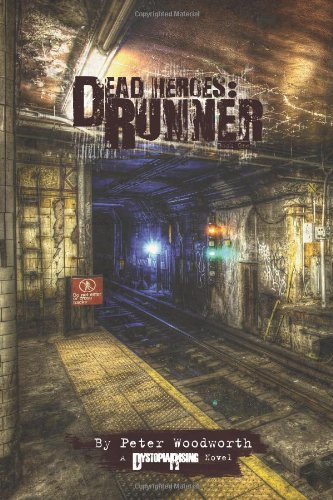
*Author’s Note, Part II: I’ve also done work for the fine people at Eschaton Media, the parent company of Dystopia Rising, not to mention brought entirely too many cupcakes to at least one of their houses. Throw more salt on the pile if you like.
Fear Agents

One of the greatest things you can do in a game is spread fear.

I know, I know, I sound like the Scarecrow, but I’m serious! This is especially true at LARPs, but it’s often worthwhile at tabletop games too. Quite simply, it’s very easy for players to put on the mask of the superhero, fearing nothing, sneering at every villain, never even the slightest bit daunted at anything the world throws at them. I’m not saying players can’t be heroes – it wouldn’t be any fun if they ran away at the slightest threat – but being utterly fearless all the time is actually a lot more boring than players realize. Why?

Quite simply, fear is fun.

I mean, think about it – one of the hoariest old cliches you hear about war is that bravery isn’t the absence of fear, it’s being afraid but taking action anyway. (Pain is similar in many respects, as players who routinely ignore wounds and really role-playing their injuries totally miss out on.) In their desire to be completely immune to any sort of negative condition and/or never show any kind of fear or weakness, all too many players inadvertently cut themselves off from the basic element that makes adventure so much fun in the first place. Without fear there is no danger, after all, and without danger you tend to have lukewarm adventures at best. Feeling that moment of fear and struggling to keep it in check makes the ensuing moment of heroism that much more fun, much more dramatic – instead of just taking on the external challenge, you’ve also overcome a little more of an internal challenge as well, something that makes your subsequent actions that much more meaningful.

I mean, playing a horror game and refusing to be scared is like watching a horror movie with the lights on and Benny Hill music playing – if it doesn’t scare you, whose fault is that really? You never gave it a chance. So instead if you want the full effect you do it right – lights out, huddled together with friends or sweethearts who aren’t afraid to let out a yelp or jump in fright if the story scares them.  Gaming is similar, just on a different scale. Yes, the writers and the staff still need to conjure up some suitably terrifying scenarios, but if you’re not open to letting them frighten you in the first place nothing they do will ever work. And then you’re robbing yourself of a lot of your own fun. You wouldn’t pay money to see a horror movie and then put in earbuds and do nothing but play Angry Birds on your phone the whole time, so why would you pay to play a horror game if you’re going to block out all the best parts of the horror?

Think of this way: When you’re not afraid of anything, nothing is scary; when nothing is scary, enemies are just obstacles, not threats; when enemies are just obstacles, the game becomes more like manual labor than high adventure as you trudge from one task to another until you “fix” your setting every session. Plus apathy is all too contagious as well – I’ve heard veteran players complain about how nobody acts afraid of monsters and dangers at a game, only to watch them display absolutely no fear of anything in their own encounters. Where do you think new players learn it from?

So how does one go about calling up this sensation? For me, the easiest way is to forget the numbers and the game mechanics for a time and just let a little fear in, the kind your rational mind normally shuts out. At weekend boffer larps the simplest solution is to just stand in the dark for a moment, at the edge of the wilderness if you can swing it, and just let that primal fear of the dark start to creep in around the edges. Most of the time adults have learned to throttle it back, and with good reason, but you’d be surprised – or perhaps not – at just how close to the surface it still is if you actively go looking for it. Take a moment and push away the knowledge that you’re at a campground with a bunch of other people in funny costumes, and imagine just how dark and terrible the nights are in the world where your character lives. Even if it mostly recedes after, you’ve let in that little bit of fear, and it makes a huge difference.

Don’t be shy about creating and exploiting these elements in your backstory either. Even if it’s only a narrow range of fears, adding those little crisis points and mental stumbling blocks gives you something to add some interesting depth and spice up what might otherwise seem to be ordinary encounters. (Hey, even Indiana Jones was afraid of snakes!) Plus, when you express fear, even just a little bit, you add tension for the other players in the scene as well – if no one’s even a little afraid to charge that zombie horde or mercenary hideout, well, then it’s really not that scary, is it? But fear’s contagious, and when you help spread it, that extra tension adds a thrill that just isn’t there if you calmly walk over and beat up your enemies. So share it, revel in it, run with it. Panic if you think you should, freak out a bit, remind everyone that things do go bump in the night in this world – and maybe they should be running too.

In the end, fear is another tool to use to help make your game world feel more real and in turn heighten your game experience. So don’t forget to let  the cracks show in your character’s facade now and then. Everybody is afraid of something, no matter how deeply it’s buried, and perfect characters who never break down or never get even so much as a cold sweat are just that much less relatable. Especially with nonhuman characters, fear is one of the universal feelings that can bridge the gap and make them something the audience can relate to in a big way.

So don’t back away from it – embrace it. Don’t be shy about showing your fear, spreading it to others, and see where it takes you, your characters, your games.

Be a fear agent.

Trust me.

Unconventional

I love going to cons.

I’ve been to all kinds of conventions – comics, gaming, costume, professional, you name it – and even though the atmosphere changes, the vibe usually doesn’t. Gathered in one place are a whole bunch of people who, as a rule, are crazy about a particular subject. I mean, absolutely nuts about it, and they’d have to be, as unless you’re a local who can afford to day-trip it, a con usually involves a couple hundred bucks in registrations and reservations and the not-inconsiderable logistics of modern travel. And that’s before you even start to consider what you’ll drop in the dealer’s room. Right off the bat, you’ve generally weeded out the idly curious, which means you’ve got a pretty fired-up population. So what do you do with them? Turn them loose for a weekend and hope that the hotel chain can survive it.

And that’s pretty much what happens – you let them go all-out with their particular passion. Seminars, demos, lectures, Q&A, workshops, instructional sessions, you name it. Not to mention all the fun that attendees can come up with on their own on the side. It’s a pretty amazing feeling to be in a crowd of people and know that, on one level or another, you have something specific in common. It creates a sort of giddiness in the air, a reflexive smile that’s shared by almost everyone you see as they walk around. Pretty intoxicating, really, the feeling that you can walk up to almost anyone at random and start up a conversation about a subject of mutual interest. Though be careful about that part, because even at a con, manners still apply, as I’ve wished only too many gamers over-eager to talk about their characters had remembered.

Of course, there is a little bit of a down side too. Over the years, one of the saddest things I’ve noticed about cons are the wannabes. I’m not saying that like some hipster kid with a Cosby sweater, skinny jeans and an $8 PBR, either – I mean it quite simply in the sense of people who desperately want to be part of a scene but can’t quite figure out how to join.  You can spot them at any con, the people who are there but don’t quite fit in, who are hoping that somehow maybe the simple fact that they are in this place at this time will magically make them part of the scene. I always feel bad for those folks, mostly because they’re looking for an external solution when in most cases being part of a scene is an internal perspective first and a group consensus second. Until you get that first bit down, the second really won’t come together.

I’ve been to a couple of cons this past month, one huge and one local, and as I was leaving the local yesterday it struck me how similar they were in many respects. The same giddiness of shared interests, the same air of excitement, the same sight of strangers striking up conversations and forming almost instant friendships – it’s always fun to watch that in action. I spent a good deal of time just walking the halls, taking in the atmosphere. Because for all they mocking they receive – and certainly deserve, for all their quirks – cons are pretty amazing when you think about it.

I mean, it wasn’t that long ago when we didn’t have these sorts of gatherings, at least not for anything less than professionals and industry leaders. It was just too expensive and difficult to set it up for something like that in the hopes that a bunch of fans and amateurs would show up. We are the beneficiaries of some amazing advances in technology, travel and communication, make no mistake. And it’s awesome to watch what people do with it.

Even the old guy in the Sailor Moon outfit.

Last Call

Never buy a dead guy a drink.

When your business is kicking over rocks and chasing what wriggles away, there aren’t too many rules, but still, that’s a good one. And yet there I was, sitting across from a smirking stiff in a rotting blue suit, smiling at him like he was my type at last call and sliding a beer across the table to those greedy greenish fingers. I’d even left my iron locked in my car. If I didn’t know me better, I’d say I’d set myself up for one nasty night of surprises. I mean, I always knew some monster might do me in, but I didn’t figure I’d be showing it where to stick the knife.

The things we do for nice chunk of change and the soft hands holding it. I swear.

Don’t get me wrong about the booze – it’s not that zombies can’t drink. Christ, it’s practically the only thing that gets them off. Without boring you with the finer points of necromancy, suffice it to say that taste is just about the only pleasant sense they’ve got left.  So most of them drink and stuff themselves every chance they get. Sure, there are still some old-fashioned cannibal zombies out there chowing on brains, but these days when the hunger hits most of them will just shuffle off to the Golden Arches. Your guess is as good as mine what that says about the rest of us.

My rule? I’d love to say it was inspired by something as noble as being repulsed by the horror of the dead walking among the living, but that’s not true. I’d even love to be an old-fashioned bigot about it and say I hated zombies just because, but that’d be a lie – I’ve met some stand-up dead folks in my time. Hell, I used to partner with one, but that’s going back a ways and doesn’t matter much now anyway. Hit me up for it a drink or ten later if you want to know. Right now I’m working.

No, the reason I don’t buy zombies booze ultimately boils down to something petty and personal: Even the nicest dead folks are horrible moochers. Do something for them once and you’ll never meet again without them expecting the same. They’re like stray cats you leave milk out for once, only these cats never sleep and they know all about credit cards. My buddy Jenny Ink says it’s because the curse of undeath leaves zombies feeling forever unfulfilled, and so they grab at anything and everything that makes them feel even the smallest bit loved and alive. I say it’s because being dead makes them assholes. There’s a c-note riding on the question, by the way, that I doubt either of us will ever collect.

I needed this sit-down bad, though. I try to get by without the gossip from the cemetery set, if only to avoid the inevitable bar bills, but so far the case was cold leads and slammed doors. Like it or not, the dead know stuff that the living don’t. It’s not a spooky magic thing, exactly – the dear departed just tend to have lots of free time and not too much in the way of morals. You don’t believe me, try writing a list of what you’d do if you were invisible, could walk through walls and crawl inside people to make ‘em do what you want. Not exactly a Sunday school to-do list, I’ll wager. And that’s just the ghosts. Zombies can’t do the walk through walls gag, true, but little known fact? Anytime they take a bite out of someone, they learn a little something.  They actually slap your brain on a plate and chow down? That’s your life story in one serving, with fries and coleslaw on the side and a slice of pie for after.

Anyway, sooner or later, all that spying, cannibalism and assorted perversion adds up to a pretty big pile of information. And I’d been around enough to know that if it was weird, and more importantly if it involved booze, Dave was the zombie to talk to. Fortunately for me, he had a habit of leaving the Boneyard at seven each night like clockwork, using his hoodoo to slip into the same neighborhood bar where he’s been a regular for the last fifty years, thirty-one of them postmortem.

“So tell me where I can find the Philosopher’s Shot,” I said. I made sure the glass was on his lips when I asked. I may buy the guy a drink, but it doesn’t mean I have to let him enjoy it. I thought about Honey’s eyes, blue as the sky through a summer school window, pleading with me as she pressed the check into my hands. Strictly for motivational, damsel-in-distress purposes, I told myself. Not because I’d seen them in my dreams every night since we met. No sir.

I watched some beer sputter back in the glass, propelled by a curse. “Christ, Frankie, you always this much fun on a date?”

“You should see me at the movies.”

“I like the outfit, too. Very classic.” It was a crack, not a compliment. For some reason it seems to bother monsters a lot more than regular people that I still wear a suit and hat to work. Don’t ask me why. The way most of ‘em bitch about the modern world, you’d think they’d appreciate a little nod to times past, but no such luck. Most folks just assume I’m doing it for the image, and I guess that’s part of it these days, but put all the cards on the table and it’s just what I like. Sue me.

“You like this, you’ll love the little silk number underneath.”

“Think I’ll pass.” Dave considered the bottom of his glass for a few moments, a glum look cracked into those crumbling white features. When he looked up and saw me still sitting there, I guess he decided I wasn’t going to go away. If he still breathed, he would’ve sighed as he put his glass back down. But he didn’t, and so it was just a silent film gesture. “Who wants to know anyway?”

“A client,” I said. I took an extra long swig to let him swing, waiting, then watched his look sour even worse as he realized I wasn’t going to drop the name after all. “One who’s paying well enough for me to skip the foreplay, so stop changing the subject.”

“Yeah? What’s a rich gig for you these days? A hundred bucks?” Dave’s eyes lit up and his face split in a nasty smile. No lie – I could hear the skin on his cheeks tearing a little. Goddamn zombies. “Fifty?”

I flirted with the witty retort of breaking his ankle under the table, but discarded it on the grounds that Dave was probably a screamer. You’d be surprised what sissies the undead can be. “It’s an honest living,” I said with a shrug, putting just a little more emphasis on that last word than was strictly necessary.

“Fuck you,” Dave hissed. Brother, let me tell you, the days of the classy Lugosi-talking creatures are long gone. I never thought I’d miss all that Old World bullshit, all fancy accents and fake Shakespeare phrases, but there you have it.

The glaring contest lasted about a minute. Dave even put some juice into it on his end – I could feel the energy at the tips of my fingers – but I’ve seen worse. Hell, I’ve taken worse to bed and never bothered to call it after. Some fancy writers have said the eyes of the dead are like fish eyes, all cold and inhuman. And Dave’s eyes might have been creepy that way, if I didn’t know he was cheap lush in a cheaper suit. The only difference between life and death was that the booze couldn’t kill him twice. So he could pour on all the magic juice he wanted, and it wouldn’t matter. As it was, it was like watching a goldfish try to scare off a great white by taping a fin to its back. It’d be pretty damn funny if it wasn’t so desperate.

“So are you finished yet or what? Jesus, Dave. Just tell me what you know about the Shot and where to find it and I’ll let you finish the rest of that in peace. Promise.”

“There’s no such thing as a Philosopher’s Shot, Frankie. You know that.” On paper, he was right. Of course, on paper a lot of things work out nice and neat, like wedding vows. And I saw his eyes dart at mine over the edge of the glass, nervous. I caught the look and it made me stop for a second. A lot of petty political stuff happens in Creep Town – bowing, long names, saving face, tea and crumpets, all that Old World jazz. But Dave was really nervous, and it wasn’t all because of me. This wasn’t just about the etiquette of the underworld. Something was spooking him. If I’d thought about that more I wouldn’t be in the mess I am now, but that’s work these days.

“Bullshit. You took me for a beer already, I’m not buying a line too.” I put down my drink and cracked my knuckles, completely casually and without any implied threat of violence at all. I’ve got hands with almost a hundred years of boxing in them, so it I know it sounds impressive. Sure enough, his eyes widened and I guess he could see just how friendly I was going to be about the matter. “Talk.”

“You don’t scare me,” he hissed. He slid back just slightly as he said it, though, cradling his glass to his body almost like a child. Priorities. I took a slow swig of my own glass. “I heard you’re in deep with the Lurks again anyway. A little bird told me they’re going to put you down for what you did to Zu Ket’s brother.” He giggled. “You’re going to be even deader than I am, when they catch you.”

Twice in one night; if word was getting around, that must mean the Lurks were getting ready to move. I guess putting a torch to a thousand year old creep with a thing for young boys qualifies as big news in some circles. I knew there’d be paybacks to deal with from that job eventually, but from the sound of it Ket’s crew was already talking hexes. Damn mummies always have a serious hard-on for revenge.

But I’d have to worry about toilet paper garrotes and getting a plague in a package some other night. I checked my watch. Maybe six hours left, which meant it was time to stop messing around and twist something of Dave’s until it snapped. And in a way, he’d just made my job easier. I leaned in close, so the brim of my hat almost touched his eyebrows. “If I’m in so deep, why not see who else I can drag down to keep me company?”

“You wouldn’t try anything,” Dave protested. “Not with the sun down.” But the only thing shaking more than his voice was the ice in his drink. He noticed and put the glass down quickly, steadying one hand with the other, but he had to know I’d caught it too. His shoulders sagged and whatever fight he’d had to start with was gone. He couldn’t have folded any more obviously if he’d been a country club napkin.

I didn’t answer right away, just gave him my business smile. I’m kinda proud of it, actually – I’ve been working on it for years. It’s a combination of I’m a big guy plus a touch of I have a weapon, with just enough I occasionally hurt people for money thrown in to really make ‘em sweat. Strictly speaking, that last bit is a little bit dated, but turns out breaking legs is like riding a bike. You never really forget, and it shows.

“Aw, fuck, the Hell do I care if you get killed anyway?” Dave laughed. It was an ugly sound, like a belt cracking across a kid’s back. He jabbed a finger at his glass, as though accusing it of betraying him, still not quite meeting my eyes. “Chinatown. The Shot’s in Chinatown. There. Congratulations. Happy hunting, Frankie.”

Chinatown. Damn. I should’ve known. I felt my heart slow down, and for a minute I thought it would just quit on me right there. Chinatown was about the last place I wanted to go tonight. Strike that – I didn’t want to go there, period. Not now, not ever. But especially not while I was working. I knew what would be coming next even before I spoke, but I said it anyway. It’s like asking the surgeon with the sad eyes if your wife is going to be all right. You know the answer already, but you have to hear it from someone else to make it real. “Yeah? Who’s got it?”

“Emperor Red.” Dave spat the name at me. Zombies aren’t known for their people skills, but they can sniff a hint of misery a mile off. Even a two-bit stiff like Dave could see that name hit me like a kick in the crotch, and just like that he’d forgotten all about pissing himself with fear. I’d ruined his social hour, but he’d ruined my night. What a miserable pair of bastards. “Are we done now?”

“Unh,” I managed by way of agreement. I fixed my eyes on my drink, barely noticing as he slimed out of the booth and into the crowd. He was out of sight and I was halfway to forgetting him already when I heard him call out to me over the rumble of conversation. I swear. Some assholes just have to have the last word. “Hey Frankie! Didn’t anyone tell you that Bogie’s dead?”

“So’s your mother.” Yeah, I know, the king of all weak comebacks. But when I looked up, I could see Dave’s eyes were burning and his free hand was clenched in a tight white fist. He actually held eye contact for about two seconds before he remembered that he was still scared to death of me and turned toward the bar with a frightened little jump. I shrugged. I guess even alcoholic zombies can miss their momma.

I sat there for a few more minutes, playing with my glass in my fingertips. It didn’t matter that my appetite was still out of town. I wouldn’t be drinking for the taste. At that moment I wanted to down that glass and twenty others like it and forget all about Honey, her dying husband and a bottle full of magic juice. What did some idiot have to go and make that damn potion anyway? You had to know people would get killed for stuff like that. Hell, killing would look good compared to what people would do for a drink that cures all that ails you and makes you immortal for a few hours. How can you be smart enough to cook it up and not smart enough to realize that? All this job could do was get me killed, maybe even Honey and her husband too. I lifted the glass to my lips, tasted a little on my tongue.

And put it back down. I got up, grabbed my coat, tossed a careless handful of bills on the table and headed for the door. Because I’m not a totally nice guy, I made sure I gave Dave a hard shoulder on my way through the crowd. I didn’t stop to see what his reaction was; his opinion of me couldn’t get much worse anyway. I had work to do, and I didn’t need to think of Honey’s eyes again to remind me. It just needed to be done.

I don’t care what they say in Sunday school – your conscience is not some prissy little white-robed dope that sits on your shoulder and whispers in your ear. If you’ve got one worth a damn, he’s a big, deaf, muscle-bound bastard who knows how to twist your arm behind your back until you stop fighting and do as he says, quick-like. I hamstrung mine a long time ago, so sometimes he’s a little late on the scene, but what can I say? I’m not proud of it, but at least I can sleep some nights when he’s around. And trust me, after a century or so, a good night’s sleep is worth a lot more than you might think.  Besides, I figure everyone works with at least one son of a bitch. I just happen to be self-employed.

All I had to do now was head to an illegal casino in Chinatown, arrange a meeting with a sword-wielding god of luck and convince him to part with a bottle of liquid immortality, so that someone he’s never heard of can beat a cancer he probably deserves. A casino where I still owed twenty-three thousand dollars, last time I checked. Run by that same Chinese little god, who still has a scar I gave him back in ’43. On his face.

Yeah. This should be no problem.

You might think I’d be upset by all of these things, but I’m a professional. I think I even whistled as I went out the door, something classy, Sinatra maybe. To my trained investigative mind, the situation was really quite simple: I was going to die. And if dumb luck actually held and I walked away from tonight intact, the advance I’d gotten meant my rent was already paid for the month.

Either way I was guaranteed a warm place to sleep.

————————————————————————-

This piece was originally written for a grad school writing seminar, and became my thesis. It’s currently being expanded into a horror noir novel called One Hell of A Dame. Hope you enjoyed it! Happy Halloween hangover, everyone!

Chivalry

Some people swore that the house was haunted.

We believed it. Set far back on the property, at the end of a drive long since broken up into weeds and gravel, the place had been abandoned about forever. Three stories proud when built, years of weather and neglect had brought sagging and collapse. Now it seemed hunched over, like a kicked dog, black windows bared like fangs, challenging anyone to approach. Because it was that kind of night, the door opened as we pulled up, slow as a death rattle and just far enough to make you wonder if it was the wind.

“You two walk the whole thing, flashlights on,” Mikey said, leaning against the Camaro and chewing on a toothpick. He thought it made him look like a gangster. I thought it made him look even more like a hick, but didn’t say so. He was that kinda guy.

“Yeah, and you have to stay inside for at least an hour,” Joe added. He turned his baseball cap around, pulled it down tight like a catcher. Nervous habit. He caught me looking and grinned to cover it. “Scared?”

“What do you think?” I replied, with practiced cool. I hated dragging Karen into it, but it was do this or listen to them bust on me for the rest of high school at least. You don’t get many choices for friends in a small town, and these were mine. “Up for it?”

“I don’t know,” Karen said, looking up at me hesitantly. I squeezed her hand as if to say, we have to do this.  “OK,” she relented, squeezing back. Mikey and Joe cheering us on, we lit our flashlights and walked slowly up the steps. We didn’t close the door behind us, but it swung shut anyway.

*          *          *

All I can say in my defense is that I wasn’t thinking straight.

Pulled together by fear and adrenaline, we got about three rooms in before Karen and I started kissing. I thought I was pretty slick, though looking back, I’m sure she’d known and decided to play along. High school. Anyway, things were going great until I looked past her and caught a glimpse of the two of us in a dusty, rusted mirror. Us, and something else.

Everyone asks me, but it’s the kind of thing you just can’t describe. I stared for a long time, long enough to tell I wasn’t hallucinating, long enough that Karen pulled back a bit and whispered “Baby, what’s wrong?”

Then it smiled at me.

I came out the front door flying so fast I don’t think my shoes touched the porch or the steps. I hit the walkway, stumbled, stayed on my feet somehow and bolted for the car. Dead grass crunched beneath my sneakers and dead leaves swirled in my wake.

“Start the car!” I yelled, hoarse with fear. I ran up to the backseat and yanked the door open. “Start the –” I froze, fear fighting confusion.

“What the hell, man?!” Mikey yelled, panicked and furious, pulling on his shirt. Next to him, Joe cursed and fumbled with his belt buckle, red-faced and sweaty.

“Yeah, what the hell?” I turned and saw Karen come running up, pale and glaring daggers at me, cobwebs trailing off her clothes like mist. Behind her the door to the house closed, almost casually. I looked to her, then to it, then back at Mikey and Joe, and realized I would never be able to explain what had just happened to any of them.

Nothing was ever the same again after that.

———————————————-

Tiny bit of contest: This story was originally written for one of NPR’s “Three Minute Fiction” flash fiction contests. It was required to be no more than 600 words long, and we had to use opening and closing lines that were provided for us. I had a blast, and hope you enjoyed it too. Happy Halloween, everyone! 

Building Monsters All Day Long

When I was a kid, perhaps unsurprisingly I was addicted to books about the paranormal. Time-Life Mysteries of the Unknown series? Conquered by third grade. If it had a monster on the cover, I was so there. If the title had any variation of the word “ghost” in it, chances are I read it under the covers by flashlight. Even if it was one of those cheesy “DIY magic” books, I read it. My elementary school had one – one! – book in its library about the occult, and by the time I left the only names on its little checkout card were mine and my best friend’s, alternating in two week intervals (since that was the longest time you could keep a book). Let’s not focus on how dated it makes my story to have an elementary school library with an honest-to-goodness occult book that hadn’t been burned by fundamentalist parents; let’s talk creatures.

One of the things I learned back then was that I was fascinated by monsters. I mean, I think all kids are, but I think I was fascinated on a slightly different level. I mean, they scared me, sure, but I also wanted to understand why monsters worked the way they did. For example, lots of kids thought vampires were cool – and this in their pre-sparkle days – but I wanted to know why they drank blood. What did it do for them? How did they live on it? What did it have to do with sleeping in coffins or turning into bats? And if biting you made you a vampire, why wasn’t the world overrun with bloodsuckers? I got frustrated because I read so many books that I started to realize a lot of them said basically the same thing, sometimes almost word for word. Finding a new book that actually had some new information in it became a major win for me, something that would keep me happy for days or even weeks, sorting new facts into my mental file.

Eventually I started reading books that talked about the actual superstition and folklore that these creatures came from. I think one of my teachers sent me in that direction out of concern for my unusual reading habits, figuring that it might dispel some of the allure if I learned the “truth” behind the creature stories I was so addicted to reading. (Normally I don’t ascribe such motives to my teachers, but she was, shall we say, thoroughly committed to normalcy.) If that was her plan, though, I’m afraid it only made things worse. Reading about the historical legends surrounding vampires, for instance, just opened up a whole new toolkit of fun facts about them, a lot of stuff the fictional vampires either changed or ignored. Plus, every culture that had vampire stories had variations on the legend that were pretty fascinating on their own.

When I got a little older, I discovered White Wolf Games’ World of Darkness roleplaying series, and the game changed again (pardon the pun). Here was a vision of supernatural creatures hiding in the shadows of the modern world, a concept I’d seen explored once or twice in books that I’d liked as a kid (the term “urban fantasy” wouldn’t find me for a few more years), but done on a grand scale and in a super-cool modern style.Vampires weren’t staggering corpses – they were smooth predators. Werewolves weren’t solitary slavering monsters – they were noble champions of a dying world. Wizards weren’t guys in pointy hats with a thing for long white beards – they were ordinary people who realized one day that their beliefs could actually bend reality. And so on. It was another revelation, another way to look at how monsters might interact with the world, and I jumped in headfirst.

Years later still, I’m still soaking up everything I can find about monsters. I’m a hopeless sucker for any TV show about the paranormal – except psychic mediums, because I have Houdini’s contempt for predators of human misery – and my wife delights in dropping the occasional book about monsters in my lap if it looks like it might have some neat new tidbits in it. My friends bring back books of local legends when they travel, knowing the regional stuff is a treat. I design monsters too, from time to time – it’s what I consider one of the biggest perks of being a sci-fi/horror writer. There’s an art to a well-designed creature that absolutely fascinates me, and while I’m no master, I’m an enthusiastic practitioner. There are so many elements to balance: origins, motives, capabilities, ecology, weaknesses, etc.

Sometimes I stop and wonder what normal people do with their time.

I hope it’s as fun as making monsters.

Artistic DNA

I mentioned my “Artistic DNA” assignment in my last post, and I realized it might be fun for folks to see what some of my answers happen to be. They change from time to time, but this is a pretty standard set. Enjoy!

Author: Stephen King

The first author I ever really followed as a fan, I devoured everything by King, and while I’m not as quick as I used to be about it, I still keep up with a lot of his work. As I got older, I came to recognize some of his weaknesses as a writer, but regarded them fondly, like an old friend’s foibles. (For the record, Different Seasons is still probably one of the most underrated books of the 20th century. Well, except for “The Breathing Method”, which was kinda lame.) And I respect the hell out of his no-nonsense, no bullshit approach to writing and the reactions of others to his work – his “treat it as a job and never apologize for your interests” ideas are a big model of my own work.

Book: Parliament of Whores, by P.J. O’Rourke.

I read this book probably about four years before I should have, but it totally blew my mind. Here was a guy writing smart, funny things about government, sending me to my parents to understand all the references to politics and history. His joke phrasing and pacing set standards I still try to follow. Most importantly, like the best satirists, he displayed a lot of heart underneath the cynicism and bite. It remains an incredibly funny and effective book almost twenty years later.

Movie: Star Wars Episode V: The Empire Strikes Back

I’ve loved Star Wars since I was a little kid – I actually saw Return of the Jedi in theatres – but the first time my parents rented Empire, it changed the game for me. It was faster and slicker than the first movie, but avoided some of the cuddlier, cheesier moments of Jedi. (Little did I know what was in store with the prequels.) And it was dark – I learned that you could have the heroes lose, or at best break even, and still tell a powerful, fun, compelling tale. Plus, it has probably my favorite romantic exchange in all of cinema: “I love you.” <beat> “I know.”  Killer. I’d love to see modern movies that take those kinds of chances on their middle installment.

Album: Destruction by Definition, The Suicide Machines

I’d listened to music a bit before I got to college, but not a whole lot – a few random movie soundtracks, the Weird Al collections I think a lot of geeks my age had, a couple Rush albums – and then my freshman roommate played this record for me. It was fast, it was fun, it mixed ska and punk, and I was hooked. I started going to any show I could find – punk, ska, swing, hardcore, you name it – and before I knew it I was head over heels in love with music. I entered college with 9 albums and left with almost 900, but this more than anything was the one that changed it. It’s still on my High Fidelity “All-Time Desert Island Top 5” albums.

Classic Literature: Henry the IV, Part I

I had an incredible senior year English teacher, who went beyond the high school staples like Hamlet, MacBeath, Julius Caesar and challenged us with some material off the beaten path. Her model of teaching us the history behind the play, the cultural context of Shakespeare’s time period, and the nuances of the language heavily influenced the way I teach today. Plus, I fell in love with Hotspur – being assigned to read his part aloud in class helped – who remains one of my favorite “minor” characters in Shakespeare. I love that basically the nicest guy in the play is the villain due to circumstance rather than malevolence.

Concert: The Aquabats, “Floating Eye of Death Tour”

I had been into music and going to shows for about a year when I went to see ska-Devo madmen The Aquabats at the Troc in Philadelphia. I’d enjoyed their stuff since I discovered them in the Princeton Record Exchange budget bin a few months earlier, so I figured what the heck, why not. I was totally unprepared for what I encountered. Giant eyes shooting laser beams! Story time with pirates! Guys in giant rubber costumes! Bottle feeding a horse puppet! Backflips! Fake commercials! It was madness, absolute madness, and I loved every second of it. I’ve seen them every time they roll through Philly since, and they never disappoint. They really understand the value of putting on a show, as opposed to simply getting up there and playing music in front of a backdrop.

Song: “In Your Eyes,” Peter Gabriel

Peter Gabriel was one of my favorite artists when I got into music, and this song never fails to impress me. Even though it’s been done, redone and overdone by countless movies and videos – most spoofing on the famous Say Anything scene – it still never goes stale for me. It’s the rarest kind of love song, in that it makes you feel better when you’re in love, and also makes you feel better when you’re not in love. It even helps with a broken heart, somehow. Most love songs are good at one, maybe two of those goals, but this is the only one that works for all three.

Game: Changeling: The Dreaming, by White Wolf Games

When people ask what my favorite (old school) White Wolf game is, I always say that Mage has my mind, Hunter hits me in the gut, but Changeling has my heart. And it still does. Partially because writing the Mind’s Eye Theatre book was my first major game industry publication, I’m sure, but that’s far from the only reason. I’ve always liked fairy tales and modern fantasy, so blending the two was a great start, but then I started realizing that Changeling is also about the journey of an artist, struggling to find Glamour and inspiration against the often-encroaching Banality of everyday life. It’s even a good allegory for the gamer’s life – seeing a world others don’t, fighting to find time to visit this secret word (which gets harder as you get older), and imagining something so completely that it feels just about real.


So…. what’s in your Artistic DNA?

Fight Music

One of the highlights of working in academia is the privilege of teaching creative writing classes. One of the first assignments I usually give is something I call “Artistic DNA”, where I ask students to list the 10 biggest creative influences in their lives. It can be stuff from the distant past all the way up to something that blew their mind the night before, so long as it really gets their heart pumping. I ask them to write 2-3 sentences explaining how they encountered that source, what about it inspires them, you name it. For the record, I usually return the favor – after all, if I know where they’re coming from, it’s only fair for them to hear what drives me too!

After a little while, though, I noticed a curious trend – students almost never listed any rappers or hip-hop groups as influences, or if they did, half of their write-up consisted of apologizing for it. Students who didn’t blink about writing up their love for torture porn horror franchises, sex-saturated HBO shows or video games with more violence than a couple of World Wars, nevertheless felt compelled to do the written equivalent of starting at their toes and muttering apologies. And this is an assignment I give out on the first or second day, so other than my basic appearance – youngish, white & nerdy, thankyewverymuch – I don’t think I’ve given them any reason to believe I’d disapprove of rap or hip-hop.

What broke my heart the most about it was that I’ve seen a number of talented poets, not to mention students with definite poetic potential, yet very few of them are familiar with even a handful of hip-hop artists, aside from what they’re aware of as part of larger popular culture anyway. Obviously, knowledge of hip-hop or any particular musical discipline isn’t a requirement for being a good poet – though the idea of Emily Dickinson throwing down with John Donne in a freestyle battle has definite appeal – but it seems like a particularly terrible loss that a lot of students are embarrassed to even talk about it, let alone admit that they might enjoy it. Especially with poets, who are writing in the middle of another incredibly vital, experimental and explosive phase in the history of the discipline. Because honestly? Some of the best poets working today do it from behind a mic, backed by a beat.

Crazy, right? But you’d be hard-pressed to top a lot of rappers when it comes to an intuitive understanding of manipulating words and sounds, playing with complex schemes of rhymes and repetitions, making smart references and allusions, and otherwise displaying elements of – wait for it – great poetry. Whether or not you love the subject matter – and if you think hip-hop is all gangsta rap or glorification of material excess, hit me up and I’ll hook you up with some serious thinkers who happen to have their lectures on records – it’s hard to argue with the fact that I’d take a talent like Eminem or Nas over a lot of other modern poets without hesitation or apology.

Uh oh. I said the “E” word.

I remember the first time I mentioned in class that I listen to Eminem. I got a lot of blank looks – ok, I get those sometimes anyway – and some actual, no fooling, jaw dropping. It prompted a great discussion, where we talked about separating the artist from the work, or understanding the enjoying an artist doesn’t mean that you endorse all of their personal beliefs. Just in case anyone is unclear, though, let me state it again for the record: I’ve never followed Eminem’s personal life, and there are things in his lyrics I definitely don’t support: drug use, homophobia, and misogyny, just to start. But I watch a lot of Scorcese movies too, and it doesn’t mean I approve of the Mafia or the brutal violence endemic to their culture. And I wouldn’t let my young cousins listen to a lot of his stuff, at least until  they were old enough to separate fiction from reality. (See? Apparently even I’m not immune to some need to make apologies when this subject comes up.) Which is ridiculous, because if you sit back and listen to Eminem, just hear the way he weaves his words, finds rhymes in unlikely places and drops allusions from way out of left field, you realize a simple truth:

The kid is a damn fine poet.

That’s it. There’s really not much else to say, except perhaps to add he’s certainly not the only one. I think it’s a shame that there’s such an odd stigma on it, especially considering its popularity- students never hesitate to list other styles of music, or really any other form of entertainment, but rap and hip-hop exist in this curious hole in the world. They love listening to it, but feel it will somehow diminish their standing to admit it, when in actuality it’s like any other art form, with plenty to teach you if you listen. Sure, like any art form it has its vapid practitioners, but there’s a lot of it worth fighting for. Go ahead. Take a listen.

7 Games That Changed Your Life

So when gamers get together, aside from war stories getting told and retold, another topic that often comes up are the games that really had an impact on you, the sytems and settings that changed the way you viewed the hobby.  I’m not always talking about your favorite games or even the best games, though they can certainly be those too – I’m just talking about the game-changers, the ones that made you sit up and take notice, fall in love with a style of gaming you hadn’t tried before or even re-examine the way you already played.

These are mine, in a very rough semblance of order – feel free to share yours, with or without the commentary!

#7 – Arkham Horror

It was tough to pick a single game line from Fantasy Flight, but when in doubt, always side with Cthulu. Simply put, I’ve never been a huge board game fan, and even when I enjoy a well-designed game like Settlers or some of the Risk variants, my interest level is generally low at best. Then I tried Arkham Horror, and realized that board games had grown the hell up while I was away. I call it “rpg-lite” for the level of character, detail and atmosphere they put into the game, but that’s really doing it a disservice, implying that it’s trying to be an rpg when in fact it’s not trying to be anything but a stellar board game. You can play it seriously, you can play it casually, you can play it dozens of times and not have two games closely resemble each other – truly a masterpiece of design. I quickly went from saying no thanks to board games to stacking my shelves with Arkham, Descent, Game of Thrones, Battlestar (whose loyalty mechanic deserves its own special mention for adding a wicked layer of trust and doubt to board gaming), The Adventurers and more. Board games grew up while I was away, and I’m glad that I finally caught on.

#6 – Pathfinder

In truth, this should be a split decision with the crew that did the original D&D 3.0 reboot, because without them there would be no Pathfinder to praise. So let me give them their props, then go on to say that the Pathfinder team has taken the revolution they started and given it some new fins, fresh chrome, a nitrous tank, and a jet engine. Because man, this system roars. Like many people my age – though not nearly so many as now, or even as started gaming 10 years ago – I began my journey in roleplaying games with Dungeons & Dragons, AD&D in fact. Over the years, though, I discovered other games with different, simpler systems, games that stressed story and setting as much or more than rules and mechanics. D&D fell out of fashion, and while 3.0 did rekindle interest briefly, it soon fell back into the trap that AD&D had, churning out tons of books until you were drowning in paper. (This may yet happen to Pathfinder, but shh, I’m enjoying the honeymoon.) So when I first heard about Pathfinder, I admit, I scoffed a bit. I’ve played dozens of systems, done LARP, done indie games all about story – I didn’t think “plain old D&D” would ever catch my eye again. But let me tell you, for someone who started out with D&D, reading Pathfinder is like coming home years later and finding out that your high school crush is still hot. And single. And wants to go out for a beer before doing freaky sex things that are illegal in five states. What’s not to love? Now hand me my d12, my inish just came up and daddy’s got some rabid baboons to kill.

#5 – Mystic Realms

I’ll admit it, there was a time in high school when – already a devoted White Wolf LARPer, mind you – my friends and I were driving through the Pine Barrens on our way to the shore. One of my friends casually mentioned that some people actually played “like, live D&D or something” at camps out in the woods, and the car erupted in laughter. What did they do, we snickered, yell “Fireball!” while hitting each other with He-Man swords from Toys ‘R Us? And what kind of loser dresses up as a goblin and fights nerds in the wood, anyway? I mean, we were gamers, but there was a limit, you know? Well, as a lot of this list proves, I do enjoy a tasty dish of cooked crow, and I certainly enjoyed a heaping portion years later when I tried Mystic Realms, my first-ever boffer LARP in what would become a long and nearly unbroken line of such games.  My brother and I drove down to an unfamiliar camp and played a whole weekend, surrounded mostly by strangers (as the friends that invited us happened to be running that weekend), running around in the woods battling all manner of things, getting killed a half-dozen times each, and loving every second of it. While this game has changed considerably since then, at the time the rules were everything you’d want – but only rarely see – in live combat, simple and quick and evocative. Roleplaying was incorporated into them, rather than added on, and the whole system was designed to eliminate narration and keep the action moving. I was hooked. Not only did I drag most of my friends in with me over the next year or two, but it gave me a whole different perspective on a lot of tabletop games as well – suddenly the idea of my D&D character effortlessly fighting six enemies at once became laughable, and the idea that a torch could light a large easily dismissed. Not to mention the excitement of really being put to the test, weapon to weapon, staying silent and hidden to sneak around, you name it. It’s a rush, and I’ve never really shaken the addiction.

#4 – Mage: The Ascension

When I first read Mage, I had never played anything but AD&D and West End Games’ glorious old Star Wars tabletop system, and let me tell you, I was unprepared for the awesome. My brother had started playing Vampire, so I’d heard a little bit about White Wolf, and I thought the World of Darkness sounded pretty cool. Mage had just been released, so while we were on vacation I picked it up with precious summer money and started reading it. I soon put it down, though, angry and confused. Where were the lists of spells? Why didn’t they have components? What the hell were “Spheres” and what did they mean, everyone’s magic worked the way they thought it should, because they thought it should? Much as I hate to admit it, I was totally lost. It was magic, but so far out of the cut-and-dried paradigm I’d experienced in the past that I had no frame of reference for it. I might have walked away entirely, except that it was the only book I had with me that vacation, and so I grudgingly picked it back up. Fortunately, this time the magic system “clicked” – everything made sense, and suddenly I got very excited. I realized the freedom they were offering, as well the price to be paid for that freedom, and how great the stories would be that you could tell about those choices. I was hooked, and spell lists have never held quite the same appeal since.

#3 – Dogs In the Vineyard

If I put up much more good stuff about this game, this blog is going to look like a Dogs fan site, but really, reading it for the first time was that much of a fundamental shift. Dogs was my first real exposure to indie games, and I wasn’t quite sure what to expect. A junior version of one of the big games, perhaps, or someone’s half-baked setting with a dose of barely edited house rules. (I know, I know, what can I say, I was young and foolish!) Instead, I got handed a thermal detonator – compact, polished, and cooly designed to blow you away.  White Wolf had introduced me to gaming that aspired to be Art from time to time, but Dogs actually got into the nuts and bolts of how to make it happen in a big way. For example, I’ve always enjoyed creating characters as a group project, adding bits and pieces to each others’ stories as we go, but a game that actively requires it? (And set a trend for other indie games to do likewise, I might add.) One where the type of family you were raised in wasn’t just fluff, but helped determine who you were in mechanics as well? A setting that’s a masterpiece of minimalism, enough to get you started and get you thinking but never gets in the way? Genius. Add in a conflict mechanic so cool it got its own post a while back, as well as loads of potential moral and ethical conflicts, and you’ve got one hell of a game-changer.

#2 – The Masquerade 

LARP is such a constant presence in my life now that it’s almost hard to remember a time when it wasn’t, but it had to start somewhere, and for me, that was a big box with fake fangs and a big book for a little set of rules. Trashing stereotypical vampire LARPers is pretty much a Goth/geek standby now, especially in the post-Twilight era, but let me tell you, there was indeed a time when this stuff was new, and cool,  and even a little bit subversive. When you felt like part of  your own shadow society, because nobody else had heard of LARP and you had your own secret language. This game, like it or not (and I love it), took LARP from the outermost fringes of geek culture and brought it into the discussion in a big way. And over the years I got to watch it grow from just Vampire to include the whole World of Darkness, going from a hobby enjoyed by a few passionate gamers to several worldwide organizations, inspiring any number of other game systems to try their hand at creating live-action systems. It’s been an amazing journey to watch, both as author and participant. And it all started with a high school game of Masquerade, with all the drama, melodrama, shenanigans and reversals that implies. Not only did it have a big impact on my career as a writer, it made me look at the real world and see a playground there I hadn’t seen since I was very small, and help me see it to this day.
#1 – 7th Sea

I almost don’t know where to begin talking about how this game changed my perspective on gaming. Spending points during creation to add disadvantages to your character? (And making you want to do it?) Earning “Drama Dice” for doing cool stunts or sharing witty one-liners? Dismissing most opponents with simple die rolls, while saving complex rules for the fights that matter? A stat openly named “Panache”? I was blown away. And I haven’t even touched on the world, the easiest non-licensed setting to explain to anyone ever – close enough to our own history to make quick, easy parallels (“Ok, so Montaigne is basically France immediately before the Revolution…”) while still containing enough difference to feel fresh and unique instead of dusty and dated (“… but there’s sorcery and monsters and ancient ruins of a lost civilization.”) 7th Sea was one of the first games where I bought and devoured every supplement, not for new rules or game mechanics (though new Swordsman Schools were always a plus), but just to read the setting material, to see what was happening as the timeline moved forward.  I saw complex world design executed with a light, almost airy touch, inspiring players with an endless array of hooks and suggestions but rarely nailing them down to facts set in stone.  In short, it was big and bright and brilliant and beautiful, and I still love it to this day.

Extremely Honorable Mentions

Houses of the Blooded – Really, I could probably do a whole John Wick list, and this is a truly great game, but I went with the original game of his that sparked my imagination in the end.

InSpectresJared Sorenson is a mad wizard of game design, whose books I wait for like some people follow favorite bands or film directors. I read this about the same time I read Dogs, and they both had a huge impact.

Star Wars (West End Games) – One of the first games I ever played, this is a wonderful example of a system well suited to its setting. It’s a fast, simple mechanic well-suited to the breezy Star Wars universe, and I still love it.

The Art of Dropping Your Guard

When I teach my creative writing course, one of the most important lessons that I try to pass on is the need to open up to a work of art, whether it’s a novel, an album, a television show, a painting, a live performance or whatever else they’re experiencing. I tell them to actively engage, to not just sit back and let it wash over them, but give it their whole attention and not be afraid of feeling a strong reaction.

For some reason, our culture tends to encourage us to experience art from a guarded, even cynical perspective – it’s the equivalent of going to see a stage magician but rather than relaxing in your seat with a smile on your face, instead sitting down in a huff, crossing your arms and barking out “Impress me.” Which makes very little sense when you consider that you’ve paid for your ticket and made the time to see the show – why approach it with such a hostile point of view? Even a “free” medium such as most television isn’t really free, as you’re still investing your time.

The comparison I make is asking my students to think of a time that they tried to show a friend a movie that they loved, one that their friend had never seen before. They sit down to watch the film, but as soon as it starts, their friends starts talking through it, texting constantly, taking phone calls, etc. The frustration they’d feel is exactly what an artist feels when people don’t give a work of art a chance – and that’s really all it is, giving something a chance. Taking the time to let it do its best, and see what happens. If you watch a movie, and I mean really watch it – not multitask with it as background noise – and it doesn’t engage you, then you’ve done everything you’re supposed to as the audience.

Don’t get me wrong, when I say “open” I don’ mean “uncritical” – if you give art your time, and it doesn’t live up to your expectations, it’s fine to express that disappointment. I also don’t advocate giving every work of art the same level of deep analysis – while it’s important to understand why you do/don’t love a work of art, taking apart a Jackie Chan movie the same way you analyze a Truffaut film is doing both of them a bit of a disservice. Over-analysis is as bad as no analysis at all, really, as it sucks out the joy of art just as surely as lack of engagement misses the joy entirely.

But one of the most liberating things I’ve learned over the years is to drop your guard and let art do what it will – make you laugh, make you cry, make you angry, make you think. Rather than sit back with my arms folded and wait for it to impress me, I go to it and encourage it to tell its story. It’s been an amazing transformation.

Fair Escape

LARPing Thoughts from a LARPer Fair

Whatever

TURN THE VOLUME UP

I'm Josh Harrison

I go where no ordinary rabbit would dare.

Not Quite Literally

Musings. Teachings. Ramblings.

J.R. Blackwell

Writer and Photographer

Music and Zombies

Musings about life and living

Agnostic, Maybe

the neverending reference interview of life

Final Girl Support Group

Put down the chainsaw. Have a donut. Let's talk horror.

Design a site like this with WordPress.com
Get started