Latest

No Pressure: 5 Tiny Tips for Writing Without a Deadline

A very talented writing student of mine wrote to me over the weekend, and brought up a difficult subject for a lot of authors – how to stay focused when there’s no looming deadline to act as an incentive. Personally, I know I often have a hell of a time working when I don’t have a particular time it needs to be finished, and I still haven’t perfected a way to really guarantee work gets done. After all, not writing is the easiest thing in the world, as the saying goes. However, I do have a few pointers that I’ve found helpful in the past:

Outline. A lot of writing projects stall out because a writer just sits down at the computer and kinda hopes that magic will happen. That’s risky, to put it politely, and can lead to some pretty disorganized stories. You don’t need much of an outline to get started, and it can certainly change over time, but you do need one.

Routine. Write 5 days a week, without fail. You pick the five, but try to be consistent. Routine is important. I like Sunday through Thursday, but choose whatever suits you.

Goals. Start off by setting a small writing goal for each day, like 250 words. If you go over, fine – but it doesn’t carry over. In other words, writing 750 words doesn’t mean you get the next two days off. That just invites disruption to your writing routine. It just means you did really well that day.

Just Write. Resist the temptation to edit as you write. Sure, you can fix a glaring mistake if you notice one, but don’t try to seriously edit and write simultaneously. They’re very different operations with very different mindsets, and you’ll wind up seriously slowing down your progress, if not stalling out entirely.

Relax. If you miss a goal or a day, don’t beat yourself up about it. Life is a decidedly chaotic experience, and inevitably things will happen that disrupt your routine. Just shrug, stick to your outline, and get back to work the next day.

The Man Behind the Curtain

Thanks to the wonders of the Internet, today I had several friends share the new trailer for the upcoming film adaptation of Ender’s Game, and I’ll admit, I was pretty much 6’3″ of solid trepidation when I clicked on the video. I’ve loved Ender’s Game for more than a decade now – I read it at least once or twice every year, and I’ve taught it to students ranging from 7th graders to undergrads. (On the whole, the 7th graders have gotten it better than any other group so far, by the way.) But the book has been famously hard to pitch as a film, for a number of very good reasons:

1 – Child soldiers. Sure, it’s not like they’re in Saving Private Ryan, but you still have kids fighting kids. Viciously. Not to mention what happens later. Also that the kids were often naked in the book, but honestly, I don’t think that was ever actually proposed for any of the various film versions over the years, so I don’t really count that one as a real objection. 

2 – The very political Peter & Valentine subplot, which I suspect will be significantly reduced in the film, if not chopped entirely in favor of simply using the emotional dynamic of the Wiggin siblings as part of understanding Ender.

3 – Lack of a love story, which Hollywood apparently assumes is mandatory for a movie with explosions or women will instinctively boycott it. I really hope they don’t add one; this was a sticking point for author Orson Scott Card in the past, and killed several previous versions.

4 – Child actors. This goes hand in hand with #1, really, but from the production side as opposed to the thematic. The kids are young – really young – but few real kids can carry these complex roles, or look convincing as action stars. So you have to age them up … but age them too far and a lot of the point is gone. 

5 – Cerebral storyline. Ender’s Game is a complex, nuanced examination of empathy, survival instinct, fear of the alien (in every sense of the word), the cost paid by some for the good of all, and the fragility of love. It has some thrilling battle sequences at Battle School, both in and out of the games, as well as some wicked awesome fleet engagements, but it’s definitely not an action-heavy epic in the conventional sense. 

All of these remain interesting questions as the geek world parses the trailer and immediately begins their “OMG IT LOOKS AWESOME!” “OMG IT’LL SUCK!” “RABBIT SEASON!” “DUCK SEASON!” argument loop, and I’ll be following more updates as the film comes closer to release. There simply is a lot of content available for a film adaptation of Ender’s Game to use, and I’m really curious to see what they’ll keep, what they’ll discard, and why they make the modifications they do.  

What jumped out at me today, though, was that in reaction threads across several different Facebook accounts on my feed, little firestorms of debate ignited over whether or not supporting the movie could be justified given Card’s avowed and very public anti-government, anti-homosexual political activities. It’s no secret that the man, a devout Mormon, has donated a lot of money to groups actively fighting things like marriage equality or gun control laws, and that understandably upsets a lot of people who don’t agree with him or his stated beliefs.

Outraged at Card’s politics, these people refuse to do anything they think will support him – buy his books, see his movies, attend his speeches – and many of them are quite incensed that some of their friends continue to do so. At the same time, a number of people on the other side are getting defensive The argument seems to more or less follow this pattern.

Protester: How can you like Card’s books? He’s a homophobic bigot!
Fan: Hey, I don’t support him personally, but I love the book! I think it’s amazing.
Protester: But buying his books puts money in his pockets! Which means you’re essentially contributing to his attempts to suppress marriage equality!
Fan: I’m sorry, I just don’t think they’re the same thing. I think it’s fair to like his work and not agree with him personally. Besides, if you start “disqualifying” art just because the creator is a jerk, you’re going to have a very long list of banned things.
Protester: I’m not talking about other people, I’m talking about him in particular. If you see this movie, you’re giving him and his fellow bigots aid and comfort ..

And so on. Both sides have good points, which means it’s time to consider the two perspectives individually and see if we can’t figure out how to untie this particularly difficult social knot. 

The Art Is Not the Artist …
By and large, creative types are like most people, in that a few of them are saints, many are sinners, and most are a mixture of both. Lots of artists famously abuse drugs and alcohol, indulge in Dionysian sexual excess, espouse lunatic political/religious beliefs, and otherwise are not people you might care to hang around with, much less invite home for dinner. They say you should never meet your idols, because they’ll never measure up to what you want them to be, but they should also say that some of your idols would be just plain dangerous to be around in general. Sure, having a drink with Hemingway sounds like a blast, but a few mojitos too many and suddenly you’re in a bareknuckle brawl with a dozen townies while Papa hollers homophobic slurs and rants about Spanish socialism. A lot of artists were objectively terrible people in one way or another, and speaking personally as someone who strongly supports gay rights in general and marriage equality in particular, I find Card’s personal views on the subject despicable. But I also find it hard to argue that the book is a masterpiece of science fiction, and since Ender’s Game doesn’t advocate his objectionable beliefs itself, I don’t feel the slightest bit uneasy reading and endorsing it. Card and his book are not one and the same. 

That’s the lovely thing about art, in fact – it exists separately from its creator. It can help to understand a bit about the artist and where they came from in order to get more insight into their work, but it’s not necessary. Ultimately the work has to stand on its own. And that also means that enjoying art created by an utter lunatic bastard doesn’t mean you also endorse their goals or ideals. Which means that you are perfectly entitled to love the sin and hate the sinner when it comes to art. T.S. Eliot was an absolute jerk by most accounts, but that doesn’t mean he didn’t write some staggeringly beautiful poetry, and you’re certainly allowed to enjoy his work without feeling the need to defend yourself against people railing against his obnoxious personal habits.

… But It’s OK to Draw A Line Too.
It’s also very possible to go too far in the direction I just outlined and try to dismiss people’s complaints with a slippery slope argument, specifically by saying something like “Well, if you refuse to read Card’s books because of his right wing views, you also have to stop watching Firefly because Adam Baldwin is an outspoken conservative, plus like a whole bunch of rock musicians are drug addicts and perpetrators of domestic violence, so that’s out, plus the director of that movie was indicted for manslaughter, plus …” Basically, they try to say that since you’re obviously not going to stop supporting every artist with questionable views or a nasty criminal record, you’re being a hypocrite for boycotting one while ignoring all the others. Or they’ll bring up people who committed “worse” crimes and ask if you’re going to boycott them too, implying that if you don’t you’re not really serious about your views or that you’re saying victims of other crimes are less important. 

Granted, sometimes there might be some merit in this position on a simple level – if you say you will never willingly support art created by convicted child abusers, it’s going to be hard to enjoy that Polanski festival without coming off as more than a little bit of a hypocrite – it’s really a pretty lousy argument in the long run. People are entitled to pick a particular instance or individual, draw a line and say “No further” and not have to justify it to other people at every turn. We all pick our battles in life, and it’s possible that something about a particular cause or creator or creation just provokes this response in you.

Sure, if you’re going to say that you’re standing on a larger principle than just one artist or one work, it’s probably a good idea to do some research and make sure you’re not contradicting yourself, 

Remember, It’s OK to Not Like Things
Ultimately it’s all about remembering that there are many instances where reasonable people can disagree about the proper course of action, even if they agree about the underlying facts of the situation. We can agree that Ezra Pound was a vile anti-Semite, for example, but still disagree on whether or not this means it’s acceptable to read his poetry. 

Likewise, boycotting a particular artist or work of art is fine, but it does not automatically follow that someone who doesn’t choose to join said boycott is advocating what you disagree with. At the same time, a person’s decision to not support an artist or a particular work is theirs to make, and does not have to be justified in some larger framework in order to be valid. Respect each other and the ability of other people to have differing opinions, and resist the urge to create false dichotomies, such as: “You’re either a fan of Ender’s Game or a supporter of marriage equality!” It’s often possible to be a bit of both, or follow a third path that isn’t covered in those narrow options.

Don’t be afraid to take a look at the man behind the curtain, as it were, but don’t let what you find overshadow the action going on in front of the footlights. There’s often a place for both, and it’s worth looking close enough to find it.

Badass Larp Talk #10: Select, Start

Let me share a great and terrible secret of larp:

You are not the star.

Well, OK, that’s not entirely true. As a player character, you are a star of the larp story where you attend. There’s an important word in there, though – “a”. Not “the star”, just “a star.” You are one of many stars at your game, and that means you need to learn a thing or two about sharing the spotlight. Because doing so doesn’t come naturally to everyone, even those who generally do their best to make the game fun for everyone.

Though some dive right in at the deep end, many of us come to larp from other forms of gaming, tabletop rpgs and video games being perhaps the most common points of origin. However, both of these gaming arenas have a different sense of the needs of the player as compared to the needs of the game as a whole. In video games, unless you’re playing an MMO or running some co-op action, the rest of the game world exists solely for your own amusement. (And let’s be honest, we know a lot of MMO players who still think that way even with 10 million fellow players online.) Everyone else you see is created by the program and is there to do with as you wish, at least within the bounds of what is possible in the context of the game. My Warcraft rogue may respectfully doff his cap, salute and kneel down before Jaina Proudmoore as part of my roleplay when I turn in a quest, but that’s my experience. You may decide to just run in, get your completion and go. Or you might decide to strip to your skivvies and dance next to her spamming macros asking everyone to group with you for a raid. Point is, in a video game, the world exists for you and you alone, or perhaps you and a small circle of friends. The enjoyment of others falls way, way down on the list for most people. If you don’t believe me, watch a bunch of individual players try to tag a quest mob that only on of them can tag at a time. Sure, some people will offer to team up, but a lot of them will simply spam every dirty trick in the book, tag the mob and ride off. Your fun is not their fun.

Tabletop gaming has a similar feel, albeit for a different reason – in this case, your small circle of characters are the people that matter, and the rest of the world is there for your enjoyment. Good groups try not to think of things that way, and good STs won’t let you get away with it much in practice, but ultimately it still boils down to the fact that the characters are in some way special if only because the story is focused on them. Not to mention that you’re going to tolerate things from your fellow characters that you wouldn’t tolerate from others because if you don’t, the game doesn’t work. Ultimately the players must work together, even if the characters don’t want to, or your game doesn’t go anywhere. There’s a wonderful scene in The Gamers: Dorkness Rising where one character uses a magical wish to revive a fallen NPC, and one of her fellow players flips out because she “wasted” her wish by using it on a character that isn’t one of the party (and therefore by definition doesn’t matter as much as they do). That pretty much sums up the “bubble” that tabletop characters exist in – even if it’s just deep down, the players know that their characters are the only ones that really matter. Now, tabletop gaming is often a bit more cooperative than video gaming, but it’s still just one group of players having fun in a world otherwise populated with NPCs, and so the only other factor to consider outside of your own characters’ amusement is making sure you keep your GM happy enough to continue running the game. Your fun is your group’s fun, it’s not anyone else’s fun.

Larp, though, she is a beast from a different forest.

When you are larping, whether it’s a weekend boffer game or a Saturday night parlor session, you are not the only person whose fun matters. Take a look around at the other players, the NPCs, the staff. All of them are there to enjoy the game as well, one way or another, and their fun is just as important as your own, if not moreso at times. Why? Because larp is not a solipsistic bubble where only your character matters and the rest of the world is generated by a program or by a single omnipotent GM. It’s generated by everyone you see around you, and if you treat it like your own personal playground built for your sole amusement, you’re not only missing the point, you’re missing out on a lot of the fun as well. You are, quite literally, playing a different game than everyone else around you, and often not in the best way.

Because unlike most other forms of gaming, the more you put into the stories of others, the more it enriches your own experience as well. Having fun for your own sake is fine, but helping others have fun too actually improves the game for everyone. Remember, this is a shared world – the more everyone around you puts into it, the more they enjoy and create and invest in it, the better it’s going to be for you too. So while your own fun is important – it is a game, after all, so if you’re not enjoying it most of the time it’s not working as intended – it’s also important to be mindful of the fun of the rest of the people around you as well. Maybe I’m more sensitive to this fact because I’ve been a serial ST for many years and making sure everyone is having a good time is part of the job description, but I think the point remains valid regardless.

It sounds like a paradox, but it’s true: The vast majority of the time, entertaining other people is entertaining for you too. Your fun is everyone’s fun, and everyone’s fun is yours too. (If you don’t believe it, try to have a good time at a larp where everyone else is bored, pissed off, frustrated or some combination of the three. Good luck to you, brave sir or madam, good luck.) Most of us encounter this when we take a turn as an NPC – the more we commit to entertaining the players, the more fun we tend to have playing the role ourselves.  Whereas one of the traits of a bad NPC tends to be someone focused only on their own amusement, and players be damned. Granted, the role of an NPC is different than that of a PC in terms of their relation to the story, but still, nothing says at least some of that spirit shouldn’t carry over to time spent as your own character. You shouldn’t feel obligated to entertain your fellow PCs at every turn, especially at the expense of your own fun, but at the same time, you should try to remember that encouraging their entertainment ultimately benefits your own as the world grows richer and the players are more fully engaged.  When you entertain only yourself, only you benefit; when you entertain others, you all benefit. It’s a net gain for the everyone involved.

What do I mean by this, exactly? If it can be boiled down to anything, it’s this: Don’t treat larp like a single player game. It’s not. That’s what’s so magical about it, right? The fact that we’re all coming together to make and sustain a world, whether it’s an entire fantasy realm or just one city by night. To get the most out of your larp experience, you need to understand when to leap into the limelight and show off who your character is and what they can do, of course. but also when to help someone else do the same. Because when you can recognize the difference between those opportunities, that takes your appreciation of larp to a whole new level.

If you’ll pardon me using my own experience for an example, I’ll try to illustrate what I mean. My main character at Dystopia Rising, a post-apocalyptic zombie horror larp, is a country doctor. He happens to be something of a jack-of-all-trades, capable of doing a lot of different things in addition to medicine – farming, brewing, patching broken objects, even crafting simple items. And make no mistake, I enjoy doing all those things, and I believe that this self-sufficiency is very much an expression of his character. But I also know when to step aside and let someone else do them if it will make the play more memorable or enjoyable to do so.

For instance, if I see a brand new tinker walk into town, if at all possible I’ll take the job to them rather than make a new weapon myself. When waves of wounded come into the triage center, I’ll let the new medics get first crack at them, staying to advise and maybe take the more advanced cases that their characters can’t handle yet. I’m not saying that I never jump to the front and build my own gear or take care of the first wounded through the door, because I certainly do (and there’s nothing wrong with doing so), but I also try to keep an eye out for the enjoyment of my fellow players as well. If it’s been a slow night and the newer docs look bored, well, I don’t mind letting them catch the next couple of cases. The point isn’t that I’m giving up my own fun for theirs – I still stay involved in the scenes through roleplay and such – but I’m trying to be considerate and let other characters have a chance to show their stuff as well.

Most veteran larpers have been at games that have fallen prey to “superhero syndrome.” For those that are not familiar, it’s pretty much what it sounds like – games where some long-running characters are so powerful that newer characters often feel useless by comparison. (Imagine trying to feel relevant and useful as an ordinary police officer when the Justice League always swoops in to solve every case.) However, I’ve seen games where this power disparity was a major problem, and games where it generally didn’t seem to matter nearly as much. The difference? In some games the “super hero” characters cared about their fellow players and tried not to just bulldoze over them to solve every problem with their mighty presence, often allowing other characters to come to the forefront when their vast powers were not required to solve a problem. By contrast,  in other games the “super heroes” were only interested in their own amusement, and didn’t care at all if anyone else was having fun so long as they enjoyed themselves. I’ve seen situations where a group of low-level characters is excited and about to face off with a group of dangerous enemies, only to have one super hero wander in, obliterate those enemies with a few powerful abilities, and wander off with a bored look in their eye. It’s not a whole lot of fun for anyone, trust me. The NPCs are frustrated, the new players are frustrated, and honestly, the super hero rarely has more than a moment or two of satisfaction from it anyway.

Now I know there are people out there calling bullshit on this line of thinking. (Hi, Noah!) And they have some valid points that are worth noting. After all, you’ve spent your money to play the game – if not up front at the door, at least chipping in for food and drink at your local parlor larp, I hope – and that means your fun should be primary. Even if you are an NPC, specifically tasked with entertaining players, your own enjoyment should still factor in or you’re not playing a game anymore, you’re going to a job. Let me also be clear in saying that it is absolutely true that you should be enjoying game. As I noted previously, I am not saying that being a good larper always means giving up chances to do things so that others get to do so. It definitely does not mean sacrificing your fun for the fun of others – it just means trying to encourage the entertainment of others at the same time as you enjoy yourself.

As I said, at Dystopia Rising I’m perfectly happy to heal people and build things when I like, especially if I’ll enjoy doing it, but I just try to “pay it forward” at times when it doesn’t matter as much to me as it might to someone else.  If you think about larp as a single player experience, where you’re just there to pay your money, grab your fun and go, you might enjoy it. And there’s nothing necessarily wrong with that, at least so long as you’re not actively wrecking the fun of others in the process. But if you look at your role as being part of a larger community, and try to contribute not only to your own experience but that of others as well, you’ll find you can have a much more rewarding, much more fulfilling experience than any single player game can offer. Put your fun in everyone else’s hands when you can, and take up their fun from time to time yourself. I think you’ll be surprised and pleased by just how much fun it can be.

The woods are lovely, dark and deep, my sweets.
Let’s all go get lost together.

—————————————————————————-
Badass LARP Talk is a semi-regular advice series for gamers who enjoy being other people as a hobby. Like what you read? Click on the BLT or Badass LARP Talk tag on this entry to find others in the series, follow me on Twitter @WriterPete, or subscribe to the blog for future updates! 
Badass Larp Talk #9: The Great Divide

By popular request, this installment of BLT is going to tackle something that every larper must face sooner or later – drawing the line between in-character (IC) and out-of-character (OOC). Now, I’m not talking about actually remembering that you’re not really an elven warrior or a vampire prince – though, for the record, if that does actually become a problem at some point, seek help (seriously) – I’m talking about some of the trickier or less obvious situations that come up when you and your friends spend time as other people for a hobby. And speaking of friends …

1) “We’re friends OOC, so we should be friends IC too!”

This is one of the first social hurdles a lot of larpers have to navigate, and a subject that has been known to split groups into two sometimes surprisingly vehement factions. Quite simply, the trouble is that some people like to automatically carry over their OOC friendships into game, while other players prefer a more “natural” approach that requires the IC friendship to develop. Neither approach is necessarily better than the other, but trouble arises when a group of friends doesn’t all share the same perspective. I’ve seen it happen, too – a person comes to their first session and has their character cozy up to a friend’s character, only to be brushed off with a IC dismissal because their friend doesn’t automatically assume OOC relationships should apply. The newcomer feels hurt and a little betrayed; after all, they came to this game to be with their friend, and being brushed off sometimes means that they spend the rest of their night surrounded by strangers pretending to be different strangers, which is fun for some but a small slice of boredom hell for many others. Of course, for their part, the friend is likely to feel that they’ve done nothing wrong – they’re just playing their character, and if that character doesn’t know someone, they’re not going to suddenly open up to them for no real IC reason. This tends to lead to a bit of a standoff and some hurt feelings, which can sour whole circles of friends on a game in really short order.

The Fix: As with a lot of IC/OOC problems, the best way to head off this sort of trouble is to talk about expectations before going to game. If OOC friendships are going to carry over into game from the beginning, make sure there’s at least some thread of backstory and character ties to support them – some classics include family members, old business partners, survivors of the same battle, etc. Having those ties also has the added benefit of soothing more “purist” roleplayers who don’t want to automatically carry over their OOC relationships by giving them IC reasons to know and talk to these new characters, so that they don’t feel like they’re bending their character just to accommodate their friends.  Ultimately, though, if things start getting heated, remember that you’re all friends sharing a hobby – it should be fun, not painful. Even great games aren’t worth losing OOC relationships over. And speaking of relationships …

2) “So, we’re dating IC too, right?”

Along the same lines, when players are dating/married – let’s just say involved to keep it simple – the subject of whether or not their characters should also be romantically attached is bound to come up.  As with the friendship issue, some folks like to just roll over their OOC relationship while others prefer to keep their IC love life separate from their OOC one, and problems arise when those involved can’t agree on which approach they want to take. Addressing that basic concern involves the same sort of dialogue involved in carrying OOC friendships over IC, though obviously tailored to suit the relationship in question. In my experience, at least initially a lot of players choose to maintain their OOC relationship in some fashion, if only to avoid potentially awkward situations. However, there is an added problem that faces players who are involved, at least if they choose not to roll over their OOC relationship – are their characters then allowed to date/marry other characters, or be sexually active IC? Even players who are cool with the basic concept of not rolling over an OOC relationship into game aren’t always OK with their partners becoming involved with other people IC, which can lead to some really awkward situations as their characters remain single for primarily OOC reasons.

The Fix: Communication, communication, communication. If you’re going into game and maintaining your OOC relationship, you don’t have much to discuss unless one of you decides to end it IC, in which case I’d recommend a long talk to reassure them that it’s a strictly IC decision. (If you want to end things OOC too, please, have the decency to just do it OOC and not sneak up to it by doing it IC first, or you risk dragging other players into a really messy situation.)  If you decide not to maintain an existing OOC relationship but you’re fine with your partners pursuing IC relationships, you still should talk about what you consider acceptable IC behavior when it comes to sex and romance, and when in doubt, choose the more conservative option just to be safe. After all, it’s a lot easier and less traumatic to relax restrictions later if you find you’re more comfortable than it is to tighten restrictions after something upsets you. Make sure your lines are clear, and revisit them on a regular basis to make sure they’re still a good fit. (For longer games, like marathon con sessions or weekend boffer larps, it’s also a good idea to build in a little sweetheart time where you can spend a few minutes together and be all cute and cuddly OOC before going back into game.) I’d also recommend coming up with a code phrase that lets your partners know that you need to talk to them OOC, so if you find yourself needing to discuss important OOC matters or just have a little relationship time you can do so without being disruptive. And remember, no matter how awesome and immersive and intense your IC romance might be, it’s never a good idea to blow off your OOC partners for it, whether putting them off at game, spending too much downtime chatting with your IC love interest, or anything else. Trust me, “It was just in-character!” is the last thing a lot of sad larpers say to the angry person on the other side of the bedroom door before spending the night on the couch. Speaking of intense …

3) “Wow! Our characters have great chemistry – wanna go out for real sometime?”

As classic blunders go, this one ranks right up there with land wars in Asia and going in against Sicilians when death is on the line – while it’s true that many larpers end up dating and sometimes even marrying people they first meet at game, it’s important to remember that most players are just there to play a game and have fun living in a fictional universe for a while. Which means that the person you meet IC can be and often is very, very different from the person playing them OOC. It would seem self-evident, but it’s surprisingly easy for even veteran larpers to forget that everyone around them is playing pretend too – that obnoxious thug might be a softspoken PhD, that charismatic revolutionary might be quite shy OOC, and that outrageous flirt might be happily committed to someone else when the curtain falls. (And even if they’re not, that doesn’t mean they’re necessarily looking to be involved with someone at game.) Over the years I’ve talked to a lot of players about romance subplots, and the number one reason that a lot of people list for not pursuing them is that they’re worried their IC partner might not be able to keep things separate, and ruin some great roleplaying by trying to initiate a real relationship. Which is a damn shame, when you think about it, but a very understandable concern regardless.

The Fix: If you are really interested in asking out one of your fellow players, it’s generally best to do a couple of things before you take that step. First of all, you’ll want to get to know them outside of game, to make sure that you’re really attracted to them and not the character they’re playing. A lot of people play very different personas from their real life personalities, and that extends to their sexual and romantic preferences as well. Second, you want to find out if they’re available and interested, if you haven’t learned that in the course of getting to know the real person behind the IC persona. If they’re not available or they decline a request to date, accept it gracefully and move on. (By gracefully, that ideally also means not suddenly cutting all IC ties with them just because you learned they’re not OOC available.)  Third, if the stars align and you learn that they’re really an awesome person and that they’re potentially amenable to a date request, for the love of Holy Rock-Paper-Scissors Trinity, DO NOT ASK THEM OUT DURING GAME. Not only is it potentially confusing – “Are you asking out me or my character?” – but it also breaks game and puts the other player on the spot in a big way. Wait until after a session, or better yet, try to set up something away from game entirely, even if it’s just the diner after a session. And now that we’re on the subject of being away from game entirely …

4) “Hey, guys, I know it’s 3 AM, but I have the best idea for a new power!” 

Full disclosure: When I first got into larp, I was a sophomore in high school. My group of friends started playing The Masquerade, and we got seriously into it. As in, our whole group talked about little else but vampire clans and political intrigue and personal plotlines and cool powers and “could a mage take a werewolf in a fight” types of discussions. None of us failed out of school or quit all our other extracurricular activities, so we weren’t dangerously obsessed, but it’s safe to say that we were deeply into it. My girlfriend at the time – not a fan of vampires – told me more than once that she was sick of the fact that all our friends could ever seem to talk about was the game. It happened again when we found boffer larp in college, too – suddenly we were going to games for one or two weekends a month and spending an awful lot of our time away from game making costumes, holding fight practices, debating rules and storylines and otherwise geeking out about our new larp obsession. Again, nobody wound up carving an Uruz into their forehead and going to jail for stabbing people handing out Chick tracts, so we managed to stay at least a little grounded, but it was another period where those few friends who didn’t game with us had their friendship sorely tested by our incessant discussion of all things Mystic Realms. So trust me when I say that I know what it’s like to fall in love with a game and want to talk about it all the time. Both times it ended up that eventually our obsession leveled out a bit and our discussions returned to normal, but for a while we really broke one of the cardinal guidelines of larp, namely remembering to walk away from game from time to time.

There’s a fine line here, and I’m well aware of it – people like to talk about their hobbies, and I don’t want people thinking that I’m trying to shame people for being excited about their hobby or getting into their games and their characters. However, it’s also important to remember that always bringing the subject back around to the game can be really tiring for other players, particularly when they’re trying to enjoy the downtime between games. Most of you know the kind of person I mean – you’re at the diner with your gamer friends, talking just hanging out and chatting, and there’s that one friend who keeps trying to get people to discuss which vampire clan Dick Cheney belongs to, or joking about how many points Mal put into his pistol skill, or comparing their Econ professor to the villain from last weekend’s larp session, and so on. No matter what you try to do, they just keep trying to bring things back around to game, to the point where they’re really straining the conversation to make the connections or insist on continuing even when clearly no one else is into it. You’re all gamers, you all enjoy the game that they’re stuck on, but you’d just wish they could stop talking game for a while, you know? And we haven’t even touched on the folks who won’t give staff a moment’s peace, and constantly approach them about new rules, tweaks to skills and powers, etc., even when all the ST wants is a cup of coffee and a plate of eggs after a session.

The short answer, of course, is to take breaks from game and discussion of game from time to time. If it seems like too much game discussion is causing strife, designate certain nights “game free” zones where you avoid talking about game, and organize social activities away from game where you can hang out with people in a different context. You don’t have to be rigidly authoritarian about these things, but at the same time, if you realize you have trouble going without talking about game for a night, that’s generally a sign that you might need to give yourself a bit more distance. When it comes to handling some of these problems in others, you’ve got a few approaches that seem to work well too:

Fix #1 (New Friends):  Believe it or not, when it comes to new friends you make at game, a lot of the time this behavior has as much to do with insecurity as it does with a genuine obsession with the game. Specifically, the person who keeps bringing everything back to the subject of the game is worried that you don’t have anything else in common, so they stick to the one subject they absolutely know you share (and enjoy). They can generally be persuaded to snap out of this pattern if you make it a point to find other common interests and talk about those as well. (“You like punk rock? Sweet! So do I! Who have you seen?”) As they become more comfortable in the idea that you’re now friends in general, and not just game friends, they’ll relax and stop leaning on game so much to support their conversations.

Fix #2 (Old Friends): Hey, we’ve all been there – the friends we’ve known for years who won’t stop going on about their new obsession. (Chances are you’ve probably been that person yourself a few times.) In this case, the best way to address the problem is usually to, well, address it directly. Just tell your friend straight up that you need a little time without game coming up, and they’ll generally adjust their behavior. Most of the time they’re just super excited to share something awesome and fun with you, and genuinely don’t realize how stuck they’ve become on that single subject. So just politely let them know that you still want to talk about philosophy or horror movies or combat robots or swing dancing or whatever else you like chatting about with them, and generally it’ll work itself out in short order.

Fix #3 (Staff): Folks, let me tell you a poorly-kept larp secret: Your storytellers, rules marshals and other game staff need breaks from game too.  It might seem like you just have one quick thing to tell your ST about the rule that’s been on your mind, but remember that many games involve 25+ players, and some big games have hundreds, many of whom may also be approaching the ST with “just one quick thing” to talk to them about, when all the ST wants is a quiet meal or a chill night out with friends. In short, it adds up quickly, and it can strain even the most laid back staff member at times. Once again, I’m not telling you that game staff are like holy mystics you dare not approach, much less question, but if you want to be polite, I’d recommend asking them if it’s OK to talk to them about game if you’re encountering them outside of a session. (This includes social media like Facebook and game forums.) If it’s fine, they’ll say so, but sometimes they might be tired or stressed or upset or simply not have the energy to discuss game with you, and they’ll appreciate a chance to politely decline and maybe talk to you about it later. Trust me when I say that this is one of the most amazing courtesies you can show a game staff member, if only because sadly so few people do it.

The woods are lovely, dark and deep, my sweets.
Let’s go to the beach now and then too.

—————————————————————————-
Badass LARP Talk is a semi-regular advice series for gamers who enjoy being other people as a hobby. Like what you read? Click on the BLT or Badass LARP Talk tag on this entry to find others in the series, follow me on Twitter @WriterPete, or subscribe to the blog for future updates! 
Badass Larp Talk #8: Ten Tiny Tips to Keep Old Larpers Young!

There’s a term that a good friend of mine uses – “larp fatigue.” It’s the feeling that can set in when you’ve been playing the same game for years, whether it’s a weekend boffer game or a parlor larp at a friend’s place. Those veterans in the audience know what I’m talking about – it’s the point when you realize you don’t know half the characters around you (and aren’t as interested in finding out about them as you used to be), when you see dread enemies lay waste to scores of people and think “well, that’s going to be a mess on the forums later”, when you start grouching about how things used to be in the good old days of the game, etc. A lot of the time it passes on its own if you just rally a bit and immerse yourself back in the game, but sometimes you might need a bit more of a push to chase away the dark clouds.

So with that in mind, here are a few tips for veterans who want to fight off “larp fatigue” and stay invested in the game. As always, of course, nothing about these rules is set in stone, especially if your character has a particular IC reason to be a certain way. (For example, #7 might not be as relevant if for some reason your character is not prone to big displays of emotion for IC reasons.) But in general, hopefully these  tips will help inspire you veterans to fight off fatigue and apathy and come to fall in love with your games all over again. Because good games really are worth the effort. Here goes:

10) Don’t cut corners. New players often learn their bad habits by watching older players who slack off. If you don’t care, neither will they. If you want the game to stay strong, help lead by example.

9) Learn people’s names. It’s a little thing to you, but it can be huge for a new player when a veteran knows who they are. When you stop bothering to learn names, it’s often a big sign of fatigue.

8) Characters often organize into IC cliques. There’s nothing wrong with gaming with your friends – that’s why many of us do it! – but make sure you socialize outside your crew sometimes too.

7) Energy is contagious. Make sure you communicate fear and joy, pride and loss, as much as possible. Other people pick up on it … and it is also a big middle finger to game fatigue.

6) Take breaks now and then, whether it means playing an alt, volunteering to NPC for a bit, or even taking a game or two off. This is especially true if playing starts to feel like a chore.

5) Resist cynicism and mockery if the game seems to be changing OOC in ways you don’t like. Try to be constructive instead – volunteer, offer to help, give advice to new players, etc.

4) Get to know people outside of game, even if it’s just a diner trip after a session or the occasional forum post. Larps are communities, and knowing everyone helps keep you invested.

3) Set three goals – a short term goal for each session, a long term goal for a season or so, and a challenge goal that will be very difficult to achieve. Goals keep things fresh and characters busy.

2) Keep the old stories alive. Tales of battles won, friends lost and challenges overcome give a game history and depth, and make people really feel they’re part of an ongoing story.

1) Forget the “game” and embrace the story. It can be hard to see your 100th fight is as scary and intense as your first, but when you give up even trying, none of them ever will be again.

The woods are lovely, dark and deep my sweets.
And there are always new paths to find.

—————————————————————————-
Badass LARP Talk is a semi-regular advice series for gamers who enjoy being other people as a hobby. Like what you read? Click on the BLT or Badass LARP Talk tag on this entry to find others in the series, follow me on Twitter @WriterPete, or subscribe to the blog for future updates! 

Crooked

This is a little bit of a tangent for what this blog is usually about, but after thinking it over I decided it needed to be said. If only for my own sense of self.

Yesterday I read one of most horrifying things I’ve ever seen anywhere, online or otherwise. It was a blog post in reaction to the Steubenville verdicts, and it was one of the most nauseatingly hate-filled, horrifyingly ignorant and inexplicably smug rants I’ve ever seen. It was posted by one Michael Crook – I had not known anything about him before reading this post, though apparently he’s been making a name for himself for some time as the very epitome of a troll. The sort of person the Internet has perfected, if not created, someone who longs so desperately for the validation of other people’s attention that they will do the lowest, most vile things imaginable just for a few more seconds of notoriety. The kind of person who considers it acceptable to be hated if only so people keep discussing them, whose endless shout of “LOOK AT ME” is all the louder because they have nothing else to say.

I don’t want to discuss the content of his blog post yesterday, for several reasons. One, he’s objectively wrong in his assessment, and I’m not going to entertain his points any more than I would entertain a Flat Earth proponent. Two, even without linking to his site – which last I checked had been taken down by the vast armies of the Internet anyway – I already feel dirty enough giving him any more attention, even to make a point of my own in the process. Last but not least, at best we would be furiously agreeing with each other over what a terrible person he is, which is cathartic in a way but has been done plenty elsewhere, and at worst some misguided soul would try to play “Devil’s advocate” and end up turning this into a huge, rolling flame war.  If you want to read it, I believe it’s been archived in several places, but be advised – it is extremely unpleasant to read. It is hateful, misogynistic, condescending to the point of blinding arrogance and on the whole makes a YouTube comment section look as cogent and reasoned as a Feynman lecture.

What I’m interested in is the fact that most of the news stories I read about him categorized him as an author. As that is a profession I’ve been known to dabble in a bit, I winced to see him counted among our number. Not because he’s the lone bad apple that spoils the bunch – like any profession, authors have their fringe component of borderline personalities, sad to say – but just because it means another bad example getting too much attention. Before his site went down, I clicked around and saw a collection of short stories, a book containing his “guide to life” (and here I thought the Internet had lost its capacity to make me cringe), and an upcoming novel about a man who kills drunk drivers. The themes are as obvious as they are inescapable – the righteous man being unjustly served by the world, the lone wolf who dares to speak truth to power, the virtuous man rejecting the temptations of a sinful world, etc. Basically all your favorite misunderstood loner tropes are there to be counted. It’s clear that in his mind he is a righteous David fighting a monolithic Goliath, but the sad part is that it’s more like a delusional David fighting Goliath’s old off-campus apartment. It’s a “battle” that serves no purpose except to injure a bunch of innocents who want nothing to do with his supposed cause.

I expected to be even more infuriated, but ultimately it was just depressing, the work of a profoundly lonely, angry and seriously damaged person who feels the need to try to pimp his work by shouting horrible, hateful things at anyone who will listen. (Not that it excuses anything, mind you, just an observation.) Labeling him an author is like calling a ragged homeless man a singer for screeching obscenities at traffic – not only is it an ill-fitting label, it also misses the disease for the symptoms. Except that’s not really a fair comparison, as the homeless man in question would probably be much bettered with proper medical care and social intervention, whereas all you can glean from looking at someone like Crook is that they are already hopelessly lost in the labyrinth of their own fears and delusions and unlikely to ever find their way out.

As noted before, there exists online a faction of personalities that take the maxim “no such thing as bad press” to ludicrous extremes in their quest for attention. They would rather make a splash saying something hugely repulsive and hope it translates into page hits, book sales, album downloads, etc., than admit that they have no other way to get attention. It’s the equivalent of someone gloating “They’ll never forge me now!” after taking the stage at a concert and playing nothing but discordant noise before urinating on the audience.  They might be right, but not the way they’d hope. They’re figuring that if they can’t be remembered for their talent, they’ll be remembered as someone who shocked us to our very core – this colossal figure that made us question our deepest beliefs – the grand antagonist who consumes and bedevils our every waking moment and is discussed in frightened whispers or furious rages for years to come. But really all they’re remembered as is a sad, ruined soul.

In the wake of this sort of scrutiny, it’s important to remember that this is not what art is about. Not really. Yes, art can be controversial. Yes, art can leap out and challenge your beliefs, make you question things you had considered unassailable only moments before. But just as obscurity is not always an indication of a lack of talent, so too is popularity a poor tool to measure ability in anything but the barest sense. There are some people out there who will embrace the path of sensation and controversy as a shortcut to notoriety – as the wise man said, it’s quicker, easier, more seductive – but many more of us reject that approach, and will not turn our corners of the web into hateful bully pulpits just to get attention. Not only that, but we reject these individuals as part of our community, and will not condone their presence at our events.

So. Here it is. In the wake of blog posts like yesterday – or the imitators sure to come, forsaking talent and hard work for sensationalism and a quick fix of media attention – I offer a little Responsible Author’s Creed:

* I will not use the real suffering of others as a platform to promote myself.

* I will not mistake controversy for profundity, or publicity for truth.

* I will not support conventions that give hate artists a bully pulpit.

* I am not a Crook.

The Magic Elves of Inspiration

I recently responded to a post over on Chuck Wendig’s excellent blog that I thought might be worth repeating here. Here’s the original comment I was responding to in italics – written by one Ali Craig – followed by my reply. I have edited my reply slightly from its original form:

Hi Chuck, I’ve liked your posts recently about that robber of time and lives, procrastination, and about just getting your ass in a the chair and writing. Well, I do. Write, that is. I think about it a lot (all the time), but I get a lot of words out too. Sometimes I have to tie them to a chair and beat some sense out of them, but hey, it’s all in a day’s work. But this thing happens to me, often. Really often. I have tons of ideas. Motivation and inspiration are not a problem. But then this thing happens where my head is burning and buzzing with an idea, it’s writing itself in my head so fast I just have to find a pen as quickly as possible, and then the minute the first few words arrive on the page or whatever is my means of commital (notebook, back of a receipt, laptop, notes bit on my cell phone), the idea dies a quick but ghastly death. I think it’s stupid, unoriginal, nobody else will like it, it’s just plain shit. What’s that all about? Does this happen to anybody else?

What you’re describing is really, really normal. Ideas are really easy to see in your head in all their glory – viewed from a big budget cinematic angle, if you will – but much more stubborn about making the transition to reality. Sometimes they really do leap out of your mind like Athena from Zeus’ forehead, nearly fully-formed and shining, but in my experience that is a rare and wonderful exception. Most of the time ideas take hours and hours of wrangling to get right.

For instance, take the famous lobby fight scene in the first Matrix film, Propellerheads music and all. It plays out in the matter of a few short minutes on film… but it took weeks to translate this actual shooting script sequence*-

INT. LOBBY DAY
NEO enters the lobby, looking super sweet. Some GUARDS stop him at the metal detector. He reveals a HUGE BUTTLOAD OF GUNS under his coat. A lot of shooting occurs, plus really cool anti-gravity parkour ninja flips and wuxia style wall-running. Everyone but NEO and TRINITY is ultimately TOTALLY SHOT TO DEATH. Our heroes then exit in the ELEVATOR as a single piece of masonry falls from a wall, providing COMIC RELIEF to cap off a scene of MASS MURDER.

– into a real thing. Actors had to learn a few lines and a ton of fight choreography, set design had to put together the perfect lobby space, stunt coordinators worked out all the wire tricks and taught the actors harness work, directors placed cameras and sought perfect angles, the music supervisor auditioned track after track for the scene, wardrobe tried and discarded a whole Vampire LARP’s worth of black trenchcoats and sunglasses just to find the right look for Neo and Trinity, etc. All for a sequence that, in the final film, runs for less than five minutes.

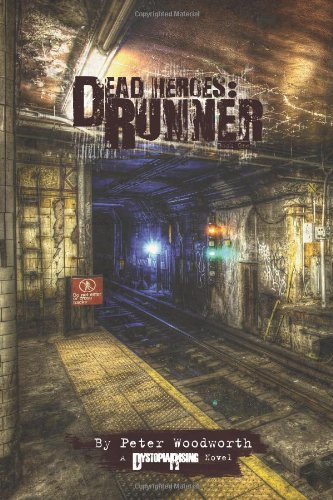
Hell, when I was writing RUNNER+, my zombie post-apocalypse novel, I had this bitchin’ idea for an action sequence. My protagonist, Rockaway, would ride down a really long zipline – during a thunderstorm! – and land on the roof of an old church. She’d slip on some debris and nearly fall off the roof, just barely pull herself back up only to see an enemy coming down the zipline in hot pursuit. She’d barely manage to get her rifle free just in time to shoot him and send him tumbling into the flooded city street below, then collapse exhausted against the bell tower as the storm raged on in ruined NYC.

It takes three sentences to describe it … and almost twenty pages to actually tell it in the book from start to finish. My mileage may vary – some authors would do that in less, some in more, depending in part on personal style as well as factors such as the importance of that scene to the story as a whole – but the point is that taking it from the visual I have in my head to a fully fleshed out sequence on the page is not an easy one.

What you’re describing that you see in your head is the three sentence summary. The reason it dies a quick death after you jot it down is that it needs more than those three sentences to live. It needs the time, attention and care of being brought to life a line at a time … and that’s not easy. Writing is very often the process of putting your head down, keeping your eyes on the end result and fighting your way through stubborn prose that just does NOT want to become the beautiful, awesome thing you see in your head. It’s easy to get discouraged after the initial rush fades, because you see the amazing thing in your mind and compare it to what you have on the page and the difference is frankly really depressing at times.

But you have to keep going.

And yes, self-doubt is often part of the process. As is hating what you’re working on from time to time, or being convinced no one will ever want to read it, etc. The cliche of the author staring at rejection letter after rejection letter – from agents, from publishers, from magazines – is so familiar that most people don’t realize just how hard it can be to cope with in reality. But that’s just it. You have to cope with it all. The rejections, the bad reviews, the self-doubt, the impatience of wishing it could just become on the page what it already is in your head, the fear that even if you do finish no one will like it. Neil Gaiman famously called this part of writing The Slog – the time between the rush of an initial idea and the satisfaction of wrapping it up, which incidentally is the majority of anyone’s time writing.

Mostly writing isn’t a cinematic moment of fevered inspiration, it’s just the day to day work of putting down one line after another, like a dot matrix printer slowly drawing an ASCII picture++. I think as a culture we do a lot of people disservice in how artists are portrayed in entertainment because we tend to focus only on those moments when everything is coming so easily, and imply that removing the fabled “writer’s block” can only be done by meeting a quirky soulmate at a coffee shop and going on a ski adventure full of wacky hijinks or something. That leads people to believe that being an artist is like being visited by capricious magic elves who bestow inspiration at random, when in reality it’s mostly about the capacity to stick with a vision even when it is dull or apparently hopeless. Because if you do, it generally does get better, or at the very least it gets finished, which is more than 95% of people get.

So I’m not telling you “sack up” or anything like that. Just that you can recognize what you’re feeling is normal, and that the only way to get past it is to realize that most every writer gets it – but the only ones who will ever know the satisfaction of a work completed are the ones who work through it.

True story.

.
*Not the actual shooting script.
+Shameless plug!: http://amzn.to/11a0cjl
++ Because I’m tech savvy like 1985.

Amazon Breakthrough Novel Award: Guess Who Made the Quarter-Finals!

The Amazon Breakthrough Novel Award began with 10,000 entries which were then sored into five categories and cut to 2,000 entries (400 per category). Today they announced the next round of cuts, down to the top 500 (100 per category). Or, to put it another way, they’ve gone from the top 20% to the top 5%.

“The Impossible Mister Lapin” has made the top 5%, and is now in the Quarter-Finals.

I’m proud. There’s a lot of ground left to cover in this contest, but I’m proud to have made it this far.

But wait! There’s something you can do to help us. Available RIGHT NOW on Amazon, you can download my excerpt – the first chapter of the book – and write a review on Amazon. (Link below.) Anything helps, though if you can put up a little more than just a “This book rocks!!!11” that would be even better. Even just one or two lines with specific points about the excerpt and what you’d like to see from the completed book. No matter what, though, every little bit really, really helps.  This is not exactly the voting stage, but I can’t imagine it hurts their selection to see that people are reading and responding to the excerpt. So if you have time, download our excerpts and take a moment to put up a review. If you listen carefully while you do, you can hear the sound of authors dancing gleefully in the distance.

The Impossible Mister Lapin!

Badass Larp Talk #7: The Business of the Stage

So, let’s talk about business.

I’m not talking about corporate stuff here. No, I’m using the actor’s definition for the term “business” – small actions and gestures that you perform that help set the atmosphere of a scene or assert a trait about your character. Business is James Bond casually straightening his cuffs after narrowly escaping mortal danger, a John Woo villain leaning over to light the cigarette in his lips off the engine of a burning car, Jayne Cobb grabbing for his pistol even though he’s totally outgunned (and backing down at a single look from Mal), the “bitch, please” look on Ripley’s face when the lone facehugger hatches after she stares down the Queen. All the little gestures and expressions that stamp a character’s essence on a moment without saying a thing. Even if you’d never seen a James Bond movie before and knew nothing about the character’s history, watching him casually adjust the fit of his suit right after surviving danger that would leave most of us weeping in the corner would tell you volumes about the kind of man you’re watching.

Or to put it in larp terms, business is a bunch of NPC bandits passing a bottle and playing cards around the campfire as the player characters sneak up for an ambush, rather than simply standing around staring into the woods. Business is your character crossing themselves before going into a fight, or after swearing, or whenever they see a dead body. Business is that gal in the corner flipping a coin over and over, cocky and dangerous without saying a word. Business is the acting you do when you make your big entrance or have your moment of triumph, true, but it’s also the things you do in the quiet times and private moments. Have you ever taken some extra time to make an in-character gesture, even when you were totally alone? If so, then you already know what the essence of business is in a game environment. If not, that’s cool too – I’m here to tell you why you might want to check it out in the future.

When it comes to games, business is often the difference between an immersive, ongoing world and a mediocre video game where characters stand around doing nothing as they wait for you to interact with them. Over the years I’ve been larping, one of the things I’ve noticed is that the best games and the best characters tend to be ones that use business the most when they’re creating their stories. It’s the recognition that all the moments in a game world matter, whether or not it’s a climactic scene or your character has the spotlight at the time. Indeed, I’m often most curious to see what players do during downtime or in the background, to see who actively maintains character and who simply waits for the next chance to assert it. I don’t judge players for it – playing a character is tiring for the best of us, I can’t know what people do in private, and besides sometimes your character is simply at a loss for what to say or do in a situation – but I’m always fascinated when I notice characters doing business even when they think nobody else is watching. Perhaps especially when no one else is watching, because that’s when I get to see something very personal about their character and how they view them.

A friend of mine played a ranger in the first fantasy boffer larp I attended, which was not itself unusual for the setting, but after a while what caught my attention was that he was always a ranger. You could tell by the actions he performed, even when we weren’t fighting or talking to NPCs. He’d check the wind and the weather, examine animal tracks when he found them, identify plants and bird songs, fashion clever little things out of twine and branches and otherwise take a few dozen tiny actions that played into his woodsman identity. (For the record, he was an Eagle Scout before coming to game, so he had a head start on a lot of his forestcraft; he didn’t just study it all for the game.) All these bits of business didn’t make him a “better” ranger than others at the game – nobody says you have to memorize the flora and fauna of your campground just to play a fantasy character! – but it definitely made it easier to see him in the role, particularly during downtime at events. Even when nobody was around, he’d stay in character and whittle or hum or whatnot. He felt like a real, well-rounded character, as opposed to a collection of game skills and boffer swords that sprang into action whenever danger threatened. And the business that he did really played into that. Notice I never mentioned his active roleplaying with others (which was great) or his backstory (ditto) – yet how many of you already feel like you know the character a little? That’s the magic of good business.

There’s an old thespian saying: “Act on the lines, not between the lines.” It means that you should be performing actions with your body simultaneously to reciting your dialogue, not saying your lines and then moving about. The lesson for larpers is similar; you don’t want to have a gap between speaking and acting. You want to be your character as much as possible as often as possible. That’s what business is good for – it helps keep you in character by giving you something small but evocative to do to maintain character even when there’s nothing else going on. It can be hard to stay in character during a lull in the action, especially during weekend-long events – but believe it or not, it actually gets easier if you’re chewing on your character’s favorite cigar rather than doing nothing at all. Even that little reminder that you’re in character is enough to help keep you invested in the moment, not to mention help maintain the environment for everyone around you. It’s also a good fallback if you’re exhausted and having trouble focusing on game, by the way – if I know that you’re always chawing on that stogie, and you walk past with it in your teeth, I don’t even wonder for a moment if you’re in character or not. You’ve already signaled it to me just by having the prop that I identify with that persona. You benefit, I benefit, the game environment as a whole benefits. All from one little gesture and one tiny prop.

Along those lines, business is also a public service of sorts at games, because it helps everyone else feel more in character and builds the feeling of a shared world. Larp is a communal activity – the more you see other people getting involved, the easier it is for you to get involved as well. Conversely, if no one else seems to be bothered to wear appropriate costumes or stay in character, it becomes more difficult for others to maintain game too, because they begin to wonder why they’re bothering to make an effort when other people are clearly half-assing it. Walking into a town where everyone seems to be doing something in-character creates a much different impression than walking into a town where it looks like a bunch of people chatting in costume while they wait for the next hook to show up – even if the latter group is totally in-character, the visual impression is different. It’s a subtle difference, but an important one in creating an environment that motivates everyone to stay in character.

At that aforementioned fantasy boffer larp, there was an in-game military order that used to camp together and basically remain a military unit all weekend. A visitor to their camp during a long downtime on Saturday afternoon remarked about how invigorating it was to see how each of them was still in character, even though it was downtime and even if they were off by themselves: the chaplain was writing prayers in his prayer book, the officers were talking strategy over a map of the camp, a sergeant was running some of the enlisted through some basic drills, their bard was practicing a battle song off to the side, their armorer was roleplaying repairing armor and weapons over an anvil, etc. Some of that was active roleplaying – the officers, the sergeant, etc. – but some of that was business – the chaplain, the bard, the armorer – and it combined to give the impression of a real military camp, rather than just some geeks goofing off in the woods for the weekend. The lesson being that you should never underestimate the impact that your little business can have on the rest of the players around you. That moment you take to visibly assert that you are still in game and playing your character can snowball into inspiring many other players to keep their focus and stay in game as well – character is contagious!

Make no mistake, character business is something that often takes time to develop, and business can certainly be overdone too – David Caruso’s sunglasses-and-a-quip routine from CSI Miami has grown into its own bad meme industry. Don’t feel compelled to make up quirks and gestures just for the sake of having them, or they’re likely to feel forced and inauthentic, if not outright cliche. As unhelpfully vague as it sounds, generally you’ll know it when you hit on a bit of business that works for your character, because when you do it you immediately feel more like your persona. It calls out the character as much as slipping on the costume, strapping on your gear or speaking in your accent. If you’re new to doing business, ease into it at first – do it a little and build up to more as you get more comfortable.

Having trouble thinking of good character business? Not to worry. Here are a few ideas to get you started thinking along those lines:

* Saying prayers/repeating mantras
* Carefully inspecting all of your equipment for damage
* Straightening your clothes/fixing your appearance
* Keeping a cigar or cigarette in your mouth (game rules & local laws permitting)
* Humming/singing (careful not to overdo one tune!)
* Playing with a small handheld object: lighter, coin, rosary, deck of cards, relic, etc.
* Polishing weapons/cleaning guns/counting ammo
* Pulling up the hood of your sweatshirt right before a fight
* Taking catnaps after battles
* Reading a book (sacred, trashy novel, science text, whatever)
* Cleaning a particular play area, often in a ritual fashion
* Taking out the contents of a bag or pack, inventorying them, then carefully replacing them
* Handicrafts (knitting, sewing, whittling, etc.)
* Putting notches in weapons/decorating gear for particular “wins”
* Reverently tending to the fallen, friend and foe alike

The woods are lovely, dark and deep, my sweets.
Let’s never lose sight of the path.

—————————————————————————-
Badass LARP Talk is a semi-regular advice series for gamers who enjoy being other people as a hobby. Like what you read? Click on the BLT or Badass LARP Talk tag on this entry to find others in the series, follow me on Twitter @WriterPete, or subscribe to the blog for future updates! 

Badass Larp Talk #6: How Not to Talk At Larps

Welcome back, BLT fans! On this week’s plate we address some simple steps to fix common mistakes and improve your roleplaying. As always, remember that this is just advice, not an absolute guide set down in stone – there are bound to be lots of situations where other responses are not only good but preferable. Such is the amazing and spontaneous nature of roleplaying, after all. With that in mind, though, enjoy!

#1 – Don’t Just Say “No”
Warning Signs: Long pauses, conversations ending awkwardly and gaps in interactions.

Before you think I’m advocating something very different, I’m not talking about mind-altering substance. What I’m saying isn’t new – it’s pretty much the cardinal rule of improv acting, and naturally carries over to larping, in a slightly modified form anyway. In improv, they tell you never to just say a flat “No.” All it does is kill the momentum of the scene, and shuts down the other person. You’re basically dismissing their input, which isn’t fun. Even a plain “Yes” doesn’t do a lot in larp either – it puts all the weight back on the other player to come up with everything in the conversation. Either way, it’s a really awkward moment. So when you’re roleplaying and someone throws you a bit of improv, don’t just say “Yes” or “No.” Build on it. Always try to tack on an “and” or a “but” and some new details to keep the scene moving.  Here’s an example:

Player #1: So, I hear you’re a man of action.
Player #2: No.
Player #1: …. oh.

That scene just screeched to a halt. Ouch. Painful. Now try this version:

Player #1: So, I hear you’re a man of action.
Player #2: No, but I know some dangerous people aren’t too picky about jobs they take. Whatcha looking for? 

P2 has still told P1 that they’re not a man of action, but now they’ve acknowledged what P1 is saying and are putting out material that will keep the scene going. They didn’t change their answer – it’s still “no” – but the scene is a lot less likely to come to a halt. It’s a big difference.

Of course, this is also character/scene dependent in some cases. If an enemy is trying to get information out of you, for example, a flat “No” may be the perfect in-character response! Or your character might be in a hurry and  unable to talk, or your character might be deliberately rude to a rival, or your character might distrust another character’s culture or background, or any of a hundred other reasons. I’m not saying you’re obligated to build on every hook handed to you or you’re a bad larper. But assuming that you don’t have a reason to be cagey or cut the conversation short, if you find that a lot of your larp interactions seem to have awkward pauses, it might be that you are giving more flat answers than you think.

#2 – Don’t Put People On the Spot
Warning Signs: People looking a little panicked, people saying a lot to stall for time, people changing the subject, etc.

This one’s a lot more subtle than the first one, but a surprisingly common one. Chances are you might not even be aware of is putting other players on the spot; ie, forcing them to improvise very specific details without warning. Asking a very direct question is fine – if the other player knows the answer already. If they don’t, though, chances are good that they will freeze as the player works to figure out the answer on the spot. Some people are very nimble at improvising that way, but many others – including many very good larpers too, I might add – are not, and it puts a lot of stress on them to do so. One of the best ways to avoid this is to add prompts with your questions; think of them as options to offer that give the person you’re talking to a ready-made jumping off point and maybe even guide them to some possible answers. Even if they don’t use them, it gives the other player an idea of where the answer might go, or at least more time to think of their answer. Here’s an example:

Player #1: So, where did your parents come from?
Player #2: Uhm, ah, well, I, uh …  <trails off>

P1 probably figured this wasn’t a difficult question, and it might not be for some, but right now P2 is probably feeling uncomfortable because she didn’t have the answer to a question her character likely would know. It’s a very specific question, and if you don’t have the exact answer, you’re going to kinda stall out trying to think of it. This is especially hard on new players who might not know a lot of world detail or the names of places, or be afraid to improvise details for fear of getting them “wrong” in terms of world continuity. Now look at this talk with prompts:

Player #1: So, where did your parents come from? Were they local, or did they come from someplace farther away?
Player #2: Oh, ah, farther off I guess. I didn’t know them much – I came to town recently.

P1 gives P2 a basic pair of prompts that doesn’t require a specific location name, which make it a lot easier for P2 to answer. In answering, too, P2 can make up a detail about her character and elaborate on it if she wants – the whole “I didn’t know about my parents” detail – but even if she didn’t she could still feel confident answering. Note that prompts can be added afterward if you notice the other player seems to be floundering a little:

Player #1: So, where did your parents come from?
Player #2: Uhm, ah …
Player #1: Were they locals, or did they come from somewhere else? Me, I’m a local. Born and raised!
Player #2: Farther off, I guess. I didn’t know them much, but I came to town recently.

Here, P1 notices P2 is caught a little off balance, so P1 throws out some prompts to help them figure out what they might say – they even give their own answer, which might serve as inspiration (plus it gives P2 a little extra time to come up with an answer – how thoughtful!).

#3 – A Little Bit Me, A Little Bit You
Warning Signs: People looking bored, people staring off while you speak, people quietly excusing themselves after a long one-sided conversation, etc.

We all love talking about our characters; one of the reasons we play them is because we find their stories compelling! However, if you’re not careful it can also grow into a bad habit, or more specifically the tendency to make every conversation about your character and how awesome (or awesomely screwed) they are. I’m not saying it’s never appropriate to tell stories – some of the absolute best memories I have from various games are times spent sitting around swapping tales with other characters – but even so the key word in that sentence is “swapping.” It’s an exchange, a give-and-take, not a monologue.  While there will certainly be times when you might find yourself perfectly justified in delivering a rather one-sided account of your actions, you want to be careful that you’re not falling into the practice of monopolizing interactions as a rule. Here’s a common case of what it looks like:

Player #1: Wow. did you see that guy? Man, he was badass!
Player #2: That’s nothing man, this one time I was fighting six Nazi mindmutants and … <five long minutes of thrilling heroics recounted> … so in conclusion, that’s why I’m the only Ewok with a triple-bladed lightsaber.
Player #1: Yeah. <fidgets> You know, one time I was fighting some sand worms, and I did this sweet flip –
Player #2: Hah! That’s cool! I learned how to do awesome flips from the only Vulcan ninja master ever certified by the Justice League, and … <five more minutes> … and so I told them, ladies, call me back when you find a sixth who can keep up, knowumsayin’?
Player #1: Uh, yeah. I gotta run, man.

Notice that P1 never asked P2 to recount any stories – that wouldn’t be so bad on its own, as sometimes a story is the best answer regardless, but the real red flag here is that when P1 tried to get in the spirit and share her own story, P2 just bulldozed right over it in his hurry to get back to his own awesomeness. Sadly, this sort of thing is all too common, but it can be easily prevented if you remember a very simple rule: If you want people to be interested in your exploits, you need to show interest in theirs too. Fortunately, there’s a relatively easy fix for this problem: Any time you want to tell a story about yourself, ask the other person a question about themselves first. (It’s OK to ask at the end too, if you only remember halfway through.) Here’s what it might look like:

Player #1: Wow, did you see that guy? Man, he was badass!
Player #2: Heh, seriously! You ever done anything that sweet?
Player #1: Well, there was this one time I was fighting some sand worms … <tells tale>
Player #2: No shit? Awesome. Me, I was fighting six Nazi mindmutants, and … <tells tale>
Player #1: You’re kidding me? In front of the whole Jedi Council? With a grapefruit?!

Conversations like that can continue happily for quite some time, as both sides are both listening and being heard instead of one character dominating the interaction. Not only is it more polite, but it also shows the other person exactly what you want for yourself – a little bit of attention paid to the places they’ve been and the things they’ve done. Everyone wins!

—————————————————————————-
Badass LARP Talk is a semi-regular advice series for gamers who enjoy being other people as a hobby. Like what you read? Click on the BLT or Badass LARP Talk tag on this entry to find others in the series, follow me on Twitter @WriterPete, or subscribe to the blog for future updates! 

Fair Escape

LARPing Thoughts from a LARPer Fair

Whatever

TURN THE VOLUME UP

I'm Josh Harrison

I go where no ordinary rabbit would dare.

Not Quite Literally

Musings. Teachings. Ramblings.

J.R. Blackwell

Writer and Photographer

Music and Zombies

Musings about life and living

Agnostic, Maybe

the neverending reference interview of life

Final Girl Support Group

Put down the chainsaw. Have a donut. Let's talk horror.

Design a site like this with WordPress.com
Get started