Latest

It Was the Last of Us, It Was the Best of Us

Before I get started, I wanted to make it perfectly clear – this post is designated as a major spoiler zone. If you are playing but have not finished The Last of Us, or if you intend to play it in the future and don’t want the ending spoiled ahead of time, then turn away and come back to this post later on down the line. Seriously. Normally the last thing I want to do is turn away readers, but when it comes to spoiling the hard work and superb storytelling that the Naughty Dog team put into this classic, you really don’t want to cheat yourself.

For those of you who have played it all the way through, feel free to read ahead and enjoy. For those of you who haven’t played it or finished it, but also don’t care about spoilers and want to read on anyway, here’s a brief overview of the premise and some setting details:

The Last of Us follows two characters, Joel and Ellie, as they travel across an America ravaged by 20 years of battling an apocalyptic fungal infection. Joel, a grizzled smuggler, lived through the initial terror of the outbreak but lost his family in the process; Ellie, a young teenager, has only ever known a world of quarantine zones, rationing, and martial law. The story begins during a hot Boston summer and proceeds to go a full year round as the two travel cross-country on an urgent mission, fighting zealous soldiers, desperate bandits, and the hideously warped infected as they go. Supplies and ammo are always low, trust is rare and dangerous, and even the two protagonists have a rocky relationship that frequently flares up into conflict. And unlike a lot of post-apocalyptic games where you simply wade in and blaze away, you’re frequently forced to sneak and plan to survive, not to mention improvise all manner of nasty surprises (like duct taping broken scissor blades to a baseball bat). It’s a harsh world and the game pulls no punches about it, yet for all the rough violence and hard choices, the content doesn’t feel forced or exploitative. When Joel tortures someone for information, there’s no cheap sadistic thrill for the audience like you might find in a GTA-style game, only a sick and sobering realization of what needs to be done to survive in this world.

OK. I think that about covers it. Let me just get one more warning out my system to make sure everyone knows what’s coming:

_______________________

WARNING! WARNING! HUGE

HONKIN’ SPOILERS AHEAD!
_______________________

So, I finally finished The Last of Us. I’m not quite sure how I feel about it, honestly, but I mean that in a good way, the way I believe was intended by the design team. Joel’s decision to “save” Ellie despite the fact that her sacrifice might mean the salvation of humanity was a choice I honestly did not see coming, but which made perfect sense given his actions up to that point. It’s been established that he’s no revolutionary, and doesn’t really care about the world at large or the future of the human race in general; at the outset, he doesn’t seem to care for much at all except survival.

Don’t get me wrong, we can see his affection for Ellie coming a long way off, given his history, but it still doesn’t feel forced – I like his reaction to her killing the man in the hotel lobby for that reason, the first kill we see her make onscreen. We expect him to give her a grudging thanks for saving his life, and he doesn’t, and they fight about it for a while, and their relationship feels more real because of it. (Elizabeth’s “wrench moment” in BioShock Infinite felt much the same way to me.) But we figure that by the end of the game, it’s going to be a father/daughter sort of bond, an affectionate sort of connection that makes both of them feel better about the world and their place in it. Ellie replaces her lost parents – one of them, anyway -and Joel replaces his lost daughter. Very neat, very poetic, and we’ve seen it all before in various incarnations.

And that’s the core of the matter when I consider how I feel about how the game ended. I’ve seen a fair amount of hate for the ending here and there online, and I’m pretty sure I know why. It’s not a comfortable ending. We see a lot of “what is the life of one versus the life of the many” decisions in video game endings, but we’re accustomed to either receiving a miracle at the 11th hour that allows us to avoid making the choice after all, or our protagonist makes the hard call themselves and we can at least feel noble about it (see BioShock Infinite, Mass Effect 3). Either way, though, it fulfills our expectations – whether it’s a last minute reprieve or a stoic farewell, we’re familiar with it. It’s safe. It’s expected. Doesn’t mean it’s bad, either, by the way, but it’s normal. We get it.

In this case, though, there’s no magic cure-all to save us at the last second, and more importantly, there’s very little nobility in Joel’s decision. Maureen says it directly, that Ellie would want to sacrifice herself if it meant finding a cure and saving everyone, and Joel doesn’t bother to deny it because we know she’s right. Everything we’ve seen about Ellie up to that point says that’s probably true – I mean, she wouldn’t leap to be a martyr, she’s too cynical for that, but if it meant a real chance at saving humanity I don’t doubt for a second that she’d do it. But Joel can’t accept losing her, and suddenly the cute father/daughter relationship we’ve been building up in our heads for most of the game takes a very grim turn. We often say that parents would do anything for their kids, but we don’t often examine the darker implications of that statement. Joel doesn’t care what Ellie would want, or what is best for the world at large – he simply can’t handle losing another daughter, and so he puts his needs above those of literally every other human being on the planet.

I think it’s also important and amazing that the design team didn’t villify the Fireflies at the end. They could easily have done so, ramped up factors like callousness and brutality in order to make us root for Joel taking Ellie away, but they didn’t. And that’s crucial, because that would have been a major cop-out, an excuse to let us feel better about the ending by making it a simple “good guys/bad guys” dynamic. Instead, they twist the knife a bit more, at least if you find the recorders that are scattered around the final stages – we hear about the loss and struggles of the Fireflies as they came west, we hear Maureen agonizing over the decision to take Ellie’s life, we hear the researchers talking about the promise of the cure as a real thing and not simply a hypothetical.

There’s a great quote from near the end of The Wire, when one of the main characters, Detective Jimmy McNulty, is trying to explain what went wrong during an investigation in the final season. I won’t spoil it, and it’s complicated besides, but let’s just say that he starts coloring outside the lines in order to try to put a bad guy in jail, and things most definitely do not turn out as he hoped. Desperate to justify his actions, he says to the woman he’s seeing: “You start to tell the story, you think you’re the hero, and then when you get done talking…” And he just trails off, because he realizes that he’s not the hero, and maybe he never was, and maybe there just aren’t heroes, not like we’re brought up to believe in anyway. Maybe life is just people doing things to get what they want, and we label it all later.

In that moment he has much the same realization that the audience does – that we’ve been rooting for him because we’re conditioned by movies and TV to cheer for “loose cannon” police officers who break the rules to get results, but when we stop and think about what that would really mean in real life, it’s not that noble or that simple. That’s my interpretation of the scene, anyway, but I think it’s a fair one.

And that’s exactly what the end of The Last of Us made me feel like. Like I’d conned myself into thinking I was watching a hero’s story, when in reality – looking back over everything Joel says and does throughout the game – it’s pretty clear that he’s not really a hero. Anti-hero, maybe, and a pretty damn dark one at that. He does some good things, maybe even some selfless things (depending on how you look at his relationship with Ellie), but he also does a lot of pretty awful things too, and not all of them strictly necessary. You can argue that he’s a product of his world, and I think that’s a fair assessment, but the ending shocks into remembering exactly what that means.

Like cheering for McNulty in The Wire only to realize how screwed up some of those assumptions are in the light of day, The Last of Us sets us up to cheer for an outsider hero and his bond with a spunky surrogate child, only to rip away the easy ending and remind us exactly what’s really going on in this world we’ve been playing in. Looking back, the evidence is all there, we just chose to see it differently because that’s how most games would spin it. But taken on its own, Joel’s brutal choice really shouldn’t have surprised anyone.

And I think that’s pretty damn amazing.

Badass Larp Talk #14: Nice Shoes, Wanna Larp?

We question one accessory,
don’t think the piece is neccessary –
we agree you’re dressed to kill,
but wonder if you will
– The Mighty Mighty Bosstones, “Hell of Hat”

So I was talking with my Dresden Files larp partner in crime, the lovely and talented Christine, and she mentioned a larp practice she was developing that I thought was pretty dynamite. She talked about trying to capture a character in a picture, using only a small collection of their props and costume pieces, maybe a half-dozen or so. Combined with a grand Dystopia Rising tradition begun by the inimitable Jamie Snetsinger – go ahead, just try and nimit him, I dare you – of posting pictures of costume pieces right before an event, I thought the two ideas together had a lot of potential to really make larpers focus on the physical foundation that makes up their character. I mean, a lot of players spend a great deal of time on backstories, and they spend a lot of time on their costumes and props, but they don’t always connect the two. Which is a real shame, because costume pieces are as iconic and meaningful as any part of your character, if not moreso.

I mean, in many of the worlds we larpers inhabit, good gear is at a premium one way or another, and characters who live dangerous and adventurous lives are likely to have very good reasons for wearing and carrying what they do. Those of us who have been in the life for a long time also know that wonderful feeling of slipping into a favorite costume like a second skin, or how picking up that one signature prop instantly fills you with badass swagger. The players will go on and on about how they lucked out at a thrift shop, slaved for hours at a sewing machine or had this brilliant idea to adapt some existing material to suit their character, but often as not if you ask the character where they got a piece of equipment, and you get a blank look or a simple “Um, I, you know, bought it” that doesn’t go anywhere. Which is a shame – shouldn’t the character’s story about finding their gear be at least as interesting as the player’s story? So with that in mind, I’m issuing you a challenge. That’s right, you!

The Hell of A Hat Challenge
1) Find or make a backdrop suitable for your character and their world – the hood of a rusted out car for a dystopian caravan driver, the roots of an old oak tree for an elven ranger, a quiet library for a vampire archivist, etc. If no good location presents itself, use a simple cloth backdrop instead, but regardless, set the scene a little.

2) Pick no less than three but no more than six costume and prop pieces from your character’s wardrobe. If your character has multiple outfits, feel free to mix and match as you see fit. They don’t need to be the biggest, flashiest or most obvious pieces in your collection – just the ones that most embody your character to you. Signature pieces are great, of course, but even if it’s a ring that’s usually worn under a glove and thus generally visible to no one but you, that still works. Clothing, jewelry, gear, accessories, tools, weapons, armor, masks, footwear, whatever strikes you.

3) Lay your pieces down against your backdrop, one at a time. You can choose to try to arrange them artistically if you like, or you can simply lay them all in a row. Whatever works for  you – this isn’t a photographic composition contest, after all. However, before you can lay a piece down, you have to come up with A) Where your character got it, and B) Why they wear it/carry it.  (If you want to be even more ambitious, add C) Their favorite memory involving it.) The answers don’t need to be elaborate, but they should satisfy the questions.

4) Take a picture of the final array and post it – here, on your home larp’s forums, your own private blog, etc. Spread the love! If you’re feeling ambitious, include a one sentence summary of each piece’s significance.

I highly encourage you to give the answers real thought, too. Not every piece has to be some sort of legendary item handcrafted by cherubs, of course, but even if it’s ordinary clothing in a modern day game where such stuff is readily available, there’s still a reason your character is drawn to it (or pieces like it). After all, a vampire lord in immaculately tailored suits is projecting a very different attitude and impression than a vampire lord in cut off shorts and a tank top. A ranger in dirty woolens and dented leathers is almost to be expected – which makes your character’s immaculately kept gear that  much more interesting, don’t you think?

Contest Deadline
In order to give people time to do this right – and because I have a vacation coming up shortly – let’s say the window for entries is open until 8/10. Sound good?

The Prize
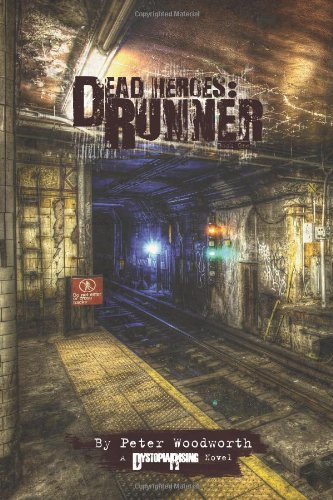
If I can get at least, say, 10 people to post their arrays somewhere where they can be seen – either here, or linking back to it somewhere else – I will judge the entries and offer the winner a brand new signed copy of Dead Heroes: Runner, the first book in my zombie apocalypse trilogy. Already have it? I’ll put up a copy of Domino,  the brand new second book in the series, instead. Already got both of those? Well, I thank you for your fandom – seriously, I mean that! – and I’ll see if I can work something out. (Note: International winners may have to chip in a few bucks for postage. Sorry about that!) So what are you waiting for?

Show us what you’ve got!

—————————————————————————-
Badass LARP Talk is a semi-regular advice series for gamers who enjoy being other people as a hobby. Like what you read? Click on the BLT or Badass LARP Talk tag on this entry to find others in the series, follow me on Twitter @WriterPete, or subscribe to the blog for future updates! 

The Misery Olympics

My old friend Rich put up an excellent little Facebook post about how people seem bent on outdoing others when it comes to comparing levels of misery and personal problems. Specifically, Rich lives in New York, where – you might have heard – it’s been really, really hot lately. It’s not fun, especially in a city that has the population density and social graces of a Dropkick Murphys mosh pit, and so quite a few New Yorkers have taken to various forms of social media to register their discomfort. Anytime someone from the area posts about it, though, it seems like other people swoop in to outdo them – “You think it’s hot there? That’s nothing! I live in the Sahara and it’s 158 degrees right now!” Or, even better, non sequitur classics like, “Heat is nothing, try raising four kids and see how you feel!” and “You should be glad heat is your only problem – think about all the human rights abuses in China right now!” As I was reading it, I found myself nodding at his description of people’s behavior, and it reminded me of something from many years back: the Misery Olympics.

It was a term my parents used on occasion to describe the fact that misery and suffering aren’t a competition. In particular, my parents used to tell me, “Problems are sized to people.” In other words, if someone is upset, it’s because that issue is a real concern to them. It may seem trivial to someone with a different set of problems – because, of course, their own problems are much worse and more important than anyone else’s – but it’s not trivial to the person making the complaint or experiencing the distress. Otherwise they wouldn’t be concerned.

When I was a kid in grade school, my parents listened to my worries about book reports and science projects and gave me advice and support accordingly. They didn’t talk down to me or brush me off with how lucky I was to be a kid. Looking back, I’m sure having to write two pages on George Washington seems idyllic compared to struggling to work, raise two kids, balance budgets, maintain a stable marriage and do the thousand other things working parents do – but they recognized that I didn’t have those problems. I had 8 year old problems that made 8 year old me concerned, so they treated them seriously (or if they didn’t, I never caught on).

Even as adults, you’ll see a certain type of person who likes to swoop in when people complain about something and say things like, “Shut up, you’re lucky you live in the US where you can worry about paying a mortgage, right now thousands are dying in the Sudan!” I understand the sentiment (see below), but at the same time, even after I reflect on how lucky I am to live in the US and be part of my socio-economic class … my problems are still there when I’m done. I know I’m lucky to have my main worry be paying a mortgage, as opposed to fearing for my life or foraging for food in a bombed out wasteland, but that bill still needs to be paid or I have serious problems to consider about where my wife and I will live. And that’s not life or death, but it’s not nothing either.

I’m not saying a little perspective isn’t necessary from time to time – witness people losing their minds every time FB changes its interface, nerds raging “thanks for ruining my childhood Hollywood” because somebody is making a Thundercats movie, or the spoiled brats whining that their lives are ruined because their parents didn’t get them the right *color* iPhone 5 for Christmas. There are definitely times when we need to stop and consider just how bad our problems are, whether it’s in the grand scheme of things or just with regard to our own lives. Even when I was making much ado about nothing even for a kid, my folks would call me on it – it’s one thing to be anxious because there’s a major report coming due, it’s quite another to be upset because the store didn’t have the TMNT figure I wanted.

There’s no Misery Olympics, people, so stop going for the gold, and support each other instead.

Badass Larp Talk #13: Mind the Gap

I hate character histories.

OK, OK, so that’s a bit of an exaggeration. I don’t actually mind when people lay out the lives of their characters, inventing whole networks of friends and family, love and loss, places been and promises to keep. There’s a ton of passion and invention in that sort of work, and it can really help flesh out a character and give them reasons to inhabit the worlds we create. That’s awesome, when you think about it. Truly, awesome.

What I hate are airtight histories. You know the type – the player with pages and pages of character backstory and motivation detailing everything that’s ever happened in that character’s life from birth until ten minutes ago. They know their character’s favorite food, the name of their first co-worker, the mascot of the high school they went to, the dress they wore to their first birthday party, you name it. Don’t get me wrong, I admire the work ethic behind such creations, but they’re closing the door on one of larp’s best features: improvising your own history on the fly.

(Note: Remember to be respectful of other players’ backstories, especially if your improvisation involves their character directly. Characters are very personal, after all, and telling other people to change theirs to suit yours can come off as very rude if not handled correctly. Ask politely, explain why you’re thinking the change would be positive for everyone, and most importantly be OK with getting “No” as an answer. While it might seem totally awesome to have your characters turn out to be cousins, they might have other ideas for the relationship, or have a clearly defined backstory with no room for a sudden cousin, and that’s fine too.) 

You see this skill used a lot by veteran larpers – players who recognize an opportunity to increase the drama and character connection in a moment by tying in their character in a way they hadn’t defined before. (I’ve picked up siblings, rivals, long lost friends and more in this way – “Hey, you wanna be cousins?”) In his great game Houses of the Blooded, master game writer John Wick talks about this exact phenomenon – the idea that you can take advantage of a gap in your character’s backstory to vault yourself right into the action. In his example, he was playing a detective character, and hadn’t really connected to the character much, when a plot about a missing girl came up.

Suddenly he just knew that his character had lost someone too, a daughter – and abruptly a throw away character became someone real and compelling, He hadn’t thought anything about children before, hadn’t really done more than sketch a backstory to get himself going, but now the plot meant something much more to him, and in turn he got much more invested in the game and had a lot more fun. It was a great character turn – and it wouldn’t really have been possible if he’d been beholden to some sort of massive Sacred Comprehensive Backstory.

I recently had a moment like this myself – game on had just been called at Dystopia Rising when one of the staff members running that weekend approached me in character asked me if was a firstborn child. (Biblical plagues are always a hoot.) I paused. I’d only just recently begun playing the character, and I honestly hadn’t thought of his immediate family much at all. I knew my character was part of a wealthy (crime) family, out seeking his fortune in the world, and I knew he had a fierce mother at the head of his family, but I hadn’t thought much more about his relatives than that.

Right on the spot it hit me – he’s not the firstborn. Of course he’s not. His older sister is the heir apparent, and his two older brothers and another older sister work under her directly, taking care of the family business. There were other kids, a boy and a girl, both older as well, but one died young and the other one was killed by a rival family. He’s the baby of the family, so he gets away with a lot, but that also means he’s not going to inherit anything either, not with that many older siblings dividing up the business and a mess of aunts, uncles and cousins mixed in too. That’s why he’s come south to the town where the game is played, because for all his bluster about how big and important his family is, he wasn’t going to get much from them, and so he knows this is his spot, his chance to make a name for himself. And I knew that his Ma missed him, her baby boy, and writes after him often, which he pretends to be embarrassed by but secretly loves, of course.

All of this backstory creation happened in the space of a few seconds – I’m sure the NPC was a little baffled at how I spaced out, sorry Josh – but it really helped me open up my character. Now, if I’d had a detailed backstory, I’d have known his birth order and his siblings, but it would have been pretty flat detail. I’d have just said “Nope” and moved on, and that part of the story wouldn’t have come alive quite the same way. But since I hadn’t worked out what was going on ahead of time, I was able to take that storyline and run with it – even though he wasn’t a firstborn, he kept keen track of the plague and how to cure it, and then immediately ran off and wrote to his big sister to tell her what to look out for if it came her way. Even though the plague story didn’t affect me directly, I was hooked, and all because I’d just invested a ton into my family that I hadn’t known even moments before.

And that’s the real beauty of gaps in a character history – they leave you room to improvise in compelling ways, allow you to adapt your character to suit the stories you’re involved in or the people you meet. It takes a little practice, but once you know how to do it, it opens a lot of doors to a lot of awesome possibilities. So when you’re writing up a character background, feel free to put in plenty of detail and motivation and the like, but leave some room to improvise too. Let some things be decided during play, as needed. I think you’ll be pleasantly surprised at how far this technique can take you.

The woods are lovely, dark and deep, my sweets.
Mind the gaps.

—————————————————————————-
Badass LARP Talk is a semi-regular advice series for gamers who enjoy being other people as a hobby. Like what you read? Click on the BLT or Badass LARP Talk tag on this entry to find others in the series, follow me on Twitter @WriterPete, or subscribe to the blog for future updates! 

Table Manners: Or, How Not to Be a Convention Troll

In honor of Dexcon this weekend, where hundreds of gamers are coming together for a weekend of dice rolling and debauchery, I thought I’d share a few little tips to help everyone make the most of their con (and maybe help break some bad habits at the table before they get started):

1) We’re All Nerds Here
Dystopia Rising creator Michael Pucci likes to open his larp sessions with some variation on the following advice: “Look around you. We’re all nerds! Everyone is here because they’re a geek who loves gaming! Enjoy it!” The message goes double for gaming cons: Leave the hatin’ at home, and focus on the fun instead. Try new things, play new games with new people, maybe learn some new tricks or even a new way of looking at an old game you never would have considered before. We’re all nerds. Embrace it.

2) Stay On Target
Most convention games have between 4-6 hours to hand out characters, explain the rules (for new folks), provide relevant background/setting material to set up the scenario and then actually play out a full, entertaining story, usually with a group of strangers who’ve never gamed together before. That’s a hell of challenge. So do your GM a favor and try to stay focused. Don’t be a humorless jerk about it, of course, but those long-winded war stories from other games can probably wait for the bar afterward, you probably don’t need to keep dropping character to talk about your other convention larps, and that game of Angry Birds on your iPad will still love you even if you don’t play for a few hours. You’ve only got a short time to play, so dive in!

3) Play Nice with Others
Don’t get me wrong – I know some con games thrive on PvP action. (The “everyone make characters for system X and have a huge gladiator brawl” is a storied con tradition, after all, as are the equally time-honored “let’s all make Evil characters and screw with each other” games.) But there’s a difference between your characters hating and fighting and scheming, and the players being at each others’ throats. Even the harshest PvP games are still games, after all, so the goal is to have fun. Be magnanimous in victory and gracious in defeat, and remember, it’s just a game, so enjoy it, and help everyone else at the table do so the same.

4) Respect the Shower Hour
I know that because of the limited convention time frame, gamers tend to maximize their playing time and minimize other needs like sleeping, eating properly and so on. It’s sort of the nature of the beast, and looking at my schedule for Dexcon right now, I’m no different in that respect.  On top of that I’ll fully admit that I’m no daisy after six hours of larp in a small convention boardroom or five hours packed around a gaming table, and my nutritional plans never seem to quite be as healthy as I’d hope. I’m not going to say that the convention needs to schedule a designated Shower Hour between gaming rounds. (Though, now that I mention it…)  Deodorant, mints, real food, a nap now and then, enough changes of clothes to see you through the weekend and doing battle with shampoo at least once a day – these things not only make you better suited to enjoy the games you’re playing, but your fellow gamers will appreciate it too.   

5) Guys. Seriously.
I hate having to write this one, but some guys need the reminder, so here goes: There are lots of female gamers. I know to some of you it might seem like they just suddenly appeared in the time it took to get another case of Mountain Dew from the garage, but believe it or not, they’ve actually been here for a long time now, and not because their boyfriend dragged them into it. In fact, at a con I’d say it’s pretty safe to assume that any lady you see with a badge and a backpack is there because she’s stoked to throw down in an Apocalypse World, or to see her Space Wolves wreck on some Necrons, or because her Gangrel is gonna slit throats and seize Praxis as soon as the sun goes down. So really, stop reciting rules at them like they don’t know what they’re doing, talking over them during planning sessions, offering unsolicited advice on the “best” move to make every time their turn comes up, quizzing their “cred” like the geek SATs, or worse yet assume that sharing a table and some laughs entitles you to share a hotel room later. It’s sad and obnoxious, and it needs to stop. For all the guys who don’t need this reminder, thank you, keep being awesome, and don’t hesitate to speak up and back up a lady if you see some tool trying to pull this sort of bad behavior. For all the ladies in these hobbies, thanks for coming out despite all the crap and the cavemen and the creepers, not to mention kicking some major ass besides.  All too often we’re still like the short boys hugging the walls at the eighth grade dance, the ones that made you roll your eyes and long for the relative social graces and personal growth of high school guys, but don’t give up on us yet. We’ll catch up to y’all sooner or later, maturity-wise. Promise.

—————————————————————————

Table Manners is a new commentary and criticism series for gamers and their own little corner of geek culture. Like what you read? Enjoy larping in particular? Click on the BLT or Badass LARP Talk tags to read a different semi-regular advice series for larpers of all kinds. You can also follow me on Twitter @WriterPete, and subscribe to the blog to stay in the loop about future updates! 

Badass Larp Talk #12: 5 Key Tips for Staff Members

Hey everyone! It’s been almost a month since my last update, so apologies for the extended absence – the end of the semester caught me a little off guard, and then a succession of larp weekends and events kept me busy. (I know, I know, what terrible problems to have, right?) So, without further ado, I present a by-request edition of BLT – specifically, answers to the question: “What advice would you give to larp staff members to make their games better?”

1 – Learn the Entertainment Ratio
Wait, math at a larp? And not in combat? It’s true, folks. One of the best lessons I ever took away from the first boffer larp I played was something my friend Matt called the “entertainment ratio.” It’s pretty simple, really – for any scene you set up, how many non-player characters (NPCs) are being used to entertain a particular number of player characters (PCs)? That’s your entertainment ratio. So if you send out one NPC as an impassioned artist who winds up entertaining twelve PCs with their performance, that’s a 1:12 entertainment ratio – a very good one in most games. On the other hand, if you use twelve NPCs to set up a special module for three PCs, that’s a 12:3 ratio (or 4:1 if you like reducing things correctly). Chances are that’s a really intense, immersive experience for those three PCs, no question, but it might not be the best investment of your staff members if it means 40 other PCs are sitting around bored while waiting for staff members to answer their questions, portray crucial NPCs or otherwise make an appearance in the game.

It’s the economics of staff management, really. If you know that you’re investing heavily in one scene, you have to make sure you’re still putting out enough entertainment to keep everyone else satisfied, or at least make sure the game isn’t stalling out. Most of the best staff members I’ve ever seen grasped this intuitively, or at least learned to do so after a while, and made sure that their ratios always added up to the most fun for the largest number of players whenever possible. But if you’re new and it’s not second nature, I highly recommend that you at least consider the entertainment ratio as you’re sending out plot to the players. Don’t agonize over every little number – “oh no, those two NPCs were supposed to entertain 11 people, but they only got 9!” – but try to make sure that you have a sense that your staff is being utilized wisely.

Oh, and for the record, when your PCs are entertaining each other, which no NPCs required? (Popular examples of this are martial tournaments, talent showcases, heated internal political debates, etc.) Congratulations! Entertainment ratio = infinite! My advice at that point is to take a breather, get your staff ready for when it’s over, and enjoy the show your players are putting on for each other!

2 – Don’t Interrupt Living Story Moments
Remember when you were in school, and a class discussion totally (and often unexpectedly) took on a life of its own? Everyone got really into it for its own sake, because they were actually interested and had real things to say about the topic. If you had a good teacher, what did they do? Sit back and moderate the discussion, but otherwise let it go on a while. And what did a bad teacher do? Shut it down, leaving everyone feeling frustrated.

Those moments happen in larp too – I call them “living story” moments, because they’re those times when the story really seems to take on a life of its own – and if you see them happening, whenever possible try to leave them the hell alone. Unless it is vital for the plot, or the players put themselves in a position where they knew they could be interrupted easily – like holding their tender wedding at an unholy portal that frequently overflows with ravenous monsters, which is really just begging to have it crashed by demons – just steer your NPCs around those moments and find other PCs to entertain. Interrupting that sort of roleplaying is the larp equivalent of butting in on a serious private conversation, and that doesn’t usually end well for anyone.

Now, don’t get me wrong – I’m not saying that players having a tender moment should have some kind of magic anti-plot forcefield. (Those moments can be hard to spot, for one, and some players might get the wrong idea and start trying to abuse the practice if it became widely known.) I’m just saying that, assuming the plot and/or characters they’re bringing in area able to be ignored, or at least can interact with other players in the area, you should avoid interrupting scenes already in progress whenever possible, especially if it looks like the players are really engaged and roleplaying intensely. Generally you can tell when you’re approaching this sort of scene as opposed to PCs just hanging around and talking – if the PCs aren’t too engaged, they’ll usually leap at a chance to talk to NPCs and see what’s going on, but if they’re really invested in the moment they’ll barely acknowledge the NPCs and stay focused on what’s at hand.

It’s a fine line and you’ll make mistakes now and then. That’s fine. But the important thing about it is remembering that when story is happening – even and perhaps especially when it’s something the players have generated on their own – try to give it some room to breathe. You don’t have to let it go on and on – most games take place in dangerous worlds where those moments of respite are all too brief – but don’t stomp on it too quickly or what you’re really doing is telling the players that your story is more important than their roleplaying investment, and that’s a bad message to put out there regardless.

3 – Don’t Try to Play Their Characters For Them
One of the biggest traps I see new staff members fall into is the desire to play their players’ characters as if they were own – sending that PC plot that essentially makes them become what the staff member wants them to be. At a Vampire game I played years back, one of the Storytellers decided that a friend of mine should become the Sheriff of the city, which would’ve been great if my friend had shared the notion. But she didn’t, and so every time the Storyteller tried to push her in that direction she pushed back the other way. It became a weird tug of war, because the Storyteller got it in his head that this was what her character “should be”, when really that power is and always should be the player’s.

It sounds really obvious, but sadly a lot of staff members can get a little caught up in their ability to create situations that challenge PCs and try to use them to change PCs instead, taking away beloved aspects of a character or adding unwanted elements to a character. Don’t get me wrong – characters can and will change in response to stories, and games where they can remain the same in perpetuity will eventually have major problems with stagnation. But an important concept to remember is that only the player owns a PC. They are the ultimate arbiter of what that character is about, and failing to remember that is a recipe for frustration and disaster.

Now, I’m not saying that players have veto power over every possible change – if their character wanders into an ambush and gets killed, they can’t simply say “Nope!” and pretend it didn’t happen. Handling fallout from decisions is an important part of any character. But there’s a big difference between enforcing the setting realistically and actively trying to mold a character into something you want them to be. The former is being a good staff member and helping maintain a consistent shared universe; the latter is intrusive and unwanted. If I  made a character based around his beautiful singing voice, you may think it’s cool to take his voice away, and it might be very dramatic to deal with for a while. But if you do it permanently, and not as the result of actions I chose to take but because you think it would be cool to see what happens next, step back and think about what you really did. Characters can be injured, broken down, put upon and otherwise harried within an inch of their lives, without necessarily changing the core of what makes them them. So before you try to change a character’s fundamental nature, think about what you’re asking of that player. At the very least, if you have an idea that you think would be amazing for a character in a game you’re running, ask the player first. Yes, it might ruin the “surprise” – but it’s a lot better than changing someone’s character and finding out that they no longer want to play that person as a result.

4 – Let Them Win (When They Earn It)
This is another one that trips up a lot of otherwise well-meaning staff members. They load up a Super Badass Villain with plenty of ways to kick some PC butt, surround them with minions eager to do some damage and send them out to cause havoc. Except that instead of an epic battle, a clever PC manages to slip behind enemy lines and take out your supervillain with a single well-placed shot. Or perhaps the PCs approach them diplomatically and explain a perfectly reasonable alternative to bloodshed that you hadn’t anticipated. You had a huge battle scheduled for this session … now what?

The short answer is, anything that lets the PCs keep their victory. One of the things that will make me bail at a game faster than anything else is when the staff can’t admit defeat, but I’ve seen it all too often in my career. A PC figures out a clever and perfectly legitimate way to defeat a villain or solve a problem, only to have the NPCs and other staff members bull right over their actions just so they can have the fight or showdown they were imagining all along. It’s a situation a lot of us know only too well – some NPCs show up looking for a fight, the PCs patiently explain why it doesn’t make any sense to fight, and then NPCs attack anyway “because that’s what they were told to do.” It really strains the shared illusion that is larp, and it teaches players a bad lesson about the value of cleverness and skill. Sometimes the players will hit you in ways you never saw coming, unraveling all of your plans in a moment. Let them. You can always regroup while they’re celebrating their victory and think of something else to put forward.

By the same token, don’t hand them a win when it should be a loss. Sometimes staff members see players getting frustrated or discouraged because events aren’t going their way, so they hand the players an easy win: a badass villain suddenly trips and falls on his sword; powerful allies swoop in out of nowhere to save the day; the solution to a vexing riddle is whispered into a character’s ear by his dead grandmother’s ghost. (Yes, I’ve seen all of these things.) The problem with this approach is two-fold, the first part being that it diminishes the value of all their other victories if you just hand them one they didn’t earn. And yes, the players can tell when you do it, especially if it starts becoming a habit. The second is that some players actually don’t mind losing – quite enjoy it, really – when it’s a fair loss. There’s a lot of great dramatic potential in failure and loss, and when you sweep that away for a cheap win, they don’t get either the thrill of victory or the agony of defeat, they just get a bland … OK-ness that isn’t good for much of anything.

5 – Talk to Your Players
Honestly, you’d be amazed at how many staff members forget this little step. Larp is a collaborative art form, staff and players working together to tell amazing stories about fantastic characters. (In many games players and staff are one in the same, with players rotating staff duties from event to event or story to story.) Talk to each other. This doesn’t mean the game should vote on every decision – “Hey, show of hands, who wants to be horribly butchered by witch hunters next game? Really? Nobody?” – or that staff should freely share important secrets with players, the kind that will ruin their fun and spoil crucial game mysteries. No, what it means is that you should have some form of dialogue between staff and players, so that you know what’s working, what isn’t, what people want more of and what they want to avoid. You won’t be able to make everyone happy all of the time, but you can find ways to make the game better for everyone if you tear down some of the artificial distance between staff and players and put them more directly in touch with each other.

—————————————————————————-
Badass LARP Talk is a semi-regular advice series for gamers who enjoy being other people as a hobby. Like what you read? Click on the BLT or Badass LARP Talk tag on this entry to find others in the series, follow me on Twitter @WriterPete, or subscribe to the blog for future updates! 

Badass Larp Talk #11: To Live and Die In A LARP

One of the most telling decisions a game designer can make is how to handle character death; in many ways, how characters permanently exit play is just as important as how the game is played. It tells players the margin of error they’re looking at when it comes to characters failing, and also determines a number of other factors that might not be as obvious, such as the impact of player versus player (pvp) conflict.

So let’s break it down by the three main types of death systems and see what shakes out, shall we?

Single Death Systems (SDS)

Outside of certain high fantasy and super advanced science fiction settings, single death systems are the norm for a lot of games. Also known as “real life rules” since they closely mirror our actual human experience, SDS games have arguably the lowest margin of error of any system formulation, where even just one unlucky rules interaction could send a much beloved and long-played character out of the story for good. From a bookkeeping perspective, they’re probably the simplest of all the death systems out there, as when a character dies there isn’t much else to do but chalk up another strike mark and talk to the player about what they’d like to play next. Or at least that’s what it might seem like, except that it trades some simplicity in the aftermath for some complications before the fact, and you’d better be careful to figure out how you plan on handling them if you don’t want to get blindsided by some of the unexpected parts.

Advantage: High Stakes
Needless to say, when there are no come-backs, players have to take risks accordingly. Operating without a safety net in the event of foul play or catastrophe can be a rather brutal learning curve for some players, but it certainly means adds a heavy dose of excitement and tension any time lives are on the line. Given that most of my early larp experience was with the World of Darkness setting, a fundamentally SDS setting (though most characters had a lot of possible “outs” with their powers), I have to say it was hard to adjust to other systems at first. I wondered how tense it could be when you had multiple or even functionally infinite lives, because even though I hated the idea sometimes, there was a lot to be said in favor of how much it added to those dangerous moments, not to mention how much greater the triumph was when we walked away and a hated enemy did not.

Drawback: Wait, No! That’s Bullshit!
At the same time, SDS games require a lot of staff attention to make sure that they’re not being exploited, on several levels. For one thing, SDS games often have to contend with a higher rate of cheating than other systems, simply because when faced with losing a beloved character even normally honest players will often be sorely tempted to fold, spindle, mutilate or outright ignore the rules, especially if they feel it isn’t how their character is “supposed” to meet their end. Along the same lines, staff needs to decide in advance how to handle it if some players decide they’re bored and feel like killing other peoples’ characters just for something to do. Sad to say, this does happen, and it can be a major problem for games.

Possible Fix: Death’s Door Mechanic
To cope, a number of games have started adopting “delayed death” mechanics where a character is functionally removed from play – as in, cannot take any actions that involve rules or skill use of any kind, and sometimes are forbidden to talk about certain subjects (such as naming their killer in pvp situations) – but do not actually expire until the player wishes it or the end of a set period of time, which is usually but not always the session wherein the killing blow was inflicted. In effect, the character lingers long enough on death’s door to say some goodbyes and allow the player some chance to wrap up some business to allow for more closure in the face of sudden and permanent character loss, but without taking all the sting out of SDS games or making pvp killing impossible to conduct anonymously.

Unlimited Death Systems (UDS)

At the other end of the spectrum are UDS games, where death goes from being a character-ending experience to something more like a timeout or an inconvenience. (For the record, many supposedly UDS games actually have a handful of situations or conditions that can permanently remove characters, but these are often special plot directed circumstances and not elements that are casually encountered, so I’m setting them aside for this discussions.) The very first boffer LARP I ever played was a UDS game, and so I didn’t realize how uncommon it was until I started checking out other games and saw only a handful of other games I looked up online shared a similar philosophy.

Advantage: Risk Taking
One thing that players who don’t have experience in a UDS game often overlook is that – by its nature – UDS games encourage players to take risks. When you don’t have to worry about a single bad decision taking away your character, it’s a lot easier to dive in and take your chances in situations as compared to characters who get only one or two deaths. When we began at my first boffer larp – a place where resurrection took only 5 minutes – my brother and I became known for dying constantly. At my first event, I managed to die four times in half an hour, simply because I kept throwing myself in the thick of things for the fun of it. I was underpowered, couldn’t fight for crap and squishy as hell compared to the bad guys, but who cares? I was trying all kinds of tricks – flanking attacks, playing dead (not hard when you become known for getting killed), pretending to be under enemy control – and more importantly I was enjoying myself even when I failed and got ganked. A UDS game encourages players to take chances by removing one of the main reasons players play it safe in the first place, and as a result it feels very friendly as a learning and immersion environment.

Drawback: The Revolving Door
Of course, the same carefree abandon of those early games eventually wears off for most players, and at this point your game can have a serious problem: apathy. While permanent character loss can rip beloved characters away from people, not to mention make them grumble about hundreds of dollars of props and costuming becoming useless, it does serve a valuable motivating purpose, not to mention add tension to situations. For newer, less powerful characters, death is still something of a deterrent in a UDS game, if only because it can happen to them more easily and thus mean they have to be careful if they don’t want to miss out on crucial scenes due to being dead (or raised as enemy undead, or whatever). For more powerful characters, however, almost all the inherent risk is gone – they don’t fear most enemies because they’re seasoned players and have powers to back up their experience, and they don’t fear death because they know it’s temporary and have gotten used to it. Death is annoying and tiresome instead of frightening and traumatic, and that’s a major shift in attitude to play out. Worse still, if villains enjoy the same immortality, it can be hard to feel as though you ever get to defeat them. If you kill them, they just come back later; if you capture them and they escape, you start feeling much the same way.

Drawback: Power Scaling
When characters never have to be removed from play (at least until the player chooses to do so), a UDS game has to take a long, hard look at what’s going to happen down the line when those characters have been at game for years and accumulated huge amounts of experience points, fantastic gear, etc. Unlike other death systems, where there’s a strong chance that player characters will either die off or choose to retire due to impending doom, in a UDS game there’s no cap except player boredom regarding how long a character can gain experience, which means that if you have characters who choose to stay active for long periods of time you can have significantly unbalanced power levels in your player population. For this reason many UDS and even some LDS games bestow experience on a sliding scale, granting more early to encourage player growth and interest and then scaling back over time so that long-running characters advance much more slowly. Whatever the game chooses, though, this is a factor to be seriously considered in all but the most short term games.

Possible Fixes: Giving A Damn (Players) & Alternative Approaches (Staff)
Normally I don’t like to lay blame on players for system elements, but generally speaking the revolving door problem becomes a problem mostly because of roleplay habits and not staff issues (though stories that make light of the revolving door certainly don’t help). Simply put, you have to remember that even if your character is aware that death is temporary for some people in her world, that doesn’t mean it isn’t painful and unpleasant to experience, which should be roleplayed accordingly. It might also inspire her to fight harder on behalf of those who don’t share her functional immortality, as is the case in many fantasy settings, where heroes are repeatedly raised back to life but humble farmers fall once and stay dead. In short, you have to remember that even if you the player know death is little more than a time out, your character still experiences it as a much more intense, disturbing experience. And if she doesn’t, what does that say about how callous her attitude has become about life and death …?

Of course, staff isn’t totally off the hook here. If you run a UDS game, you need to think of other ways to threaten players and resolve conflicts that don’t encourage the negative aspects of this system. While killing the big bad guy is a nice exclamation point in many game systems, if the bad guy is just going to come back to life again later, you need to make sure the players don’t feel cheated or that their actions are pointless. (Maybe it takes them a certain amount of time to return, or players can perform certain dangerous rites or use rare technologies that prevent resurrection in order to keep particularly nasty villains from coming back.)  Also, just because players can return to life functionally forever doesn’t mean that it has to be wasted time for their characters – have staff members narrate experience between life and death when possible, showing an afterlife experience full of strange visions, comforting loved ones long lost, villains waiting for revenge or whatever else the world dictates. A really ambitious staff could use the time between death and resurrection to sow clues about ongoing plots, or even run whole story arcs in the time between life and death, possibly even requiring players to deliberately die to run special “flatliners” adventures in the sinister and eerie underworld from time to time …

Limited Death Systems (LDS)

As the term implies,  LDS games bridge the gap between the two worlds – players have more than one life but not an infinite amount, and so it enjoys some of the benefits of both while downplaying the drawbacks a bit in process.

Advantage/Drawback: The Best of Times, The Worst of Times
Death is still a source of great tension in LDS games, since you don’t have an infinite number of “respawns” to fall back on, but you can also take comfort in knowing that your first fatal mistake won’t be your last either. In some games the players know the exact number of lives they have, while others keep them secret in a staff database of some kind; generally I prefer that players have a way of knowing how many lives they have, even if the character does not, because it lets them make decisions about retirement and wrapping up stories that they wouldn’t have otherwise, but there are certainly excellent roleplaying arguments in favor of the mystery and uncertainty of not knowing either.

One of my favorite compromises, in fact, comes from the absolutely superb roleplayers at the NJ fantasy larp Nocturne, where players don’t know how many lives they have … until they are resurrected into their last lifetime, which is accompanied by a brilliant display of IC pyrotechnics that signals to player and character alike “this is your last life, use it well.” I always thought that balanced the two elements very well – the player doesn’t know exactly how long their character has left until near the very end, so they have to play cautiously as they might not have more than just the one life left, but when the actual end is near, both player and character are clearly informed and can plan and roleplay accordingly. It’s a brilliant way to handle the LDS mechanics, and I’ve always thought it was a very elegant solution.

Of course, there are other twists to the LDS model that are worth investigating too. Post-zombie-apocalypse madhouse Dystopia Rising uses an LDS mechanic where players know up front exactly how many “lives” their character will have before the zombie infection claims them for good. (Generally speaking, the lower the number a particular character type has, the stronger their starting “genetics” and native skills are, which is a nice bit of game balance to accompany the LDS mechanics.) Technically speaking, there’s no way to get back an “Infection Point” (the term for lives), as losing them to death represents your character slowly succumbing to the zombie plague … however, there are a few tricks you can try if you’re desperate and fading fast. Only one of them is listed in the rulebook – and even then it’s a rare and dangerous skill known only by a few decidedly creepy people – so if that doesn’t work for you, you’d better get creative and dig into some intense roleplaying and exhaustive searching. Having other ways to extend a character’s lifespan hidden in the dark reaches of the setting is a great way to encourage exploration and roleplaying, and that’s before you actually have to consider the moral and philosophical costs of some of these potential “cures” …

The one major thing to consider when crafting an LDS game, in fact, is whether the number of lives that players are given is set in stone, or if it can be tweaked during play. If it is unchangeable, you need to make sure everyone knows it, and make sure that rule is never bent unless you want the players who didn’t get that favor to riot on you. If it can be changed – if players can acquire more lives, “buy back” lives lost, or some combination of both – then you need to very carefully consider how they can go about what might be described as the most important mechanic in your system. If you make it too easy, you’ve essentially made a UDS game and death loses all tension; if you make it a matter of raw in-game power, you’re sending newer players a message about how valued their characters are in your system, at least compared to veteran characters; if you establish it as a perk of belonging to particular faiths or organizations, you make it difficult for players to resist joining if they want to continue playing, and so on. My recommendation? Talk it over with the staff and your founding players, and make sure that the answer also reinforces your setting and its lore.

Now Pay the Ferryman, Son
So what sort of conclusions are to be drawn from examining these mechanics? Having played extensively in a variety of games using all three systems over the years, I can say that it’s not a question of right or wrong, as some game design adherents might have you believe. I hope I’ve been able to show that all of them have powerful advantages for staff members to use in order to craft excellent stories, and factors that players should bear in mind as they approach playing in different death systems. I’ve also tried to raise a few of the disadvantages I’ve seen in the different systems over the years, as well as possible fixes – I’m not going to pretend those are the only problems with those systems or that my fixes will work in every instance, I’m just hoping to point folks in the right direction to anticipate problems and formulate solutions that work for their games.

Because in my experience, death systems are one thing that are nearly universal in gaming, and yet many players and even quite a few staff members often don’t stop and think about the implications of a particular system on their setting or their characters. Which is a shame, because understanding what death means and how it works in the game is an important part of understanding what kind of heroes exist in your setting, the challenges they’re up against, and the risks that make their choices matter.

The woods are lovely, dark and deep, my sweets.
Take the long way home.

—————————————————————————-
Badass LARP Talk is a semi-regular advice series for gamers who enjoy being other people as a hobby. Like what you read? Click on the BLT or Badass LARP Talk tag on this entry to find others in the series, follow me on Twitter @WriterPete, or subscribe to the blog for future updates! 

My Very Own Date at the Modern Moulin Rouge, Minus the Absinthe but Featuring A Very Charming Fox Trot with Boba Fett, As Told In Three Parts

Image

I – Wherein I Explain the Title, Or Die Trying

Welcome, Ministry fans! Thanks for visiting! I have a pair of lovely little giveaways for you, but before I share those details, let me tell you a little story about what I love about steampunk.

I didn’t intend to become a writer of steampunk stories. I really didn’t. I knew the term, sure, but it was just another literary sub-genre to me … until a gentleman named Mister Lapin wandered along and changed everything. One morning I was driving to work, listening to the Dr. Horrible soundtrack, and as the mad, bombastic closing credits music played I was suddenly struck by an idea: What if I wrote a story about a man who turns himself into a half-man, half-rabbit? And what if he used alchemy to solve mysteries? It was so crazy I just had to do it, and when I sat down later that evening, I found the voice naturally became an excitable British man straight out of the Victorian era. The Impossible Mister Lapin, my novel of weird science and occult investigations in a Britain that never was, had begun. It quickly took on a life of its own, growing from a short story to a serial novella to my first ever full-fledged novel, adding gadgets and alchemy and evil spirits as it went, often with me feeling as though I was trailing slightly behind, trying frantically to keep up.

What was even more amazing, though, was the scene that surrounded this new world I’d chanced into. My wife, the costumer, had started attending Dorian’s Parlor, a lovely steampunk gathering in Philadelphia, and as the story of Mister Lapin took on life she brought me along with her. I was stunned and enchanted by the creativity and vibrancy of the community – there were people faithfully recreating exquisite Victorian and Edwardian dress down to the smallest detail, while others blasted off into the far realms of steam-powered fantasy as airship pirates and eccentric inventors, and everything inbetween. There was music, art,  fashion, gadgetry,  literature (always a relief for a writer looking to sell a tale), academic discussion … there was a community. And even though some of them liked to quarrel about what did or didn’t suit the scene, or even how to define the term “steampunk” itself, in the end the movement always seemed to celebrate a diversity of inspiration that was positively breathtaking.

In many ways, meeting the steampunk community – at Dorian’s, at New York Comic Con, at Steampunk World’s Faire and many other places besides – reminded me of Christian’s first experience with the Moulin Rouge in the film of the same name – a whirl of sounds and sights, faces and delights. And that’s without any absinthe to help the experience along!

Now that steampunk has crossed well into the mainstream, of course there are any number of naysayers who claim it’s over, it’s done, it’s been co-opted will never be the same. But with respect, I rather think those folks are missing the point. Movements rise and fall in popularity, naturally, but the very diversity of the community and the experiences and inspirations it draws on makes it far hardier than one might expect. Because it’s not purely history, and it’s not purely fiction, it’s a lovely expanse of middle ground between the two. Besides, there are other factors that also play a role, which might be even more unexpected than airship captains, safari enthusiasts with rayguns and the inimitable Steampunk Boba Fett. (As if such a thing were possible, I know.)

But here’s what comes to mind whenever someone tells me that steampunk’s already on its way out. When I was in college, the neo-swing revival was in full, well, swing, and an interviewer asked Royal Crown Revue lead singer Eddie Nichols if he thought the music would be a fad, or if it had staying power. He replied, “Will it be huge like it is now? Nah. ‘Course not. It’ll level off soon enough. But you see those cats out there on the dance floor? They paid a lotta money on those dance lessons, not to mention the outfits. This music didn’t really die before, and it’s not going to now either. Besides, it doesn’t age like the punk rock or metal bands wil. You can grow old with this, you know? It’s classy. You won’t be moshing at your daughter’s wedding, but you will definitely fox trot.”

I look around at all the passion and energy and innovation being poured into the fashion and music and writing and crafting, the humor and style and class that inform and support this scene, and I don’t hear metal.

I hear swing.

II – Rally Behind the Ministry!

While many of you probably reached this post as part of the blog hop, I suppose it’s possible that some of you haven’t heard of the Ministry of Peculiar Occurrences, and are wondering exactly where that lovely graphic came from and what exactly is going on. Well, wonder no further! Allow the creators themselves to explain:

Galileo Games and Imagine That! Studios have teamed up to bring you an ambitious steampunk project! The Ministry Initiative is a two-part creative endeavor that will not only premiere new fiction from the steampunk world of the Ministry but also present a brand new role playing game from the makers of Bulldogs! and the ENnie Award winning game Shelter in Place. Thrill to the tales in Ministry Protocol anthology, or join in as an Agent in The Ministry Initiative RPG.

“Find out more about this endeavor by checking out my giveaway contest at the end of this entry, then hopping to all the blogs listed below – many of them sponsoring wonderful contests and giveaways of their own, I might add, for all you lovers of free things! – and of course supporting the Kickstarter here: http://bit.ly/ministry-initiative

The Ministry of Peculiar Occurrences J.R. Blackwell Jared Axelrod
PJ Schnyder Leanna Renee Hieber Pete Woodworth
Tee Tate Karina Cooper The Galaxy Express
Tiffany Trent Alex White Delilah S. Dawson
Simply Ali Wicked Little Pixie Books Make Me Happy
MamaKitty Reviews Thats What Im Talking About Kathryn Camisa
Krista Cagg Seleste deLaney Pauline Creeden
The Pen Punks Melissa Pauline Baird Jones
Vivid Muse Robert C Roman Jack Mangan

‘);

III – Last But Not Least: How to Win Free Stuff!

As part of the Ministry Initiative Kickstarter, I’m proud to announce my own giveaway for those dogged Ministry agents willing to put in a little legwork. Here’s the skinny:

THE “FIENDISH MENAGERIE FILES” CONTEST!

I want you to create the most devious, most devilish steampunk villain you can imagine, and tell me about it!

1) Craft A Villain!
Here’s what I need from you:
Name: Your villain’s name. It can be as simple or elaborate as you like. Don’t forget titles – they didn’t spend all those years in Evil Medical School to be called mister, after all!
Signature Villainy: What is your villain’s “signature” knavery? Killer gorillas? Freeze rays? Radioactive dinosaurs? Fell sorcery? Knives in the dark? A poisoned kiss? Unexpected cats?
Most Infamous Crime: Give the title or description of their most notorious bit of malfeasance: “The Terrible Affair of the Lemon”, “The Archduke’s Sinister Disappearance”. “The Time That Gravity was Most Unceremoniously Stolen”, you name it.  You don’t need to elaborate too much – in fact, it’s usually better if you leave it to our imaginations a bit.

Here’s a sample contest entry – yours can be more elaborate, but this should give you the idea:
Name: The Ghost Emperor!
Signature Villainy: Poisonous alchemical fog!
Most Infamous Crime: “The Usurpation of the Imperial Throne, By Means Most Underhanded and Occult”

2) Post Your Villain!
* Post your entry here at this blog, as a response to this very post.
* You may enter more than once, but please, no more than once per day.
* The contest is open from the time this post goes live on May 22nd to 6 PM EST on May 29th.

3) Check Back for Prizes!
At the end of the contest, a winner will be decided by an esteemed panel of judges (read: as many Ministry writers as I can collect). This winner will receive a free electronic copy of my story from the Ministry Initiative anthology, currently titled “New London Calling.” Information will be collected and arrangements will be made to deliver this story in electronic format as soon as the Ministry’s esteemed editorial staff deem it ready for public release, which is likely to be a little ahead of its release to the general public. Tease your friends with knowledge of the exploits that only you are privy to as they gnash their teeth in envy!

In addition, the winner and one runner-up will also receive electronic copies of Runnermy post-zombie-apocalypse, action-adventure novel. Because after some dashing steampunk exploits, nothing cleanses the palate for another course like a serving of gritty survival horror. And, having just referred to zombies as the literary equivalent of sorbet, I’m going to stop talking now.

**********

“WHERE DO WE GO FROM HERE?”
OK, so I’m no quite finished. I’d encourage you to check back as the contest goes forward, because you never know what other wrinkles and new developments might pop up. Don’t forget to head on over to the Kickstarter to donate to this very awesome game/anthology combo, but while you’re here, steampunk fans should really take a moment to drop in and make the acquaintance of one Mister Lapin. If that amuses you, I also like to write about LARP, writing theory. geek culture, and most anything else that comes to mind, really. It’s been a pleasure having you here – thanks for stopping by, and I hope to see some of your villains soon!

It’s a strange world out there, agents.

Let’s keep it that way!

Table Manners: Time to Level Up

OK. Deep breath. I’m going to say something that I feel is a little bit overdue:

We geeks really have to get past the notion that we’re cultural outsiders.

Before anyone flies off the handle, let me make two things perfectly clear: I am not saying that geeks don’t get picked on for their hobbies and interests. Sadly I know that there are plenty of kids and more than a few adults who get picked on by classmates and co-workers for knowing what Naruto is, or arguing the merits of Star Wars versus Firefly. Bullies like easy targets, and there’s still plenty in our culture that says “nerds” are their natural prey, as though eighth grade was Wild Kingdom. Strike that. Anyone who’s been to middle school knows that it’s not Wild Kingdom – it’s much, much meaner. Lions can only take down a gazelle once; the gazelle never have to do a history presentation with them two weeks after getting mauled. So no, I’m not saying that geeks aren’t still being bullied for being geeks.

I am also not saying that bad cultural stereotypes don’t exist. Just to pick one of the most egregious genres, look at any of the thousands of police procedurals on the air – the techies and the “brainy” characters are still likely to have glasses, be “quirky” (read: socially awkward), and have hobbies that other “normal” characters make fun of for being too dorky. Venerable ratings juggernaut NCIS, whose writers generally display as much computer savvy as Wilford Brimley yelling drunken obscenities at a ceiling fan, spent a good chunk of time mocking MIT graduate Agent McGee and his fascination with computer games, role-playing and cosplay (not that they know that term). There are exceptions, of course, especially as characters get fleshed out over the run of a series, but on average if you dig back to those early episodes you’re going to see awkward, often-bespectacled geeks spouting jargon that – inevitably – some “down to earth” alpha male type barks at them to translate into “plain English” for everyone to understand. That sort of stereotyping still happens regularly, I know. That’s not in dispute.

No, what I’m trying to say is that we have to let go of the idea – deeply ingrained in many of us – that geek culture is still the weird kid no one wants to talk to at recess. I know it’s hard; sometimes I still can’t believe it myself. Whenever I see something from geek culture splashed across the mainstream, my first reaction is that old one a lot of us nerds grew up with – I don’t trust it. I look around to see if someone’s poking fun at it, or me for liking it, or maybe both. I just can’t accept that maybe a lot of other people, and I mean a lot of other people, might be into what I’m into. I think a lot of geeks know what I’m talking about, especially those in their late 20’s-early 30’s and up, the ones who didn’t grow up with Harry Potter being around their age. (The importance of this distinction will be clearer in a moment.) It’s a habit developed by folks who were used to having what they liked mocked or dismissed, and the “us versus them” mentality it creates is very hard to let go of even many years later.

When I was a kid, many people grudgingly suffered through The Hobbit in school, but it was a far rarer soul who’d braved the grown-up trilogy. Outside my circle of equally geeky friends, being able to rattle off the rosters and relative merits of of X-Men Gold versus X-Men Blue won me no love in the lunchroom, and staying inside to master Ninja Gaiden was definitely not the cool thing to do on a summer day meant for bike riding and pickup basketball. Being a geek felt like being part of a culture at the fringes – almost nobody knew what you liked, much less got what you saw in it, and so you were the caretakers of this little world, its protectors. We were enthusiastic about it in part because no one else cared, so it seemed even more important to pour ourselves into it.

But that world really isn’t there anymore.

Take a look around. I mean, really look. Video games are the highest grossing entertainment industry in the country; the Lord of the Rings trilogy tore up the box office and the Oscars; Game of Thrones is blowing away cable television; Harry Potter gave us a generation of fantasy fans; and instead of having one superhero movie every decade or so, now they’re attracting some serious talent and studios can’t make them fast enough. The average person went from not knowing anything about the Avengers to having opinions about possible roster changes and impending villains in upcoming movies. Geek culture isn’t just for geeks anymore, it seems, much to the confusion and consternation of many of the old guard who are still caught up in that “us versus them” mentality they’ve known for so many years. I mean, we could keep going:

Dr. Who? Huge.
Star Wars? A multi-billion dollar deal.
Star Trek? Rebooted.
Nathan Fillion? Dead sexy.

And all that’s just the tip of a very large iceberg. We have arrived, ladies and gentlemen – in fact we’ve been here for some time. We just can’t bring ourselves to accept it yet. Like the kid on the playground waiting for the bully to turn a “compliment” into another mean joke at our expense, we can’t believe it’s really sincere. Deep down, a lot of us who grew up geek just can’t let go of the notion that our culture is the kid standing alone at the prom,  when in fact just about everyone’s lined up and asking us to dance.

I know what some of you are thinking: “But they sexed up the dwarves in The Hobbit! They  turned Star Wars into a merchandising scheme! The Big Bang Theory makes us all look like jerks and losers!” Underneath all those complaints is a single meta-complaint, the cry of every geek when they see something like the Spider-Man origin retcon in the third movie, the anguish of the inauthentic moment: “THEY’RE NOT GETTING IT RIGHT!” Geek culture and its properties are being picked up faster than ever, but in the process there’s a sense that it’s being co-opted, it’s being hacked apart and dumbed down and so on. Countless posts on countless forums decry the invasion of the mainstream as it grabs up another cherished geek property, and I understand why: It’s scary to have everyone suddenly fall in love with something you like after you’ve been used to no one knowing about it at all. It’s natural to lash out a little, to go into the “I was into it before it was cool” mode and complain about how it will inevitably be butchered.

All I can say to that is, well, of course not all of what is created or recreated in the mainstream will be “right.” (Though, to be fair, a lot of “right” is in the eye of the beholder. Some people like X3, after all, God help the sorry bastards.) As geek culture is brought more and more into the mainstream, there are bound to be missteps and screw-ups and bastardizations and more. It will take a long time before many of those misconceptions are corrected, if some of them ever are; I suspect even Benedict Cumberbatch’s demonic perfection won’t be able to lift the “Trekkie = virgin” stigma that particular fandom carries. And I won’t even talk yet about what my beloved larp hobby looks like to the mainstream media. Let’s just say we have a long way to go and leave it at that.

But geek culture isn’t unique in that. Ask any lawyer how “right” most courtroom dramas are, or see what a real forensic tech thinks of CSI and its many clones. Most football fans and players can name on one hand the really good “football movies” that get the feel of the game right, and let’s not even compare real epsionage work to James Bond’s adventures. Last summer the History channel got ripped, and rightly so in many cases, for “dramatizing” events in its Gettysburg anniversary programming that, oops, turned out not to have happened at all in the real battle. Every culture has its stereotypes in the media, and every culture is done “wrong” by what’s produced about them. If you believe geeks are the only people consistently portrayed in a negative, inaccurate light, have a chat with a member of a motorcycle club sometime.

No, what we’re really missing when we pull back from this culture shift and retreat into the ivory towers of “original fandom”, though, is the chance to guide what’s being brought into the mainstream. This goes beyond voting with our wallets and our ratings, though that’s important too, and focuses on the people around us who are first exposed to things that we’ve known for years. When you reject a new Dr. Who fan for only getting into it when the recent series reboot started, for instance, you’re missing a chance to show those people the charm of the older episodes in all their cheesy, wonderful glory. Push away a person because all they know about Batman is the video games, and how will they ever experience the sheer awesomeness that are classic Batman stories like Arkham AsylumThe Killing Joke, or Year One? Maybe you can’t reach out to everyone in the world who is awed by the Lord of the Rings movies or hooked on HBO’s Game of Thrones and tell them about other wonderful fantasy writers like Joe Abercrombie, MZB, Patrick Rothfuss, Scott Lynch or Mercedes Lackey – but you can tell the new potential fans sitting next to you.

We have to put some of our old demons behind us, folks, and accept that as a culture we’re no longer the outsiders looking in. We’re at the threshold of a brand new culture, one that – with a little bit of our help – can bring some of the wonder and amazement and imagination that we love to people who otherwise might never have experienced it in their lives. As my man Hardison likes to say on Leverage – one of the better portrayals of a geek out there recently, by the way, who not only hacks computers but gets to be witty, get the girl and kick a lot of ass too – this is the Age of the Geek, baby.

It’s about time we stepped back of our self-imposed exile and started leading the way to the culture we want. 

—————————————————————————

Table Manners is a new commentary and criticism series for gamers and their own little corner of geek culture. Like what you read? Enjoy larping in particular? Click on the BLT or Badass LARP Talk tags to read a different semi-regular advice series for larpers of all kinds. You can also follow me on Twitter @WriterPete, and subscribe to the blog to stay in the loop about future updates! 

The Ministry Initiative, Part I

OK folks, this is the big one! I’m proud to officially announce that I’m a small but excited part of a *super awesome* Kickstarter – the launch of the Ministry of Peculiar Occurrences RPG! One of my stories will be featured in the companion anthology for the game; not only that, but I’m standing alongside literary giants and steampunk luminaries in this collection, folks, including Tee Morris, Philippa Ballantine, PJ Schnyder, Delilah Dawson, Lauren Harris, Brennan Taylor, Jared Axelrod, Leanna Hieber, JR Blackwell and more! It’s going to be a great game and a great anthology.

For those unfamiliar with the Ministry world, it is a high steampunk setting of dashing action and daring adventure, as globe-trotting secret agents wield wits, weapons and sheer brass in the struggle to thwart various threats to Great Britain (and beyond). The world has been lovingly chronicled in the Ministry of Peculiar Occurrences novels – fourth book on the way! – and now it’s your chance to step into the action directly. Even better, the Ministry RPG will be powered by the FATE rules system, so you know the mechanics are going to be awesome for helping you craft your own exciting steampunk tales.

Seriously, everyone. This is already amazing and will only get better. Stop by the Kickstarter and back it if you can. These are all great people doing great work, and you’ll get some fantastic rewards from it too!

Full link here: http://www.kickstarter.com/projects/1034531507/the-ministry-initiative-steampunk-role-playing-and

11340dd00af527c182284cefe46890c3_large

Fair Escape

LARPing Thoughts from a LARPer Fair

Whatever

TURN THE VOLUME UP

I'm Josh Harrison

I go where no ordinary rabbit would dare.

Not Quite Literally

Musings. Teachings. Ramblings.

J.R. Blackwell

Writer and Photographer

Music and Zombies

Musings about life and living

Agnostic, Maybe

the neverending reference interview of life

Final Girl Support Group

Put down the chainsaw. Have a donut. Let's talk horror.

Design a site like this with WordPress.com
Get started